


US pop singer Bruno Mars staged a concert at the Taipei Nangang Exhibition Center on Tuesday. The 20,000 tickets of the show, which was part of Mars’ “24K Magic World Tour,” were sold out over half a year ago. The Grammy-winning artist had his first Taipei concert at the same venue in 2014.
Hong Kong singer Jacky Cheung, dubbed the “God of Songs,” is also bringing his “A Classic Tour” back to the Taipei Arena starting today, adding six shows over this and next weekend. Cheung caused a sensation when he performed in Taipei last year. Tens of thousands of fans are looking forward to the additional shows with eager anticipation.
Meanwhile, Japanese R&B diva Misia recently announced that, to celebrate the 20th anniversary of her debut, she is holding a concert at the Taipei International Convention Center in June. Misia also visited Taipei earlier in October last year to participate in the “Taiwan LGBT Pride” parade to show support for the LGBT community.

Photo: AFP
照片:法新社
(CNA and Liberty Times, translated by Eddy Chang)
美國流行歌手「火星人」布魯諾,本週二唱進台北南港展覽館,該演唱會是他「24K魔幻世界巡迴演唱會」的一站,兩萬張門票在半年前即全部秒殺。這位葛萊美獎得主於二○一四年首次來台開唱時,就是在同一個場地。
香港「歌神」張學友本週亦再度降臨台北小巨蛋。「學友.經典世界巡迴演唱會」從今日起連續兩個週末加碼六場。他去年來台巡演時造成轟動,這次加場讓數萬名粉絲十分期待。
日本節奏藍調天后Misia(米希亞)則宣布,為了慶祝出道二十週年,六月將在台北國際會議中心開唱。她稍早於去年十月也曾來台北參加「台灣同志遊行」,表達對同志族群的支持。
(中央社、自由時報)

A: Which TV drama series have been global hits so far this year? B: The US drama “Stranger Things 5,” South Korean drama “Can This Love Be Translated?” and Chinese megahit “Pursuit of Jade” are all popular lately. A: Isn’t “Pursuit of Jade” the costume idol drama about the romance between a charming marquis and a pig-slaughterer? Actor Zhang Linghe and actress Tian Xiwei are both so attractive. B: Plus, Netflix’s Korean-Japanese gay romance drama “Soul Mate” — starring Korea’s Ok Taec-yeon and Japan’s Hayato Isomura — is set to premiere in May. A: These hit international dramas
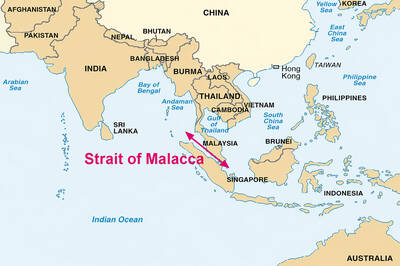
The closure of the Strait of Hormuz has forced policymakers in Asia to face questions over the security of other maritime chokepoints, including the Strait of Malacca, which is the world’s busiest waterway for international trade. WHAT IS THE MALACCA STRAIT? The 900km long Malacca Strait, bounded by Indonesia, Thailand, Malaysia and Singapore, provides the shortest sea route from East Asia to the Middle East and Europe. It carries nearly 22 percent of the world’s maritime trade, according to the Center for Strategic and International Studies (CSIS). This includes oil and gas shipments from the Middle East to the energy-hungry economies of China,
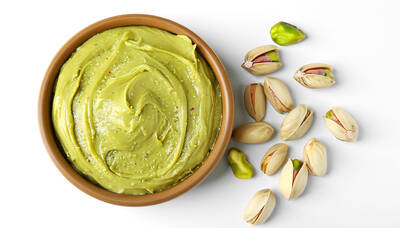
It seems like every year, new foods or drinks start trending and suddenly show up everywhere. A decade ago, avocado __1__ restaurant menus, while oat milk became the must-have addition to your coffee in cafes around five years back. The latest trend to hit this list is the pistachio. This flavorful green nut now features in everything from chocolate bars to Indian curries. While pistachios have long played a central role in certain regional cuisines, their recent global __2__ can be traced to Dubai. There, a specialty chocolate shop went __3__ on TikTok for one of its chocolate bars

One reason pistachios have taken the food world by storm compared to other nuts is their soft, green color. When ground down into a cream or butter, the green hue __6__ nicely with golden pastries or dark-brown chocolate, making it perfect for Instagram photos and TikTok videos. Their labor-intensive cultivation and __7__ also contribute to their image as a premium ingredient. Thus, buying a pistachio-based product often feels like a __8__ treat. Pistachios also stand out for their distinct flavor and health __9__. They have a subtle, sweet, earthy flavor that goes well with both sweet desserts and


 RSS
RSS