


A Northern Song Dynasty ru ware celadon washer from the personal collection of former United Microelectronics Corp chairman Robert Tsao went under the hammer at an auction held by Sotheby’s Hong Kong on Oct. 3 for a starting price of HK$80 million. After a fierce bidding battle, the washer bowl sold for HK$260 million (approximately NT$1 billion). After the sales commission is added on top, the final price paid was a little over HK$294 million, setting a new record for Song Dynasty porcelain ware.
There are only 87 pieces of ru ware porcelain left in the world, with just four pieces in private collections, one of which is Tsao’s porcelain washer bowl. The item’s listing information provided by Sotheby’s describes the ru ware brush washer as having a diameter of 13 cm and an unctuous, intense blue-green glaze with a complex ice crackle pattern.
The last time Sotheby’s Hong Kong sold a piece of Song Dynasty porcelain was in April 2012, when a Northern Song ru ware celadon washer with lobed rim sold for HK$207 million.
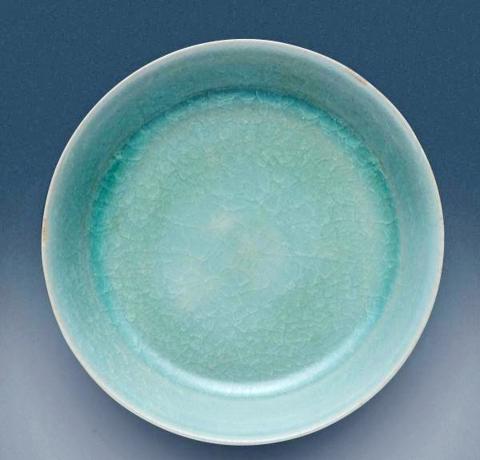
Photo: Screen grab from the Internet
照片:取自網路
(LIBERTY TIMES, TRANSLATED BY EDWARD JONES)
聯電創辦人曹興誠收藏的一只北宋汝窯天青釉洗,十月三日在香港蘇富比拍賣會上,以八千萬港元起拍,經多輪競價,以兩億六千萬港元(約十億台幣)落槌,加上佣金超過兩億九千四百萬港元,刷新宋瓷世界拍賣紀錄。
全球目前僅存的汝窯約八十七件,其中私人收藏只有四件,曹興誠的這只汝窯是其中一件。根據香港蘇富比介紹,這一宋代汝窯筆洗直徑十三厘米,釉如凝脂,天青猶翠,冰裂瑩澈。
香港蘇富比前次拍賣宋瓷是在二○一二年四月,以兩億七百萬港元拍出一件「北宋汝窯天青釉葵花洗」。
(自由時報)
Many consumers are guilty of filling drawers or closets with old laptops, cellphones, fitness trackers and other electronic devices once they are no longer needed. It’s hard to know where to recycle such items, or it seems costly and inconvenient to do so. The world generates millions of tons of electronic waste — also called e-waste — each year. According to the UN’s most recent estimate, people worldwide produced 62 million metric tons of e-waste in 2022, and only about 22 percent of it was properly recycled. The US’ Environmental Protection Agency estimates that less than a quarter of e-waste is

You’re sitting in class when a classmate asks to borrow a pencil. It seems like a small favor, so you agree without hesitation. The following week, the same classmate asks to share your notes. Later, they request help with a group project. You agree each time — after all, you helped out the first time — but before you know it, it has become automatic. This scenario demonstrates the “foot-in-the-door technique,” a psychological concept that shows how agreeing to small, acceptable demands makes it easier to accept larger ones later on. The name for this strategy comes from door-to-door

A: The four-day Tomb Sweeping Day long weekend begins Friday and will run until Monday. Are you going to sweep your ancestors’ tombs? B: I did in advance last weekend, so I can go to Kaohsiung to see the musical “The Phantom of the Opera.” A: Wow, is “Phantom” touring Taiwan again? It debuted in 1986, so this year marks the 40th anniversary of the show. B: And it’s not just touring Kaohsiung starting March 31, but also Taipei starting April 21 and Taichung starting May 26. A: “Phantom” is one of the world’s Four Major Musicals. I’ve seen all of them, except “Les

Continued from yesterday(延續自昨日) https://www.taipeitimes.com/News/lang Gig Tripping “Gig tripping” combines concerts with travel. People fly to see their favorite artists perform — usually abroad—and spend a few days sightseeing before or after the show. While die-hard fans have done this since the 1960s, the post-pandemic travel boom changed the game. Even people who aren’t superfans are now booking international concert trips because they want to make the most of travel opportunities. This trend exploded in the US, as the math makes sense. Domestic concert tickets are so costly that flying abroad for the show plus tourism expenses often matches or even beats the price


 RSS
RSS