


Staff at Australia Zoo on the Sunshine Coast, Queensland, Australia announced Tuesday the birth of a rare white koala.
The silver-white koala was born in January, the white fur coming from a recessive gene from its mother, Tia.
Tia has already given birth to one koala with very light fur.
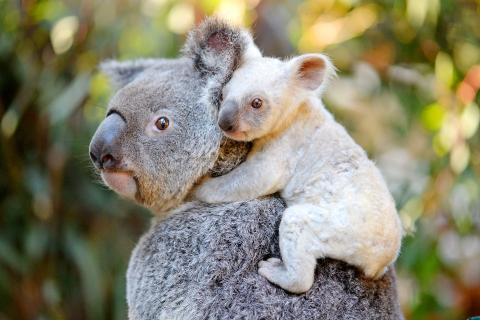
Photo: AFP
照片:法新社
Koalas have many different fur colors, ranging from light grey to brown, depending on the environment in which they are born. Those in the south of the country usually have thicker fur than those in the north, and the color of their fur is generally darker.
White koalas are extremely rare, and are at a distinct disadvantage if born in the wild, as they are more easily spotted by predators.
(CNA, translated by Paul Cooper)
位於昆士蘭省陽光海岸的澳洲動物園的工作人員週二說,動物園誕生一隻罕見的白色無尾熊。
這隻灰白的無尾熊今年一月出生,白色皮毛是遺傳自媽媽提亞的隱性基因。
提亞過去也曾生出皮毛顏色偏淡的無尾熊。
無尾熊的皮毛顏色不一,從淡灰到褐色都有,視環境而定。澳洲南部的無尾熊皮毛通常較北部厚,而且顏色也較深。
白色無尾熊相當罕見,如果在野外出生則相當不利,因為較容易被掠食者發現。
(中央社)
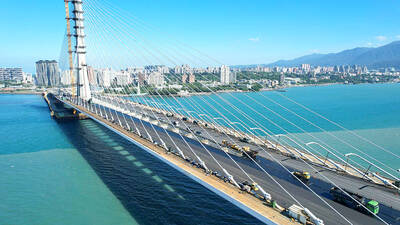
A: The Danjiang Bridge in New Taipei City is to open on May 12, and the MRT Sanying Line (Light Blue Line) will also open in June. Isn’t that great? B: Is that the bridge connecting the city’s Tamsui and Bali Districts? What’s so special about this new landmark spanning the Tamsui River? A: The Danjiang Bridge will become the world’s longest-span single-mast asymmetric cable-stayed bridge — with a total river-crossing section of 920 meters and main span of 450 meters. B: The news says there are sidewalks and bike lanes on both sides. Watching the sunset from the
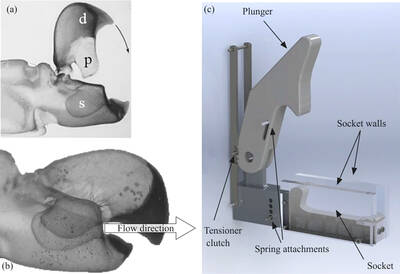
Few sea creatures of their size have as much destructive power as pistol shrimp. These small animals, usually measuring around four centimeters long, produce shock waves that can stun or even kill their prey. The attack begins when the shrimp opens its specialized claw, allowing water to fill a chamber inside. Then the claw closes rapidly. A bump on the claw strikes the chamber, forcing the trapped water out through a narrow opening at a high speed of about 25 meters per second. The rapid movement forms a bubble in the water that collapses almost instantly under the pressure of the
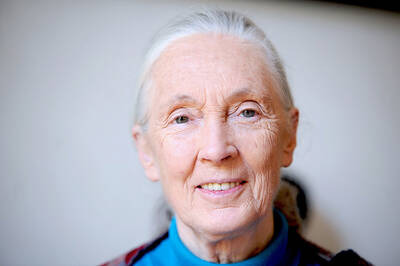
In the dense forests of Tanzania, a young researcher sat quietly among the trees, her gaze fixed on a troop of chimpanzees. It was 1960, and Jane Goodall, armed with nothing but a notebook and endless curiosity, was about to change science forever. Inspired by childhood stories like the Dr. Dolittle series, she had dreamed of Africa — and now, thanks to the encouragement of anthropologist Louis Leakey, she was there, face-to-face with the wild. What Jane discovered shocked the world. Chimpanzees weren’t mere creatures of instinct; they were individuals with emotions, families, and even the capacity for tool
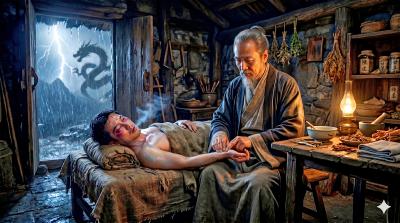
★ Bilingual Story is a fictionalized account. 雙語故事部分內容純屬虛構。 Rain hammered the roof in hard, uneven bursts. “Hold him still!” Baosheng pressed one hand against the stranger’s brow as the man twisted on the wooden bed. His left eye was swollen shut. The right one burned red like a coal. “It feels like fire,” the man gasped. “Like something is clawing inside.” Thunder rolled across the mountain. Baosheng leaned closer. The man’s skin was cold, but heat rose from his face. A strange smell hung in the air. He began the four methods of diagnosis: looking, listening/smelling,


 RSS
RSS