


Scientists in Chile have discovered molecules in two species of Antarctic flowers able to protect the plants from solar radiation. These could potentially be used in products such as sunscreen for humans, and as protection for vulnerable crops.
Researchers at the University of Santiago investigating the Antarctic plants grown under controlled conditions found that Colobanthus quitensis (pearlwort) and Deschampsia antarctica (hair grass) could tolerate high levels of ultraviolet radiation.
According to the British Antarctic Survey, these are the only two flowering plants found in the icy polar region, growing around its more temperate edges.
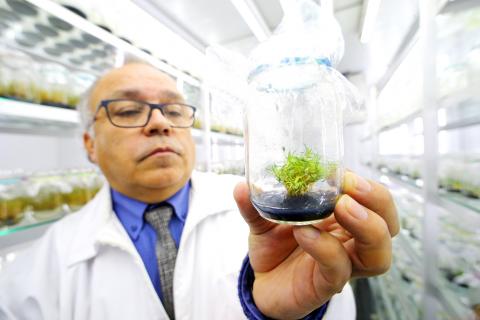
Photo: Reuters
照片:路透社
The scientists have identified a group of molecules in the flowers, particularly Colobanthus, that acts as a solar filter and prevents radiation damage, said project leader Gustavo Zuniga.
The university is seeking commercial partners to develop spin-off products from the research.
“It could be used in the not too distant future,” he said. “For example, for a crop that doesn’t tolerate increasing levels of radiation, that genetic information could be used to make the crop respond better.”
Natural sunscreens or creams could also be developed incorporating the molecules, he added.(Reuters)
智利科學家發現南極有兩種開花植物,因具有特殊的分子,不會受到太陽輻射的傷害。科學家希望將這種分子應用於研發防曬霜相關產品及保護脆弱的作物。
聖地牙哥大學研究團隊透過栽培南極漆姑草和南極髮草發現,這兩種植物能夠承受高強度紫外線輻射。
根據英國南極勘測計畫的資料,這兩種植物為冰封的南極地區僅有的開花植物,生長在南極圈較溫暖的邊緣。
研究負責人朱尼卡說,這些植物有一種分子群,可過濾太陽輻射,以避免曬傷,其中又以南極漆姑草的過濾能力較強。
聖地牙哥大學現在正在招募商業夥伴,希望利用此項發現再研發出新的衍生產品。
朱尼卡說:「也許不久以後,我們就能應用這項發現。比方說,某些作物無法承受增強的輻射,或許就能利用這種遺傳信息進行改善。」
他並指出,這種植物的分子也可用來研發天然防曬霜或具有防曬功能的乳液。
(台北時報編譯涂宇安譯)

A: This year’s two most anticipated films have finally hit theaters in Taiwan. “Michael” premiered last Wednesday, while “The Devil Wears Prada 2” premiered this Wednesday ahead of its global release. B: Isn’t “Michael” the biopic about the late King of Pop Michael Jackson? A: Yup, it tells the story of Michael’s legendary life, from child star to global icon. And the role is in fact played by his nephew, Jaafar Jackson. B: Michael caused a sensation when touring Taiwan twice in 1993 and 1996. His classic hits, dance moves and music videos reshaped global pop culture at that time. A: I’m gonna

A: In addition to the biopic “Michael,” comedy “The Devil Wears Prada 2” is finally in theaters. I can’t believe it’s been 20 years since the 2006 debut of the original film. B: Does the sequel still revolve around the fashion industry? A: This time, “Miranda,” the fashion magazine editor-in-chief played by Meryl Streep, will team up with her former assistant “Andy,” played by Anne Hathaway, to fight against Emily, her other ex-assistant played by Emily Blunt. B: Isn’t the role of “Miranda” based on then US “Vogue” editor-in-chief Anna Wintour? A: Yup, it established Anna’s fashion status, influenced pop culture
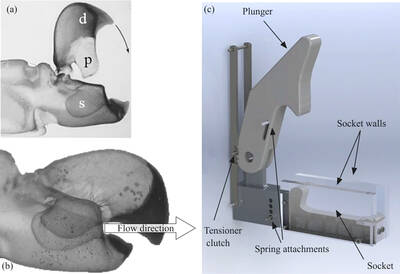
Few sea creatures of their size have as much destructive power as pistol shrimp. These small animals, usually measuring around four centimeters long, produce shock waves that can stun or even kill their prey. The attack begins when the shrimp opens its specialized claw, allowing water to fill a chamber inside. Then the claw closes rapidly. A bump on the claw strikes the chamber, forcing the trapped water out through a narrow opening at a high speed of about 25 meters per second. The rapid movement forms a bubble in the water that collapses almost instantly under the pressure of the

★ Bilingual Story is a fictionalized account. 雙語故事部分內容純屬虛構。 Rain hammered the roof in hard, uneven bursts. “Hold him still!” Baosheng pressed one hand against the stranger’s brow as the man twisted on the wooden bed. His left eye was swollen shut. The right one burned red like a coal. “It feels like fire,” the man gasped. “Like something is clawing inside.” Thunder rolled across the mountain. Baosheng leaned closer. The man’s skin was cold, but heat rose from his face. A strange smell hung in the air. He began the four methods of diagnosis: looking, listening/smelling,


 RSS
RSS