


Chinese Practice
水滴石穿
dripping water penetrates stone
Photo: Wikimedia Commons
照片:維基共享資源
(shui3 di1 shi2 chuan1)
一五六三年,英格蘭女王伊麗莎白一世在對劍橋大學的一場演說中提到一個諺語,說這句話「多少給了我一點安慰—因為這句諺語即便無法消除,但起碼可以減輕我的悲痛。」這演說是以拉丁文發表的,而這諺語的拉丁原文是「Romam uno die non fuisse conditam」。這句拉丁諺語又源自一句常見的中世紀法文諺語「Rome ne fut pas faite toute en un jour」,這句法文諺語在伊麗莎白一世之前大約四個世紀出現,收錄在一一九○年的選集Li Proverbe au Vilain。在伊麗莎白一世引用它時,這句話已經在約二十五年前譯為英文「Rome was not built in one day」(羅馬不是一天造成的)出版了。
正如這句英文所表達的,羅馬帝國—它本身代表著宏偉複雜的成就—是花了很多、很多年才發展出來的。這句話的意思是,宏大的計畫是長久努力累積與眾人協力的成果。應當做的事,值得花時間把它給做好。
中國戰國時期雜家思想家尸佼,或稱作尸子,其著作在現存的古籍中曾被多次引用,但尸子本人所著之長六萬字、包含二十章的《尸子》一書,在一千年前已經佚失。
尸子曾說,雖然水不是鑿石頭的鑽子,但持續不斷地滴下,長久下來便會穿透石頭。他所要表達的意思是說,如果持續不懈、有條理且專注地進行某一任務,最後就會完成,即便它一開始看來不可為且要花費多年時間。
由此概念,我們得出成語「水滴石穿」,字面上的意思是「滴下的水穿透了石頭」。
(台北時報編譯林俐凱譯)
不要小看這一天十分鐘的零碎時間,長久下來水滴石穿,你就會看出練習的成果。
(These ten-minute snatches of time are important. Over time they will accumulate, and you will see the results of your practice.)
這些洞是自然形成的—山泉水滲進岩穴慢慢滴下,水滴石穿,便造成了這坑疤的地形。
(These potholes were created naturally, with the waters of the mountain stream percolating through the rock, drop by drop, until it formed these holes.)
英文練習
Rome was not built in a day
In a speech given at Cambridge University in 1563, Queen Elizabeth I of England alluded to a common saying, “that has given me a certain amount of comfort — a saying which cannot take away, but can at least lessen, the grief that I feel.” The speech was delivered in Latin, and the Latin version of the saying to which she referred was “Romam uno die non fuisse conditam.” This, in turn, referred to a common medieval French proverb that appeared in the 1190 collection Li Proverbe au Vilain almost four centuries previously: “Rome ne fut pas faite toute en un jour.“ By the time Elizabeth made the speech, the saying had been published in English translation for around 25 years: “Rome was not built in one day.”
Just like the English expression, the Roman Empire itself — representing a magnificent and complex achievement — had taken many, many years to develop. The phrase means that grand projects are the outcome of a long period of accumulated and concerted effort., and that if something is worth doing, it’s worth taking the time to get it right.
In China, the Warring States period thinker Shi Jiao, or Shi zi, of the School of Syncretism, is known from the many times he has been quoted in extant texts, even though his own book, the Shizi, thought to have originally been some 60,000 Chinese characters in 20 chapters, has now been lost for 1,000 years.
Shi zi is credited with saying that although water is no drill for boring into stone, persistent drops, over time, will cut through rock nevertheless. His point was that if one is consistent, methodical and focused on a task, that task will eventually be completed, even if it at first seems impossible, and takes many years of effort.
From this idea, we have the idiom「水滴石穿」, literally “dripping water penetrates stone.”
(Paul Cooper, Taipei Times)
I said I would get it done by next week and I will try. But Rome wasn’t built in a day.
(我說過我會在下星期前完成,而且我會盡量做到。但羅馬不是一天造成的。)
The Paris Accord is far from perfect, but it’s a start. After all, Rome was not built in one day.
(巴黎氣候協議絕非完美,但這是一個開始。畢竟羅馬不是一天造成的。)
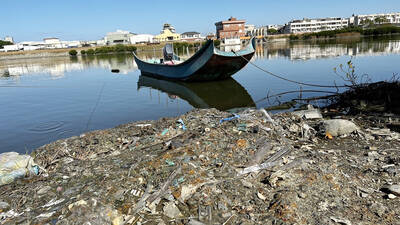
Many consumers are guilty of filling drawers or closets with old laptops, cellphones, fitness trackers and other electronic devices once they are no longer needed. It’s hard to know where to recycle such items, or it seems costly and inconvenient to do so. The world generates millions of tons of electronic waste — also called e-waste — each year. According to the UN’s most recent estimate, people worldwide produced 62 million metric tons of e-waste in 2022, and only about 22 percent of it was properly recycled. The US’ Environmental Protection Agency estimates that less than a quarter of e-waste is

You’re sitting in class when a classmate asks to borrow a pencil. It seems like a small favor, so you agree without hesitation. The following week, the same classmate asks to share your notes. Later, they request help with a group project. You agree each time — after all, you helped out the first time — but before you know it, it has become automatic. This scenario demonstrates the “foot-in-the-door technique,” a psychological concept that shows how agreeing to small, acceptable demands makes it easier to accept larger ones later on. The name for this strategy comes from door-to-door

A: The four-day Tomb Sweeping Day long weekend begins Friday and will run until Monday. Are you going to sweep your ancestors’ tombs? B: I did in advance last weekend, so I can go to Kaohsiung to see the musical “The Phantom of the Opera.” A: Wow, is “Phantom” touring Taiwan again? It debuted in 1986, so this year marks the 40th anniversary of the show. B: And it’s not just touring Kaohsiung starting March 31, but also Taipei starting April 21 and Taichung starting May 26. A: “Phantom” is one of the world’s Four Major Musicals. I’ve seen all of them, except “Les

Dos & Don’ts — 想想看,這句話英語該怎麼說? 1. 我們很早到達電影院。 ˇ We arrived at the theater very early. χ We arrived the theater very early. 註︰arrive 為不及物動詞,後面如果有受詞要用 at 或 in。例如:They arrived in Taipei yesterday.。一般大地方,如國家、省、大城市等前面用 in,凡小地方城鎮、學校等則用 at。 2. 開車半小時以後,我們到達了海灘。 ˇ After half an hour’s drive, we got to the beach. χ After half an hour’s drive, we got the beach. 註︰come, go, get(來、去、到達)某地時,在表示地點的名詞前面應該用 to,如 go to school, go to Taipei, come to Shanghai 等。如果這些動詞後面所跟的是 here, there, home 等副詞,則不用 to。 3. 明天我會回辦公室。 ˇ I will be back in the office tomorrow. χ I will be back to office tomorrow. 註︰to be back 一語裡的 back 是副詞,不是介詞,所以後面要用 at (the market) 或 in (the office)。 假如假期結束,要回學校上課了則可說: ? Kids will be back


 RSS
RSS