


The first archaeologically attested dynasty of ancient China was the Shang (商) dynasty, also referred to as the Yin-Shang (殷商), or simply Yin (殷). It is also said that the Shang was preceded by another dynasty, called the Xia (夏), which fell because of anger at the corruption and moral degradation of its last king.
The Shang was subsequently overthrown by King Wu (武王) of the Zhou (周), as it was thought the Shang, too, had descended into corruption and despotism. The victory was attributed to Wu’s father, the Zhou patriarch, who would later be given the posthumous title King Wen (文王).
The poem the Sequence of Dang (蕩之什), in the ancient Chinese classic the Book of Poetry (詩經), written in the Zhou dynasty, imagines King Wen criticizing the Yin-Shang king for appointing “violently oppressive” and “greedy” ministers: although Heaven had given them these objectionable characteristics, it was the king who gave the ministers power and status:「曾是彊禦、曾是掊克。 曾是在位、曾是在服。 天降慆德、女興是力。」
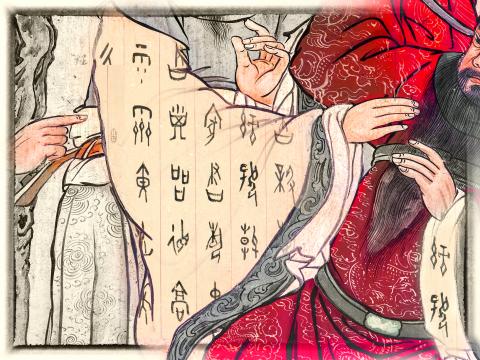
Photo: Paul Cooper, Taipei Times
照片:台北時報記者古德謙
The poem ends with the line “the beacon (lesson) of the Yin is not far off; it is in the time of the last Xia king”: 殷鑒不遠,夏后之世. Although King Wen is warning the Shang, the poet, writing during the Zhou dynasty, is actually delivering a veiled warning to the increasingly despotic Zhou king.
Now, the phrase 殷鑒不遠 means, “you don’t have to look far to see a valuable lesson to be learned. Change your ways.”(Paul Cooper, Taipei Times)
商朝是中國第一個有考古學證據證明存在的朝代。商又稱殷商,或殷。據傳商朝之前還有夏朝。傳說夏之所以顛覆是因末期腐敗、道德淪喪所致。商朝最後被周朝取代。周朝的開國始祖為姬昌,他逝世後被追封為周文王。興兵攻打商朝獲得勝利的則是姬昌的兒子周武王。
中國典籍《詩經》的「蕩之什」中,作者遙想周文王如何批判商王任用「殘暴」、「斂財」的大臣,雖然這些臣子惡劣的品德是天生的,但讓這些人當官、縱容這些人暴行的,卻是你這個當國王的。即:「曾是彊禦、曾是掊克。曾是在位、曾是在服。 天降慆德、女興是力。」
不過這首詩是創作於周朝,此時商早已滅亡。因此這即可能是詩人以一種較為婉轉的方式勸喻當時越來越跋扈的周王。
詩末以「殷鑒不遠,夏后之世」作結,意即應記取前人的教訓,不再犯錯。 (台北時報詹豐造譯)
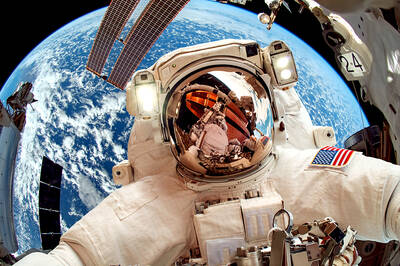
Some 400 kilometers above the Earth’s surface, the “International Space Station” (ISS) operates as both a home and office for astronauts living and working in space. Astronauts typically stay aboard the station for up to six months and engage in groundbreaking research projects in various fields, such as biology, physics and astronomy. These projects help scientists understand life in space and contribute to advancements that benefit people on Earth. The ISS has experienced significant growth since construction began in 1998. The station’s design and assembly represent an extraordinary international collaboration among Canada, the European Union, Japan, Russia and the United States.
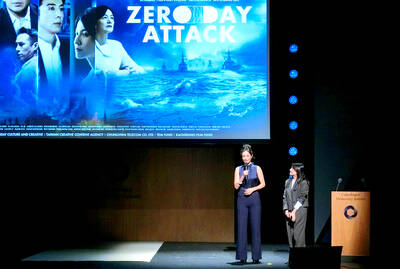
A: While hit musical Les Miserables’ concert tour kicks off, South Korean drama Squid Game 3 will be back at the end of this month. B: New Taiwanese dramas The World Between Us 2 and Zero Day Attack have also gained attention. A: I heard that Zero Day Attack is a story about the Chinese Communist Party’s People’s Liberation Army trying to attack Taiwan by force. B: The drama’s subject is so sensitive that it has sparked a lot of controversy in society. A: I just hope that such a horrible story will never happen in
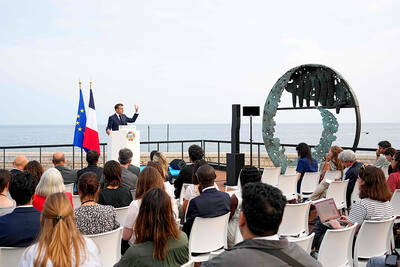
The UN Ocean Conference wrapped up in Nice, France on Friday last week with world leaders taking major steps toward marine protection and vowing a showdown when nations meet to negotiate rules for deep-sea mining next month. But a lack of funding pledges and the total omission of fossil fuels disappointed some observers. The summit was just the third — and largest yet — dedicated entirely to what the United Nations calls an “emergency” in the world’s oceans. The High Seas Treaty, or Global Ocean Treaty, is also known as the Agreement under the United Nations Convention on the Law
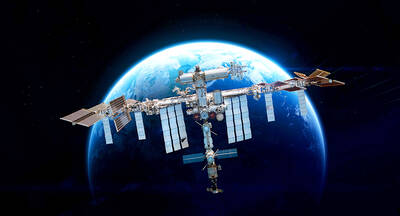
Continued from yesterday(延續自昨日) https://www.taipeitimes.com/News/lang Living on the ISS is challenging due to the absence of gravity. Astronauts must strap themselves into sleeping bags to prevent floating away while they sleep. They also spend about two hours exercising daily using specialized equipment. Despite this, microgravity can cause muscle loss, bone density reduction and cardiovascular changes. As a result, astronauts require extensive rehabilitation upon their return to Earth. In spite of these difficulties, astronauts often describe their experience on the ISS as life-changing. One of the most awe-inspiring aspects of living aboard the space station is the unparalleled view of Earth. Traveling at


 RSS
RSS