


Not far from the popular tourist destination of Jioufen in New Taipei City, just past the Jioufen Gold Mine Museum and through the parking lot, a path leads up to a prominent outcrop. Some feel this outcrop resembles a teapot. Whether it does or not is entirely up to your own interpretation.
This is the start of a challenging hike that offers spectacular vistas and variable terrain, with the land to the left and the coast to the right.
Navigating your way through the “teapot” outcrop itself can be, for some, a rather hair-raising experience, with a narrow path leading down a section through which you have to crawl on all fours, with a precipitous drop to your right. It can be quite exhilarating for the adventurous, but caution is advised: one slip and you could be a goner.
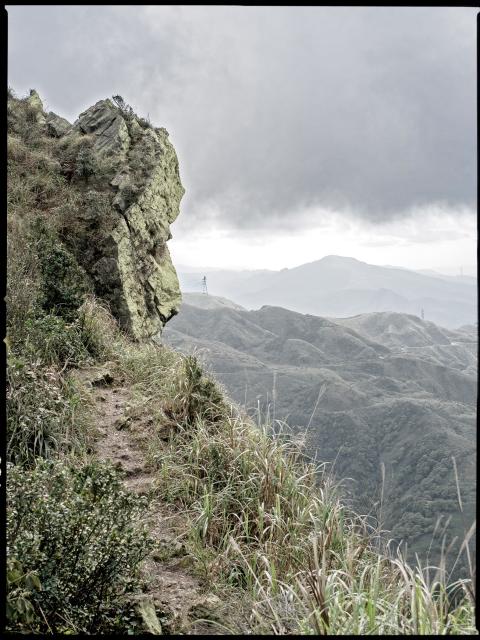
Photo: Paul Cooper, Taipei Times
照片:台北時報記者古德謙
Not far from the teapot is your next obstacle: a steep stone staircase leading up to the highest point on the walk. It can be disconcerting for the faint-hearted, but once at the top, you have reached a vantage point affording wonderful views, especially if you turn around and survey the route you came from: a sweeping view of several peaks, Teapot Mountain itself among them, with tiny buildings cradled between two peaks, and the sea in the distance, the water enshrouded by mist clinging to the coast.
On the day we hiked the teapot trail the weather was as changeable as the terrain. Looking back from the stone staircase, the sun was blazing and the air was crisp and clear. Turning to the scene in front of us, we saw a grassy path leading off along a ridge and a moss-covered craggy outcrop with brooding clouds descending over the distant hills, threatening imminent rain.
(Paul Cooper, Taipei Times)
在新北市有一塊著名的岩峰,就在觀光勝地九份的附近:過了九份金礦博物館,穿越停車場,有條小徑可以抵達。不少人覺得岩峰的形狀像茶壺,但究竟像不像,還是見仁見智。
從這條小徑展開健行,左為陸地,右為海岸,可眺望壯麗的風景,欣賞豐富的地形。
前往「茶壺山」所需的跋涉,或許會令某些人卻步。在部分路段,山路狹窄,右邊就是懸崖,遊客需要四肢併用爬行。對於熱愛冒險的旅客而言,這趟路程固然刺激,但仍應保持謹慎,以免一失足成千古恨。
在「茶壺山」不遠處,另有一大考驗:旅客必須採著陡峭的石階通往步道的最高點。對於心臟不夠強的人,這段路頗為可怕,然而一旦登頂,旅客就能將美景盡收眼底。在攻頂後,轉身眺望方才一路走來的道路,風景尤其寬闊美麗:除了「茶壺山」在內的數個綿延的山峰,還有山峰之間坐落的小小房舍,另可望見遠方的海洋及水氣氤氳的海岸。
我們去「茶壺山」步道健行的那天,天氣就如地形一樣的多變。在石階上回過頭,太陽熾烈,空氣清爽而澄淨。回望登頂的方向,只見野草夾道的小徑沿著山脊與一塊佈滿苔蘚的峻峭岩峰展開,而遠方山丘上有雲徘徊逼近,預示著風雨將至。
(涂宇安翻譯)

A: Which TV drama series have been global hits so far this year? B: The US drama “Stranger Things 5,” South Korean drama “Can This Love Be Translated?” and Chinese megahit “Pursuit of Jade” are all popular lately. A: Isn’t “Pursuit of Jade” the costume idol drama about the romance between a charming marquis and a pig-slaughterer? Actor Zhang Linghe and actress Tian Xiwei are both so attractive. B: Plus, Netflix’s Korean-Japanese gay romance drama “Soul Mate” — starring Korea’s Ok Taec-yeon and Japan’s Hayato Isomura — is set to premiere in May. A: These hit international dramas
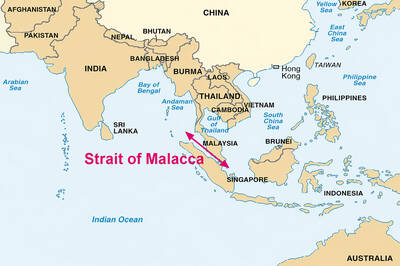
The closure of the Strait of Hormuz has forced policymakers in Asia to face questions over the security of other maritime chokepoints, including the Strait of Malacca, which is the world’s busiest waterway for international trade. WHAT IS THE MALACCA STRAIT? The 900km long Malacca Strait, bounded by Indonesia, Thailand, Malaysia and Singapore, provides the shortest sea route from East Asia to the Middle East and Europe. It carries nearly 22 percent of the world’s maritime trade, according to the Center for Strategic and International Studies (CSIS). This includes oil and gas shipments from the Middle East to the energy-hungry economies of China,
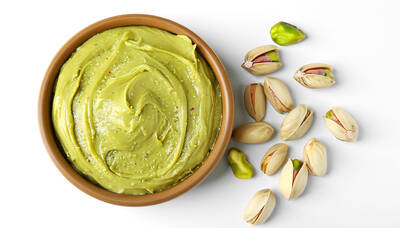
It seems like every year, new foods or drinks start trending and suddenly show up everywhere. A decade ago, avocado __1__ restaurant menus, while oat milk became the must-have addition to your coffee in cafes around five years back. The latest trend to hit this list is the pistachio. This flavorful green nut now features in everything from chocolate bars to Indian curries. While pistachios have long played a central role in certain regional cuisines, their recent global __2__ can be traced to Dubai. There, a specialty chocolate shop went __3__ on TikTok for one of its chocolate bars
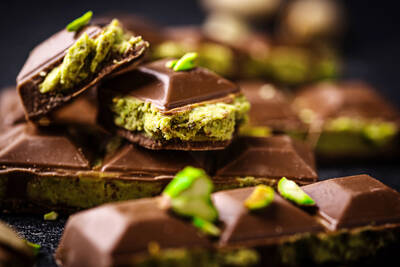
One reason pistachios have taken the food world by storm compared to other nuts is their soft, green color. When ground down into a cream or butter, the green hue __6__ nicely with golden pastries or dark-brown chocolate, making it perfect for Instagram photos and TikTok videos. Their labor-intensive cultivation and __7__ also contribute to their image as a premium ingredient. Thus, buying a pistachio-based product often feels like a __8__ treat. Pistachios also stand out for their distinct flavor and health __9__. They have a subtle, sweet, earthy flavor that goes well with both sweet desserts and


 RSS
RSS