


Some people have told Taipei City Councilor Kerr Chen that every year, as spring turns into summer, it is common for people to get sprayed with foul-smelling liquid by litchi giant shield bugs, which are in their breeding season at that time. The liquid causes skin allergy and inflammation, which can be very painful. Litchi giant shield bugs being an alien species, some people confuse them with red fire ants and mistakenly report them as such, but despite several such reports, the city government has been passive and not done much about it. It has therefore been suggested that they should issue a “shield bug warning” to inform the public.
The Taipei City Parks and Street Lights Office says that litchi giant shield bugs are an insect pest that has appeared in northern Taiwan in the last two years. They lay their eggs in April and May and are active between May and July. The office says that in future, when the bugs appear, it will put up public information notices to tell people where they are. During the bugs’ egg-laying season in April and May they will pick their egg clumps off trees and destroy them, or else remove the bugs by spraying the trees with water jets. In addition, for places that have experienced relatively heavy litchi giant shield bug infestations, the office will assess the extent of the damage to determine whether insecticide should be sprayed as a preventive measure.
Chang Chan-jung, director of the parks office’s Floriculture Experiment Center, reminds the public not to catch litchi giant shield bugs out of curiosity, so as to avoid getting burned by the liquid that they spray out of their stink glands to defend themselves. Chang also said that people need not be overly fearful of the bugs, they only need to refrain from frightening or provoking them. If people discover such bugs, they can immediately contact the parks office, which will send some of its staff to deal with it.(Liberty Times, translated by Julian Clegg)
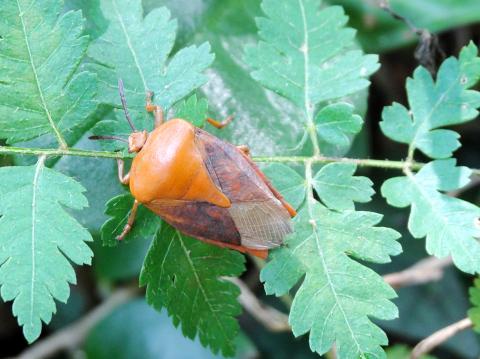
Photo courtesy of the Taipei City Parks and Street Lights Office
照片:臺北市公園路燈工程管理處提供
有民眾向台北市議員陳重文陳情,每逢春夏季節交替之時,常遭正值繁殖期的荔枝椿象臭液噴到,造成皮膚過敏紅腫,疼痛不已。因荔枝椿象屬於外來種,還有人誤以為是紅火蟻而誤報,屢次向市府反映,市府卻消極以對。因此有人建議應發布「防疫警報」告知。
臺北市公園路燈工程管理處表示,荔枝椿象為近兩年出現在台灣北部地區的害蟲,產卵期為四至五月,活動期為五至七月;往後荔枝椿象出現時,會在出現地點張貼宣導文宣,並在四至五月間荔枝椿象產卵期摘除樹上卵塊銷毀或利用水柱沖刷移除蟲體。另外,針對荔枝椿象疫情較為嚴重地點,依照危害情形評估是否進行預防性噴藥防治。
公園處花卉試驗中心主任張栴榕提醒,民眾千萬不要因為一時好奇而捉捕荔枝椿象,以免遭到防禦性臭腺汁液灼傷;也不需要過於恐慌,只要不去驚擾牠。如有發現時,可即時通報公園處派員處理。(自由時報記者盧姮倩)

A: The Danjiang Bridge in New Taipei City is to open on May 12, and the MRT Sanying Line (Light Blue Line) will also open in June. Isn’t that great? B: Is that the bridge connecting the city’s Tamsui and Bali Districts? What’s so special about this new landmark spanning the Tamsui River? A: The Danjiang Bridge will become the world’s longest-span single-mast asymmetric cable-stayed bridge — with a total river-crossing section of 920 meters and main span of 450 meters. B: The news says there are sidewalks and bike lanes on both sides. Watching the sunset from the
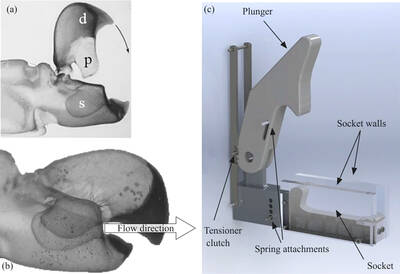
Few sea creatures of their size have as much destructive power as pistol shrimp. These small animals, usually measuring around four centimeters long, produce shock waves that can stun or even kill their prey. The attack begins when the shrimp opens its specialized claw, allowing water to fill a chamber inside. Then the claw closes rapidly. A bump on the claw strikes the chamber, forcing the trapped water out through a narrow opening at a high speed of about 25 meters per second. The rapid movement forms a bubble in the water that collapses almost instantly under the pressure of the

In the dense forests of Tanzania, a young researcher sat quietly among the trees, her gaze fixed on a troop of chimpanzees. It was 1960, and Jane Goodall, armed with nothing but a notebook and endless curiosity, was about to change science forever. Inspired by childhood stories like the Dr. Dolittle series, she had dreamed of Africa — and now, thanks to the encouragement of anthropologist Louis Leakey, she was there, face-to-face with the wild. What Jane discovered shocked the world. Chimpanzees weren’t mere creatures of instinct; they were individuals with emotions, families, and even the capacity for tool

★ Bilingual Story is a fictionalized account. 雙語故事部分內容純屬虛構。 Rain hammered the roof in hard, uneven bursts. “Hold him still!” Baosheng pressed one hand against the stranger’s brow as the man twisted on the wooden bed. His left eye was swollen shut. The right one burned red like a coal. “It feels like fire,” the man gasped. “Like something is clawing inside.” Thunder rolled across the mountain. Baosheng leaned closer. The man’s skin was cold, but heat rose from his face. A strange smell hung in the air. He began the four methods of diagnosis: looking, listening/smelling,


 RSS
RSS