


Many people don’t realize this, but Taichung’s oldest city god temple is actually located in the city’s Fengyuan District. The Fengyuan City God Temple, which has more than 159 years of history, every year uses a traditional Japanese-style mikoshi — or portable Shinto shrine — to carry out a procession around the district, a tradition that by now has been maintained for 87 years. The “Taiwanese deity sitting on a Japanese shrine” has become something of a unique custom, and the temple has applied to the Taichung City Cultural Heritage Department for the event to be officially listed as a part of the city’s cultural heritage.
The chairman of the Fengyuan City God Temple says that according to documents and records, the temple was founded in 1856. Because the old name for Fengyuan District was “Huludun,” the temple was originally called “Dunjiao City God Temple.” However, following the establishment of Fengyuan Township, the name was changed to Fengyuan Dunjiao City God Temple. Following suggestions by academics at the time, “Dunjiao” was dropped from the name and the present name has been in use ever since.
Processions can be divided into those that take place within the city limits and those that are held outside the city. The inner-city procession takes place every year on the 24th day of the sixth month according to the lunar calendar, while processions that go outside the city limits and reach as far as the districts of Shihgang and Daya, go ahead come rain or shine and have never once been suspended.

Photo courtesy of Wen Tsung-han
照片:溫宗翰提供
(Liberty Times, translated by Edward Jones)
你可能不知道,台中市歷史最悠久的城隍廟,其實在豐原!超過一百五十九年歷史的豐原城隍廟,每年以傳統日式神轎進行遶境活動,至今已維持八十七載。「台灣神坐日本轎」成為獨特習俗,廟方已申請列入台中市文化資產。
豐原城隍廟主委說,根據相關文獻記載,豐原城隍廟於西元一八五六年設廟,因豐原舊地名葫蘆墩而命名為「墩腳城隍廟」。隨著設立豐原鎮,改名為「豐原墩腳城隍廟」,再依當時學者建議將墩腳去掉,沿用至今。
遶境可分市內及市外,市內是每年農曆六月十四日舉行,市外則遠及石岡、大雅,風雨無阻未曾間斷。
(自由時報記者李忠憲、黃鐘山)

Taiwan Travelogue, the novel by Taiwanese author Yang Shuang-zi and translated into English by Lin King, won the prestigious International Booker Prize in London on May 19. It marks the first time a Taiwanese literary work has received the International Booker Prize, setting a historic milestone both for Taiwanese literature and for the award itself. Prior to this achievement, Taiwan had only once appeared on the Booker radar, when Taiwanese author Wu Ming-yi was longlisted for the Booker Prize in 2018 with The Stolen Bicycle. The International Booker Prize honors works of fiction translated into English and published in the UK or Ireland.
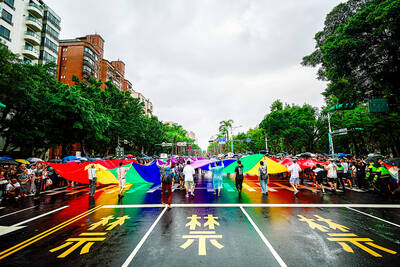
A: While Taiwan is celebrating the 7th anniversary of legalizing same-sex marriage, a poll shows that the support rate for same-sex marriage rose sharply from 37.4 percent seven years ago to 69.9 percent last year. B: Actually, I’m a bit curious about the size of Taiwan’s LGBT population. A: I’m not sure. But if we take a Gallup poll in the US as an example, 9.3 percent of American adults identified as LGBT in 2024. B: Wow, is it because the Americans are relatively open? In many other countries, the figures hover around 5 percent. A: Based on this,
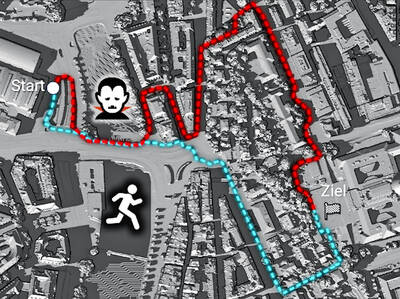
As climate change and urbanization push city temperatures higher, walking outdoors is becoming increasingly uncomfortable in many parts of the world, especially when prolonged time spent in sunlight is involved. As a result, outdoor lovers are now seeking cooler, shaded walking routes. However, most mainstream map apps still do not __1__ shaded footpaths. Enter routing.osm.ch — a Swiss web-based route planner that introduces a novel solution to this problem. Its “Vampire mode,” named after the legendary creatures’ fear of being __2__ natural light, was developed by a Swiss research team led by Professor Stefan Keller. The platform combines open data from

Cities around the world are testing “robotaxis,” hoping that autonomous vehicles will ease traffic and reduce emissions. However, recent analyses suggest these expectations may be overly optimistic. According to consulting firm Kearney, robotaxis could actually make congestion worse rather than better. Because self-driving rides are expected to be cheaper and more convenient than traditional taxis, more people may choose them over walking, biking, or using public transportation. This shift would put more cars on already crowded roads. Another concern is “deadheading,” which refers to robotaxis traveling without passengers between rides. Since autonomous fleets need to reposition themselves throughout the day, these


 RSS
RSS