


A visit to Pingtung, which was traditionally called “Akauw” [a homonym of “monkey” in Hoklo], in the year of the monkey is a must. Yet Pingtung did not get this name because it had a particularly large number of monkeys, but because previously the inhabitants of this land were Pingpu Aborigines of the Akauw village, which is why this place was called Akauw during the Qing dynasty. It was renamed to “Pingtung” in the Japanese colonial era for its location on the east side of Banpingshan. To trace the history of Akauw, visitors must not forget to visit the Jhaoyang Gate of the Akauw citadel.
The Jhaoyang gate is located inside Chungshan Park in downtown Pingtung between the tennis court and the Pingtung County Stadium. If time allows, you can spend five to 10 minutes walking to the Pingtung Academy, which has a history of 200 years and was renovated in recent years by Pingtung County Government. The place is so beautiful that even if you visit it on Monday or national holidays, when it is closed, you can still appreciate its magnificence and beauty from the outside.
(Liberty Times, translated by Ethan Zhan)
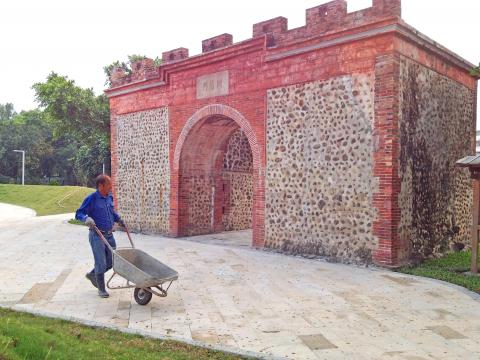
Photo: Luo Hsin-chen, Taipei Times
照片:台北時報羅欣貞攝
猴年當然要來一趟舊稱「阿猴」的屏東,這裡倒不是因為猴子特別多而得名,而是早期原為平埔族阿猴社民居住之地,清代時稱為阿猴。因為在半屏山之東,日治時期才改稱屏東。要追溯阿猴的歷史,阿猴城門「朝陽門」是不可錯過的景點。
朝陽門位屏東市中心的中山公園內,就在網球場與體育場之間。如果有時間,走個五到十分鐘,也可順遊有兩百年歷史的屏東書院。此書院近年才由屏東縣政府整修完成,環境優美,就算週一與國定假日休館,也能從外圍感受其氣勢與美感。

Cameras are everywhere — in our pockets, on our walls and even in space. They capture emotions, preserve history and reflect culture. Through these devices, photography is now essential to modern life, influencing how we perceive ourselves and the world. To understand the root of their power, let’s explore the camera’s remarkable journey. The story begins with the camera obscura, a dark room with a tiny hole. Light passing through the opening projected an inverted image on the opposite wall. Renaissance artists used this principle to paint accurate scenes. However, these images couldn’t be preserved as photographs. That changed

A: This year’s two most anticipated films have finally hit theaters in Taiwan. “Michael” premiered last Wednesday, while “The Devil Wears Prada 2” premiered this Wednesday ahead of its global release. B: Isn’t “Michael” the biopic about the late King of Pop Michael Jackson? A: Yup, it tells the story of Michael’s legendary life, from child star to global icon. And the role is in fact played by his nephew, Jaafar Jackson. B: Michael caused a sensation when touring Taiwan twice in 1993 and 1996. His classic hits, dance moves and music videos reshaped global pop culture at that time. A: I’m gonna
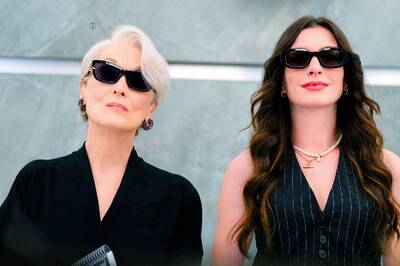
A: In addition to the biopic “Michael,” comedy “The Devil Wears Prada 2” is finally in theaters. I can’t believe it’s been 20 years since the 2006 debut of the original film. B: Does the sequel still revolve around the fashion industry? A: This time, “Miranda,” the fashion magazine editor-in-chief played by Meryl Streep, will team up with her former assistant “Andy,” played by Anne Hathaway, to fight against Emily, her other ex-assistant played by Emily Blunt. B: Isn’t the role of “Miranda” based on then US “Vogue” editor-in-chief Anna Wintour? A: Yup, it established Anna’s fashion status, influenced pop culture
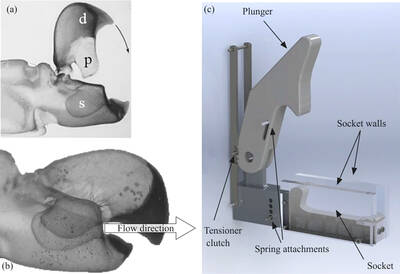
Few sea creatures of their size have as much destructive power as pistol shrimp. These small animals, usually measuring around four centimeters long, produce shock waves that can stun or even kill their prey. The attack begins when the shrimp opens its specialized claw, allowing water to fill a chamber inside. Then the claw closes rapidly. A bump on the claw strikes the chamber, forcing the trapped water out through a narrow opening at a high speed of about 25 meters per second. The rapid movement forms a bubble in the water that collapses almost instantly under the pressure of the


 RSS
RSS