


Huang Luan-ya, a student from Pingtung Girls’ High School who comes from a single-parent family, has been able to further her education by relying on a scholarship and other means of financial assistance. Although Huang has been unable to take after-school lessons due to her family’s precarious financial situation, she was nevertheless able to maintain sixth place in her school’s mathematics class for gifted students. Huang even used her time outside of classes to work as a volunteer. She received a recommendation from her school to participate in the selection process for National Taiwan University (NTU) and was admitted into her first choice: to study at NTU’s Department of Psychology.
In her second year of high school, Huang’s parents divorced. Huang and her younger brother lived with her father and grandmother, while Huang’s father took on extra jobs to maintain the family’s livelihood. Under these straitened circumstances, Huang set her sights high. After graduating from junior high school, she passed the entrance exam for Pingtung Girls’ High School. Every day, Huang would take the bus from Donggang Township to Pingtung City to go to school. She even actively participated in after-school clubs, took the initiative to organize a tuition summer camp for elementary students from the countryside and volunteered at a family support center.
Huang says she wishes to study psychology at university because during her second year at junior high school, when her family situation was unsettled, aside from the care she received from the social affairs bureau, her school tutor sought her out and talked with her every day for a whole month. This gave her a great deal of emotional support, says Huang, so she hopes to be able to develop into a counseling psychologist and occupational therapist, in order to be able to help others like herself.
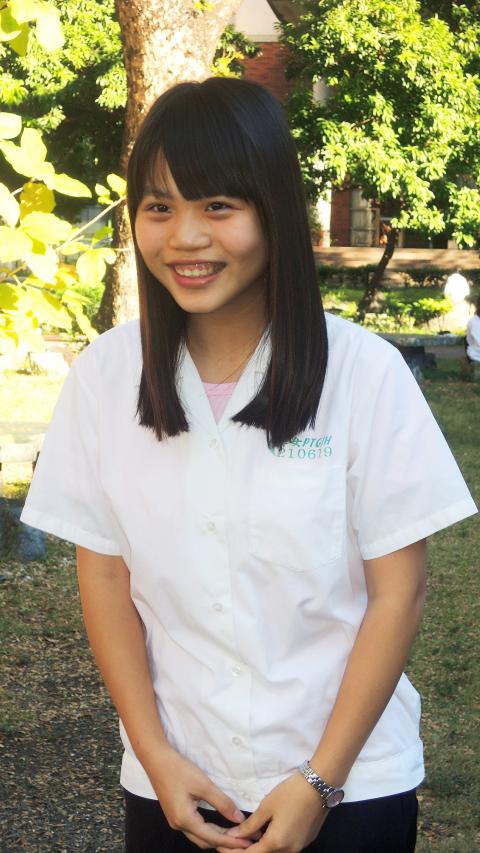
Photo: Luo Hsin-chen, Liberty Times
照片:自由時報記者羅欣貞
(Liberty Times, translated by Edward Jones)
來自單親家庭的屏東女中學生黃欒雅,靠著獎學金等補助求學,雖因經濟弱勢無法補習,卻能在數理資優班保持前六名,更利用課餘時當志工,獲學校推薦參加台灣大學希望入學甄選,錄取第一志願心理學系。
黃欒雅在國二那年父母離異,她與弟弟跟著父親、阿嬤生活,父親打零工維持家計,在不寬裕的環境中,她力爭上游,國中畢業考取屏東女中,每天從東港通車到屏市上學,還積極參加社團,主動為偏鄉小學舉辦課輔營隊,並到家扶中心當志工。
心理學系是黃欒雅的第一志願,她說,國二那年,因家裡狀況情緒不穩,除了有社會處社工關心,學校輔導老師也天天找她晤談,持續一個多月,給她很大的心理支持,所以希望自己以後,也能朝著心理諮商師、職能治療師發展,有能力幫助和自己一樣的人。
(自由時報記者羅欣貞)


A: Isn’t the 2026 Coachella Valley Music and Arts Festival — a massive music event held every April — about to open in California? B: Yeah the festival is set to take place over two weekends, from April 10 to 12 and 17 to 19, US time. A: I heard this year’s main stage headliners include Sabrina Carpenter, Justin Bieber, Karol G and EDM DJ Anyma. B: The K-pop army is also making an appearance, with legendary group BigBang, SHINee member Taemin and girl group Katseye debuting for the first time. A: Isn’t Coachella also live-streamed on its YouTube

A: Several Japanese and South Korean acts, such as BigBang, are participating in this year’s Coachella Music Festival. Have any Mando-pop singers ever performed at Coachella? B: Yup, K-pop group GOT7’s Hong Kong member Jackson Wang, and Taiwanese band Sunset Rollercoaster, which primarily performs in English, attended the festival before. A: It’s a pity that we didn’t fly to Coachella. But in fact, Taipei has also gradually become an Asian music hub in recent years. B: That’s true. K-pop sensation Twice just held three concerts at the Taipei Dome, followed by Hong Kong singer G.E.M., who is going

Concertgoers know the rush all too well — the moment the first notes play, your heart races, and nothing else seems to matter. For many, the excitement doesn’t end when the lights come back on. Some fans try to relive the performance by listening to the same songs for days afterward. __1__ A few days after an amazing show, they begin to feel unexpectedly low. Psychologists have coined a term for this phenomenon: “post-concert depression,” or “PCD.” PCD is primarily related to hormone levels. When you’re at a concert, the excitement causes your brain to release feel-good chemicals like
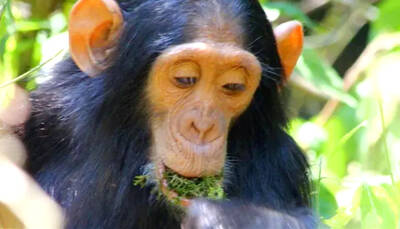
A new study suggests that chimpanzees can weigh evidence and make rational judgments. In the experiment, researchers placed two boxes in front of the chimpanzees. One box was set up to give strong evidence, such as letting the chimpanzees actually see food inside. The other was designed to provide weak evidence, like producing a rattling sound when it was shaken. The chimps consistently chose the box with strong evidence, even when the weaker clue appeared first. This indicated that they were not fooled by the order of presentation. In another trial where no strong evidence was available, the chimps


 RSS
RSS