


Hsiao Jung-hsin, warden of Jhangtan Village at Chiayi County’s Dongshih Township, captured a humongous wild male crab, which weighed in at nearly 3kg, on Oct. 6. Its body could almost fill an entire washbasin. When its claws were folded across the chest, they were wider than a beer bottle 29cm tall. Its legs were as thick as a grown man’s forearms. When the claws were fully extended, they were nearly 60cm fronm claw to claw. “I have never seen anything like this in four decades!” Hsiao exclaimed. He could not bear to eat it and planned to keep it as a pet.
Hsiao said that when he was eight or nine years old he saw grown-ups catch a huge male crab that weighed 3.6kg, and that he had never seen anything this big in the more than 40 years since then. On the afternoon of Oct. 6 when he was out fishing in the waters outside Dongshih, he could feel the weight of his catch in the fishing net. He pulled it up and, to his surprise, he saw an enormous male crab. After taking it home and weighing it, he found that it weighed nearly 3kg.
“It is indeed a huge beast!” said Yang Kuo-pin, whose family has farmed crabs for three generations. An average male crab can grow by 0.6kg in one year; if they mate more than three times, they will suffer from complete exhaustion and die. If a male crab grows to 3kg in weight, it probably has been living in the cavitys between tetrapods or in a deep oceanic trench, does not have much opportunity for mating and has escaped being caught, and therefore survived. For a male crab to mate with a female without a hitch, their physical proportions must match to a certain degree. A male crab that weighs nearly 3kg can have a hard time finding a virgin crab that weighs 1.8kg for mating.
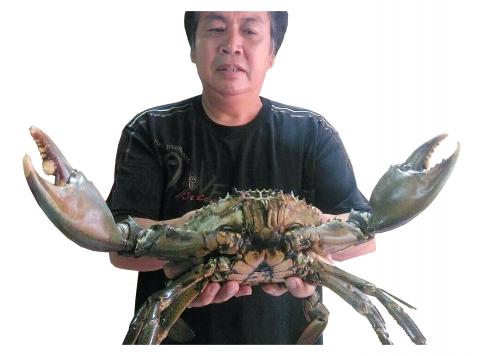
Photo: Wu Shih-tsung, Taipei Times
照片:自由時報記者吳世聰攝
The huge male crab that Hsiao caught had a carapace that exceeded 20cm in width and was incredibly active. He dared not move the crab around with excessive force for fear of breaking its claws. Hsiao planned to raise it to see how big it can ultimately be.
(Liberty Times, translated by Ethan Zhan)
嘉義縣東石鄉掌潭村長蕭榮馨,十月六日捕獲一隻重約五斤的巨無霸野生大沙公,其軀體幾乎擠滿臉盆,雙螯抱胸時的橫寬比大啤酒瓶(二十九公分)還長,螯足粗似成人上肢前臂,雙螯全展之間的長度估近六十公分,直呼「四十多年來首見」。他捨不得煮食下肚,打算當寵物飼養。
蕭榮馨說,八、九歲時曾看到長輩捉到六斤的大沙公,此後四十多年來,未曾再看過這麼大隻的。他十月六日下午在東石外海捕撈漁獲,感到魚網很沈重,拉起驚見有大沙公,帶回家秤重約五斤。
「確實是超大怪物。」三代養殖螃蟹的楊國濱說,一般沙公一年可長重一斤;若交配三次以上,就會精力耗盡死亡。能長到五斤左右,研判是生長在消波塊的洞穴內或深海溝,且很少有交配的機會,又逃過捉捕而存活。沙公與處女蟳要順利交配,須有一定的體型比例;近五斤的大沙公難覓三斤重的大處女蟳相匹配。
蕭某捉到的巨無霸大沙公,背甲寬二十多公分,活動力十足,他不敢過於用力搬動,深怕巨螯斷落,打算飼養看牠到底能長到多大。
〔自由時報記者吳世聰/東石報導〕
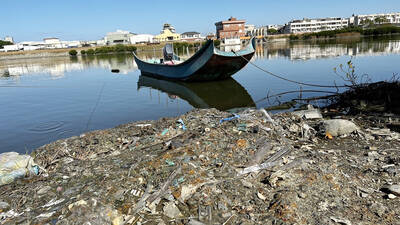
Many consumers are guilty of filling drawers or closets with old laptops, cellphones, fitness trackers and other electronic devices once they are no longer needed. It’s hard to know where to recycle such items, or it seems costly and inconvenient to do so. The world generates millions of tons of electronic waste — also called e-waste — each year. According to the UN’s most recent estimate, people worldwide produced 62 million metric tons of e-waste in 2022, and only about 22 percent of it was properly recycled. The US’ Environmental Protection Agency estimates that less than a quarter of e-waste is
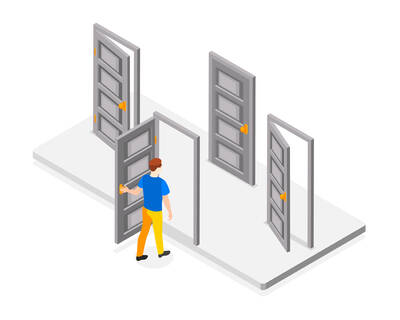
You’re sitting in class when a classmate asks to borrow a pencil. It seems like a small favor, so you agree without hesitation. The following week, the same classmate asks to share your notes. Later, they request help with a group project. You agree each time — after all, you helped out the first time — but before you know it, it has become automatic. This scenario demonstrates the “foot-in-the-door technique,” a psychological concept that shows how agreeing to small, acceptable demands makes it easier to accept larger ones later on. The name for this strategy comes from door-to-door

A: The four-day Tomb Sweeping Day long weekend begins Friday and will run until Monday. Are you going to sweep your ancestors’ tombs? B: I did in advance last weekend, so I can go to Kaohsiung to see the musical “The Phantom of the Opera.” A: Wow, is “Phantom” touring Taiwan again? It debuted in 1986, so this year marks the 40th anniversary of the show. B: And it’s not just touring Kaohsiung starting March 31, but also Taipei starting April 21 and Taichung starting May 26. A: “Phantom” is one of the world’s Four Major Musicals. I’ve seen all of them, except “Les

Dos & Don’ts — 想想看,這句話英語該怎麼說? 1. 我們很早到達電影院。 ˇ We arrived at the theater very early. χ We arrived the theater very early. 註︰arrive 為不及物動詞,後面如果有受詞要用 at 或 in。例如:They arrived in Taipei yesterday.。一般大地方,如國家、省、大城市等前面用 in,凡小地方城鎮、學校等則用 at。 2. 開車半小時以後,我們到達了海灘。 ˇ After half an hour’s drive, we got to the beach. χ After half an hour’s drive, we got the beach. 註︰come, go, get(來、去、到達)某地時,在表示地點的名詞前面應該用 to,如 go to school, go to Taipei, come to Shanghai 等。如果這些動詞後面所跟的是 here, there, home 等副詞,則不用 to。 3. 明天我會回辦公室。 ˇ I will be back in the office tomorrow. χ I will be back to office tomorrow. 註︰to be back 一語裡的 back 是副詞,不是介詞,所以後面要用 at (the market) 或 in (the office)。 假如假期結束,要回學校上課了則可說: ? Kids will be back


 RSS
RSS