


The Film Zone Pro Site — a comedy based around traditional Taiwanese outdoor banquet, or bandoh, culture — has become a box-office hit. One of its main scenes was shot at the Matsu Temple and on Jhongsiao Street, where the temple is located, in Greater Tainan’s West Central District, which has suddenly become a hot tourist attraction. Since the film’s showing in mid-August, thousands of people have visited the street. Some people have seen the investment potential of the properties on the street, and three old houses have already changed hands, while a good number of people are eager to rent commercial properties there to start a business.
Chang Lin Hai-bao, the real-life owner of the house at which the film’s eatery named “Ai Feng” is located, said that since the film’s showing in theaters nationwide, curious tourists have been crowding outside, wanting to peep inside her house, and she does invite tourists inside to look around. During weekends and holidays, the place is bustling and chock-a-block with people both inside and outside the house.
Many tourists have suggested that she run a shop in the house, selling nostalgic products such as marble soda, said Chang Lin. However, she is already 81, and did not want to take on so much work. There were also people inquiring about renting her house, offering NT$20,000 a month, but she thought it would be too much of a hassle and declined.

Photo courtesy of Activator Marketing Company
照片由牽猴子整合行銷提供
Wang Chen-i, who worked on Zone Pro Site, feels very much at home in Greater Tainan, as one of his parents is from Tainan. While prospecting scenes for the film, he fell in love with Jhongsiao Street’s simplicity. He bought the house where the film’s “Beef Soup” restaurant was for several million, and plans to open a Japanese-style izakaya pub there.
Greater Tainan is an interesting, unpretentious city with a host of historical sites scattered around, forming the backdrop to life there, said Wang, who is also obsessed with the city’s unique lanes and alleys. Although he wants to open the izakaya there, he also hopes to preserve the original nature of Jhongsiao Street, and so will not put any signs up outside.
According to Chang Lin, Zone Pro Site has brought a continuous flow of people to Jhongsiao Street and reinvigorated the real-estate market along the street. Aside from the three old houses that have been sold, prospective buyers are currently in the midst of negotiating the sales of more houses.
(Liberty Times, Translated by Lin Ya-ti)
以台灣辦桌文化為核心的喜劇電影《總舖師》熱賣,重要場景之一的台南市中西區媽祖樓及所在的忠孝街,突然間都成了熱門景點。附近民眾估計,八月中旬影片上映迄今,來造訪忠孝街的人潮至少一、二千人次;也有人看到忠孝街未來的發展潛力,已知三間老房子換手,更不乏欲租屋做生意者。
電影中「愛鳳小吃店」的真實屋主張林海寶說,電影在全國上映後,來參觀的人很多,都會在門口好奇探頭張望,自己也會請他們進屋看看,假日時屋內、屋外擠滿人很熱鬧。
張林海寶透露,很多遊客建議她乾脆將屋子用來做生意,賣古早味的彈珠汽水,可是自己已經八十一歲了,才不想這麼忙;也有人來問租屋,開出每月二萬元的價格,想想太麻煩,還是回絕。
《總舖師》劇組成員王振一本身是半個台南人,《總舖師》勘景時他就愛上忠孝街的純樸,花了數百萬元買下電影中「牛肉湯」的房子,拍電影的空檔要經營居酒屋。
王振一表示,台南是個很有趣、又純樸的地方,古蹟就在城市裡、在生活周遭,台南的小巷弄也別有特色,都讓人著迷;雖然要開居酒屋,但也希望忠孝街可保持原有純樸,日後開店將不會刻意掛招牌。
張林海寶指出,《總舖師》重新為忠孝街帶來人氣,還有房子的買氣,除了三棟房子已出售外,還有一些老屋接洽中。
(自由時報記者孟慶慈)
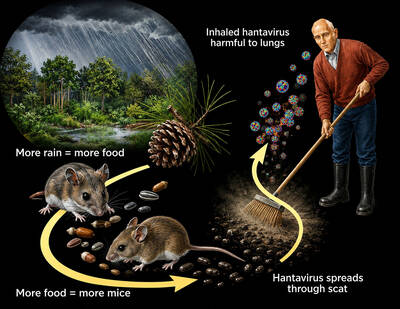
An outbreak aboard a cruise ship of a rare rodent-borne illness called hantavirus has left three passengers dead and sickened others, but global health officials say the risk to the general public remains low because the germ does not easily spread between people. “This is not the next COVID, but it is a serious infectious disease,” said Maria Van Kerkhove, director of epidemic and pandemic preparedness at the World Health Organization (WHO). “Most people will never be exposed to this.” The virus usually spreads when people inhale contaminated residue of rodent droppings. Hantaviruses have been around for centuries and are thought to

Have you ever wondered how people navigate the world when they can’t see a map? For individuals with visual impairments, conventional maps are nearly impossible to use. This is where tactile maps come in — essential tools that allow people to “see” the world through touch. A tactile map is specially designed with raised lines, textures, and symbols to represent geographical features such as roads, rivers, and buildings. Users explore it with their fingertips. However, these maps are not exclusively for people with visual disabilities. They serve as valuable multisensory learning tools that enhance spatial understanding for everyone, making

A growing green movement allows hotel guests to fund tree planting projects simply by opting out of daily room cleans. This approach turns an ordinary hotel stay into a direct contribution to nature. Founded in the Netherlands, the nonprofit “Hotels for Trees” operates on the principle that one skipped cleaning equals one new tree. It has planted more than 750,000 trees since 2021. Similarly, Sarnia Hotels in Guernsey donates £2 per refused clean. Since 2024, over 3,300 services have been cancelled, raising sufficient money to plant 1,100 native trees and hedgerows. Simplicity has been central to this success.

1. 他病了三天。 ˇ He has been sick for three days. χ He has been sick since three days. 註︰這裡現在完成時態 have / has been 表示從過去某一時日到現在的一段時間存在的行為或狀態,與它連用的時間副詞應為 「for +若干時」,如 for a year, for three hours 等,意思是歷時多少。 2. 他自從星期三以來都很忙。 ˇ He has been busy since Wednesday. χ He has been busy from Wednesday. 註︰「自從……以來」,該用 since。說從某一天(某一時刻)到某一天(某一時刻)才用 from,如 from Monday till Friday。 3. 房間角落裡散放著一些零星物件。 ˇ There were some odds and ends lying in the corner of the room. χ There were some odds and ends lying at the corner of the room. 註︰「在房間角落裡」該用介詞 in。例如: He stood in the corner. There is a lamp in the corner of the room. at the corner 指房子外部的拐角。例如: A little boy


 RSS
RSS