


The US fast-food chain Subway got caught up in an online furor after an Australian teenager measured his “footlong” Subway sandwich and found that it was an inch (2.54cm) short.
Matt Corby’s photo of the sandwich next to a tape measure attracted hundreds of thousands of likes and hundreds more comments when he posted it on Subway’s Facebook fanpage.
In response, Subway Australia said the “Subway Footlong” was a registered trademark “as a descriptive name for the sub sold in Subway restaurants and not intended to be a measurement of length.”
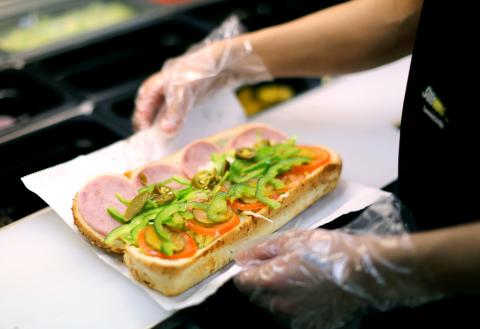
Photo: Bloomberg
照片:彭博社
Angry sandwich fans quickly took to the Internet to knock the company’s response.
“I refuse to eat at restaurants where I need to bring a measuring tape to choose my bread,” said one netizen, while another made the case for the necessity of that extra inch, “An inch or two can mean a big difference ... if the Titanic had missed the iceberg by an inch or two it wouldn’t have sunk.”
(Reuters)
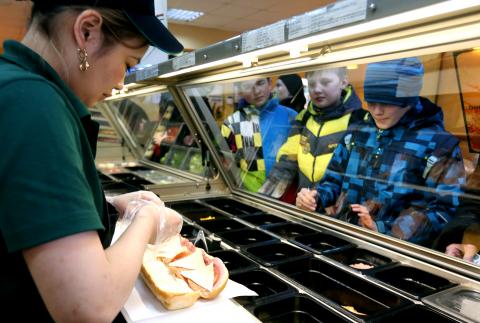
Photo: Bloomberg
照片:彭博社
在一名澳洲青少年測量他的「呎長」賽百味三明治、並發現少了一吋(二點五四公分)長後,美國速食連鎖店賽百味捲入網路怒潮。
麥特‧寇比的三明治旁放著捲尺的照片,吸引成千上萬人按讚;當他把這張照片貼到賽百味的臉書粉絲專頁後,還有更多人回覆。
澳洲賽百味對此回應說,「賽百味呎長」只是一個登記商標,用來形容在賽百味餐廳所販賣的潛艇堡三明治,而非意指(三明治的)長度尺寸。
憤怒的三明治粉絲馬上上網反擊該公司的回應。
「我拒絕在我得自備捲尺來選麵包的餐廳吃東西,」一位網友說;而另一位則提出(麵包)必須多一吋的充分理由:「一吋或兩吋的差別可大了…要是差個一或兩吋,鐵達尼號就能避開冰山,不會沉沒了。」
(路透/翻譯:張沛元)

In 2023, an 80-year-old woman in Taipei suffocated her paralyzed son after over five decades of caring for him. Turning herself in immediately, she confessed that worsening health and anxiety about who would care for him after her death had driven her to act. The court, acknowledging her difficult situation, sentenced her to two-and-a-half years in prison while recommending a presidential pardon. This rare judicial recommendation drew a complicated social response. Supporters argue that the mother’s half-century of caregiving renders her deserving of compassion instead of incarceration, believing that allowing her to live her final years in dignity and

★ Bilingual Story is a fictionalized account. 雙語故事部分內容純屬虛構。 The mango looked perfect. It sat on the fruit stand like a small sunset, red on one side and gold on the other. “I’ll take this one,” said Daniel. The fruit seller shook her head. “Not that one.” Daniel was surprised. “Why not? It looks beautiful.” “Yes,” she said, “but beautiful is not always ready.” She picked up another mango and held it near his nose. “First, smell here.” Daniel smelled the top of the mango. It was sweet and warm. “Good mangoes have a smell,” she said. “Next, feel the weight.”
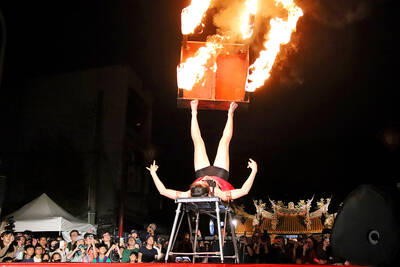
A: Over 130,000 college graduates are about to enter the workforce upon graduation. B: According to a survey, the top 10 most desired careers among Taiwanese are: independent content creator, civil servant, information engineer, financial professional, medical worker, content planner, flight attendant, news anchor, designer and fitness trainer. A: What are the “dream jobs” for young Gen Zers? B: The top three for men are YouTuber, pro gamer and engineer. For women, they are writer, social media editor and YouTuber. A: Every profession has its champion. Just look at Taiwanese fire dancer Yang Li-wei — who was on fire

1. 他非常討厭偽君子。 ˇ He has a deep hatred for hypocrites. χ He has a deep hatred to hypocrites. 註︰表示「對某人懷著愛、恨」等, 常用 have a love for/of, have a hatred for/of。 例如: We have a love for/of science. The working people have a hatred for/of all forms of exploitation. 2. 問題的答案其實不難找。 ˇ The answer to this question is not difficult to find. χ The answer of this question is not difficult to find. 註︰中文中的「的」在英語中不一定都用 of 來表示,有時須用 to。其他的例子如下: 我把房間的鑰匙弄丟了。 I lost the key to the room. 中間矗立著烈士紀念碑。 In the center stands the monument to the martyrs. 這部電影的續集你看過沒有? Have you seen the sequel to the movie? 3. 比起那家餐廳,他更喜歡這家。 ˇ He prefers this restaurant to that one. ˇ He likes


 RSS
RSS