


As temperatures drop, many people are now enjoying hot footbaths to help them sleep better. Doctors of Chinese medicine suggest taking footbaths with Chinese medicine to promote blood circulation, but they remind people with high blood pressure, diabetes or nerve damage to be careful not to scald or inflame their skin by bathing too long.
Juan Ying-hsu, a doctor of Chinese medicine at Buddhist Tzu Chi General Hospital’s Dalin Branch in Chiayi County, says that the feet are sometimes considered to be a “second heart.” He also says that taking a warm footbath can help circulate blood in the body, improve the endocrine system, enhance organ function and decrease the risk of high blood pressure and stroke.
Juan says that it takes a long time for blood to get back to the heart from our feet, which, as anatomical extremities, are farthest from the heart. It is also fairly difficult to retain heat in the feet because they have only a relatively thin layer of fat around them, so the temperature of the extremities is usually lower than the rest of the body. When the weather turns cold, our hands and feet are typically colder than the rest of the body due to energy and blood stagnation, and muscles getting sore from the cold, as well as poor circulation, he says.
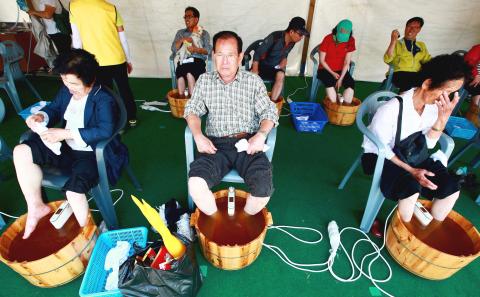
Photo: EPA
照片:歐新社
Juan suggests that when taking a footbath you should sit in a comfortable chair, use a bucket that goes above your lower leg, use water between 30°C and 40°C, keep your feet flat at the bottom of the bucket, and allow the heat of the water to relax the joints in your feet and lower leg. Doing this will increase blood circulation back to the heart and improve blood flow to organs such as the heart and brain, and get rid of the body’s stagnant energy and waste, he says. Juan also suggests that 30 minutes is the optimal amount of time to spend taking a footbath.
(Liberty Times, Translated by Kyle Jeffcoat)
氣溫降低,許多人喜歡在睡前用熱水泡腳助眠。中醫師建議可使用中藥材幫助血液循環,但也提醒,有高血壓、糖尿病等疾病者要小心,以免因末梢神經遲鈍泡太久,造成燙傷或皮膚潰爛。
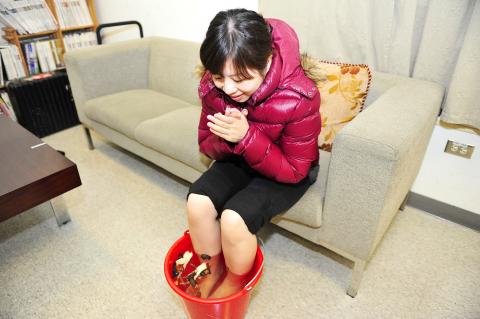
Photo: Lin Yi-chang, Liberty Times
照片:自由時報記者林宜樟
大林慈濟醫院中醫科醫師阮膺旭說,腳被稱作人體的第二心臟,用溫水泡腳時能促進人體血液循環、調理內分泌系統、增強人體器官機能,並可減少血壓升高和中風機率。
阮膺旭說,由於腳位於人體末端,距離心臟較遠,使得血液回流較慢,而且腳的表面脂肪層很薄,保溫力較差,所以指尖的溫度比身體其他地方低。天氣寒冷時,人體容易出現氣血瘀滯、寒性肌肉酸痛、循環不良所導致的手腳冰冷。
阮膺旭建議,泡腳時選擇舒適的椅子,桶子高過小腿,水溫約三十至四十度,足底完全平貼在水桶,讓水溫通過熱力來放鬆腳上及小腿處的經絡,加快血液回流,改善心腦等器官供血,排出體內的寒氣和廢物,時間以三十分鐘最佳。
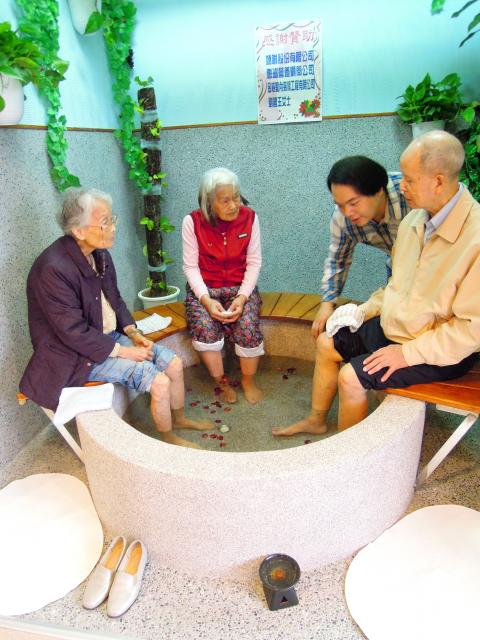
Photo: Huang Pang-ping, Liberty Times
照片:自由時報記者黃邦平
(自由時報記者林宜樟)
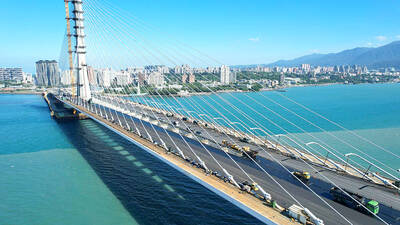
A: The Danjiang Bridge in New Taipei City is to open on May 12, and the MRT Sanying Line (Light Blue Line) will also open in June. Isn’t that great? B: Is that the bridge connecting the city’s Tamsui and Bali Districts? What’s so special about this new landmark spanning the Tamsui River? A: The Danjiang Bridge will become the world’s longest-span single-mast asymmetric cable-stayed bridge — with a total river-crossing section of 920 meters and main span of 450 meters. B: The news says there are sidewalks and bike lanes on both sides. Watching the sunset from the
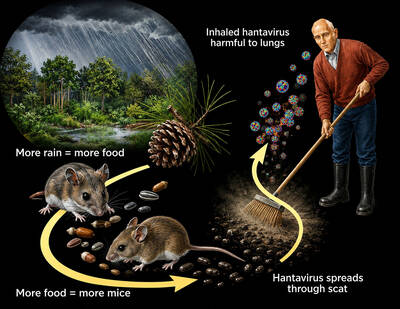
An outbreak aboard a cruise ship of a rare rodent-borne illness called hantavirus has left three passengers dead and sickened others, but global health officials say the risk to the general public remains low because the germ does not easily spread between people. “This is not the next COVID, but it is a serious infectious disease,” said Maria Van Kerkhove, director of epidemic and pandemic preparedness at the World Health Organization (WHO). “Most people will never be exposed to this.” The virus usually spreads when people inhale contaminated residue of rodent droppings. Hantaviruses have been around for centuries and are thought to
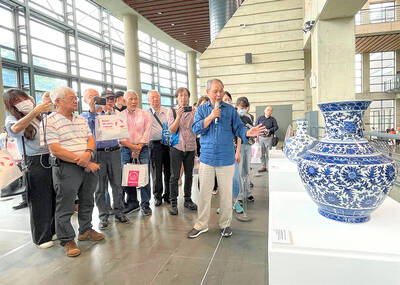
A: Apart from the Danjiang Bridge in New Taipei City, the MRT Sanying Line (Light Blue Line) will open in June. B: Is that the new line leading to Yingge District, the ceramic town? A: Yup, the line will connect the Yingge Ceramics Museum and the Old Streets in Sanxia and Yingge Districts. B: The eastward extension of the Tamsui-Xinyi Line (Red Line) that goes through Taipei’s Xinyi District will also open in June. A: Plus, Taoyuan’s Aerotropolis Line (Green Line) will partially open by the end of the year. In the future, it will connect the

1. 他病了三天。 ˇ He has been sick for three days. χ He has been sick since three days. 註︰這裡現在完成時態 have / has been 表示從過去某一時日到現在的一段時間存在的行為或狀態,與它連用的時間副詞應為 「for +若干時」,如 for a year, for three hours 等,意思是歷時多少。 2. 他自從星期三以來都很忙。 ˇ He has been busy since Wednesday. χ He has been busy from Wednesday. 註︰「自從……以來」,該用 since。說從某一天(某一時刻)到某一天(某一時刻)才用 from,如 from Monday till Friday。 3. 房間角落裡散放著一些零星物件。 ˇ There were some odds and ends lying in the corner of the room. χ There were some odds and ends lying at the corner of the room. 註︰「在房間角落裡」該用介詞 in。例如: He stood in the corner. There is a lamp in the corner of the room. at the corner 指房子外部的拐角。例如: A little boy


 RSS
RSS