


Malai-yitzu Temalalate is a 20-year-old Paiwan woman. Her transliterated name in Chinese includes nine Chinese characters and a dot separating the two parts of her name. It had to be edited in a special way so that all the characters could fit in the space for names on the ID card. She said that because her name is so special, teachers often pay more attention to her during roll call. Many of her classmates want to get to know her because of her extremely long name, allowing her to make many new friends.
Temalalate studies at Tzu Chi College of Technology in Hualien. She is an only child, and both of her parents are also members of the Paiwan ethnolinguistic group. Her ancestors were chieftains, so she has always received a lot of attention since she was very little. Her father gave her the beautiful Paiwan name of Malai-yitzu, which refers to the beauty of a woman that even the blooming flowers and full moon cannot match. Temalalate identifies her as a member of a specific tribe.
She said she used to go by her Han Chinese name, Lee Nien-tzu, when she was a little girl, and that her elementary school classmates still call her by that name. She started using this significantly longer transliterated name when she started junior high school. At first she was not used to being called by the name at all, and it always takes a long time to write her entire name when she has to fill out forms or take exams. Since her classmates do not know what to call her, and in order to make things simpler when introducing herself, she tells them to call her Malai, which is a shorter version of her given name.

Photo: Lee Li-fa, Taipei Times
照片:自由時報記者李立法
Malai said there are about a dozen classmates in her school with an Aboriginal background, but she is the only one who uses an ancestral tribal name. She says that because of the name teachers always enjoy calling her name during roll call. Although she feels the name is an inconvenience when she gets a chop engraved or fills out applications, she is happy that companies tend to hire her because they think her name is very attractive.
(LIBERTY TIMES, TRANSLATED BY TAIJING WU)
「瑪萊依慈.得馬拉拉得」是位二十歲排灣族女性。音譯成中文的姓名包含間隔號總共十個字,身分證姓名欄得特別編排打印。她說,因為姓名特別,上課時常被老師點名,也因為名字很長,很多人都想認識她,讓她交到不少朋友。
就讀花蓮慈濟技術學院的瑪萊依慈.得馬拉拉得,是家中獨生女,父母親是排灣族原住民。來自頭目家族的她從小備受疼愛,父親幫她取了一個美麗的排灣族名字「瑪萊依慈」,意思是擁有閉月羞花之貌,「得馬拉拉得」則是氏族名。
她說,小時候有過「李念慈」的漢名,國小同學現在還叫她「念慈」,上了國中才使用這個較長的名字。剛開始很不習慣,每次填寫資料及考試時名字都要寫很久,同學們也不知道要怎麼稱呼她,為求方便好記,自我介紹時,她都請大家簡稱她為「瑪萊」。
瑪萊說,全班四十多人中具原住民血統的有十來個,只有她使用原族傳統名,老師點名最喜歡找她,雖然刻印章或申辦證件常感不便,但她在校外應徵打工時,卻有僱主認為她的名字具吸引力而錄取她。
(自由時報記者李立法)

A: Wow, Les Miserables Staged Concert Spectacular is visiting Taiwan for the first time. B: Isn’t Les Miserables often praised as one of the world’s four greatest musicals? A: Yup. Its concert is touring Taipei from tonight to July 6, and Kaohsiung between July 10 and 27. B: The English version of the French musical, based on writer Victor Hugo’s masterpiece, has been a huge success throughout the four decades since its debut in 1985. A: The musical has never toured Taiwan, but going to the concert sounds like fun, too. A: 哇,音樂劇《悲慘世界》紀念版音樂會首度來台巡演! B: 《悲慘世界》……它不是常被譽為全球四大名劇之一嗎? A: 對啊音樂會將從今晚到7月6日在台北演出,從7月10日到27日在高雄演出。 B: 這部法文音樂劇的英文版,改編自維克多雨果的同名小說,自1985年首演以來,在過去40年造成轟動。 A:

Some 400 kilometers above the Earth’s surface, the “International Space Station” (ISS) operates as both a home and office for astronauts living and working in space. Astronauts typically stay aboard the station for up to six months and engage in groundbreaking research projects in various fields, such as biology, physics and astronomy. These projects help scientists understand life in space and contribute to advancements that benefit people on Earth. The ISS has experienced significant growth since construction began in 1998. The station’s design and assembly represent an extraordinary international collaboration among Canada, the European Union, Japan, Russia and the United States.
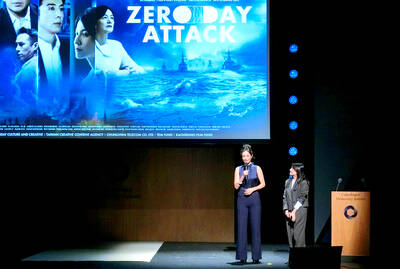
A: While hit musical Les Miserables’ concert tour kicks off, South Korean drama Squid Game 3 will be back at the end of this month. B: New Taiwanese dramas The World Between Us 2 and Zero Day Attack have also gained attention. A: I heard that Zero Day Attack is a story about the Chinese Communist Party’s People’s Liberation Army trying to attack Taiwan by force. B: The drama’s subject is so sensitive that it has sparked a lot of controversy in society. A: I just hope that such a horrible story will never happen in

Continued from yesterday(延續自昨日) https://www.taipeitimes.com/News/lang Living on the ISS is challenging due to the absence of gravity. Astronauts must strap themselves into sleeping bags to prevent floating away while they sleep. They also spend about two hours exercising daily using specialized equipment. Despite this, microgravity can cause muscle loss, bone density reduction and cardiovascular changes. As a result, astronauts require extensive rehabilitation upon their return to Earth. In spite of these difficulties, astronauts often describe their experience on the ISS as life-changing. One of the most awe-inspiring aspects of living aboard the space station is the unparalleled view of Earth. Traveling at


 RSS
RSS