


Culture officials in Rome are mulling a ban on “living statues,” arguing that dressing up in costume and standing on the street to solicit spare change has no artistic merit, media reported last Friday.
“Living statues demonstrate no artistic activity, to the extent that they can’t be compared to mimes, and they amount to a veritable racket,” said Federico Mollicone, deputy culture chief in Rome’s mayorship.
The proposed ban is part of a broader bill from Mollicone’s office, which aims to regulate activity on Rome’s streets, reports said.
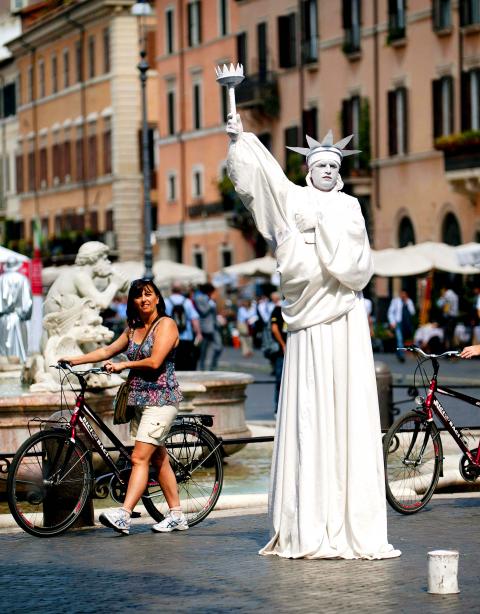
Photo: AFP
照片:法新社
Under the proposal, street musicians could have their instruments or speakers confiscated, and “deafening” music would be banned after 10pm, compared to the current curfew of 11pm.
The measure is to be debated by Rome’s municipal council within two weeks, and must pass a vote before coming into force.
(AFP)
媒體上週五報導指出,羅馬市文化局官員正仔細考慮是否對「活雕像」祭出禁令。爭議點落在政府認為一身戲服裝扮、站立街頭,並請求施捨零錢的「活雕像」,缺乏藝術價值。
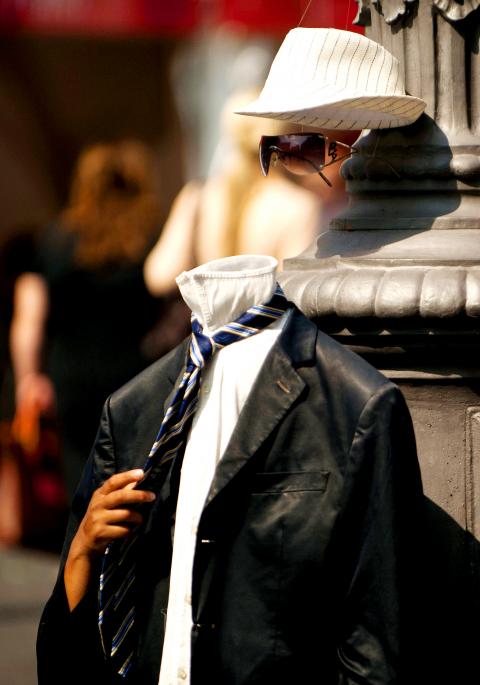
Photo: AFP
照片:法新社
羅馬市政府文化局副局長費德里科‧莫利科內表示:「活雕像不算是啞劇,反倒只是個不折不扣的敲詐行為,所以稱不上是藝術活動。」
報導指出,該禁令是莫利科內辦公室提出較大法案中的一部分,該辦公室致力為羅馬街頭活動制定規章。
該提案可能讓街頭音樂家,面臨樂器或揚聲器被沒收的命運,而「震耳欲聾」的音樂則擬訂提前到晚上十點後禁止,目前的宵禁時間則為晚上十一點後。
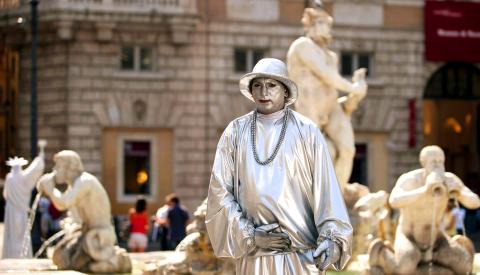
Photo: AFP
照片:法新社
羅馬市議會將在未來兩週內,針對該措施進行辯論,而該法案必須通過才能生效。
(法新社/翻譯:林亞蒂)

The debate surrounding Taipower’s recent corporate identity reboot has gone well beyond the design community. The controversy began after Taipower replaced the familiar “Taiwan Power Company” wording — widely regarded as the calligraphy of Yu You-ren (1879-1964), former Control Yuan president and master calligrapher — with a modern logotype by designer Aaron Nieh’s team, Aaron Nieh Workshop. Taipower said the change was not a wholesale replacement of old signage, but an “optimization of its identity system,” aimed at meeting the needs of digital media, electronic bills, apps, social media graphics and various small-format applications. Existing physical markings, such as building

Since 2005, the third Monday in January has come to be known as “Blue Monday.” In other words, that day is believed to be the most depressing day of the year. This concept seems logical at first. After all, Monday marks the start of the school or workweek after two days of rest and fun. Also, blue is a color that is often associated with sadness. Furthermore, in many parts of the world, January is a time when the weather is cold, rainy, and gloomy. But is there any scientific proof that this January day is truly sadder than any of

Continued from yesterday(延續自昨日) https://www.taipeitimes.com/News/lang For the most part, the idea of “Blue Monday” has been rejected as a myth. Some mental health experts also say there is a danger in labeling a certain day as the most depressing time of the entire year. Some argue that if people expect to feel sadder on the third Monday in January, this belief alone may increase their anxiety. One group that is worried about the negative effect of believing in Blue Monday is Samaritans. A mental health charity based in the UK, Samaritans is working to turn Blue Monday into “Brew Monday.” In this
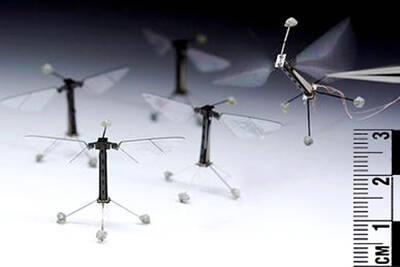
As bee populations around the world continue to decline at an alarming rate, scientists are developing an innovative solution: robotic bees. Recent advances at research institutions like Massachusetts Institute of Technology (MIT) in the US have produced tiny flying robots capable of performing pollination tasks similar to those of real bees. These tiny machines represent an impressive technological achievement. MIT’s latest models can hover in the air for over 1,000 seconds and perform complex movements, demonstrating the agility needed for successful pollination. The robots are designed to mimic the flight patterns of natural bees, offering potential support to agriculture


 RSS
RSS