


A cross-eyed opossum in Germany called Heidi, who is not yet even on public display, has become an Internet hit, winning more than 65,000 “friends” on the social networking website Facebook.
Heidi is thought to be two and a half years old, and was abandoned outside an animal shelter in North Carolina in the United States, together with her sister Naira. She has been in Leipzig Zoo in eastern Germany since May last year.
The two sisters and a third male opossum called Teddy arrived from a zoo in Denmark, and they will make their public debut on July 1, the German zoo says on a special Internet page set up for Heidi’s apparent legions of fans.
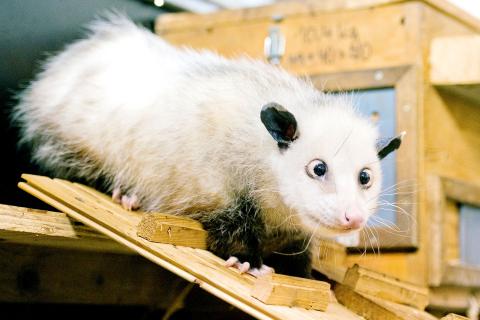
Photo: EPA 照片:歐新社
The zoo believes the marsupial’s eye problem may be to do with her diet before she was abandoned, or because she is overweight, leading to fat deposits behind her eyes. Otherwise she is completely normal and not in any pain.
The zoo is hoping to replicate the success of a polar bear called Knut in Berlin who, as a cub, became a global media star and a money-spinner in 2007, even featuring on the front page of Vanity Fair magazine.
“You can all visit me from July 1 ... but not all 65,000 at once,” reads a “message” from Heidi on her Facebook page.
(AFP)
德國有一隻名為海迪的鬥雞眼負鼠,尚未公開亮相,就造成網路轟動,在社群網站Facebook上已擁有六萬五千名「粉絲」的喜愛。
海迪約兩歲半,她與她姊妹奈拉一同被遺棄在美國北卡羅萊納州的一間動物收容所。她從去年五月開始就住在德國東部的萊比錫動物園。
德國動物園在專為海迪大批粉絲所設的網頁指出,這對姊妹與另外一隻叫泰迪的雄性負鼠一同從丹麥的動物園抵達德國,並將於七月一日公開亮相。
園方相信這種有袋動物的眼疾,可能是跟她在被遺棄前的飲食有關,也可能是因為她過重,造成脂肪囤積在她眼睛後方。除此以外,她完全正常且未有任何病痛。
園方正希望讓海迪成為繼柏林動物園明星北極熊克努特之後的另外一個成果。克努特在二零零七年不僅是國際媒體寵兒,而且還是搖錢樹,甚至登上《浮華世界》雜誌頭版。
海迪在她的Facebook上的一篇「留言」說,「你們都可以從七月一日開始來拜訪我...不過不要六萬五千人同時來喔。」
(法新社/翻譯:林亞蒂)
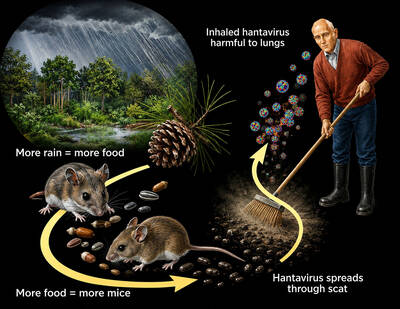
An outbreak aboard a cruise ship of a rare rodent-borne illness called hantavirus has left three passengers dead and sickened others, but global health officials say the risk to the general public remains low because the germ does not easily spread between people. “This is not the next COVID, but it is a serious infectious disease,” said Maria Van Kerkhove, director of epidemic and pandemic preparedness at the World Health Organization (WHO). “Most people will never be exposed to this.” The virus usually spreads when people inhale contaminated residue of rodent droppings. Hantaviruses have been around for centuries and are thought to
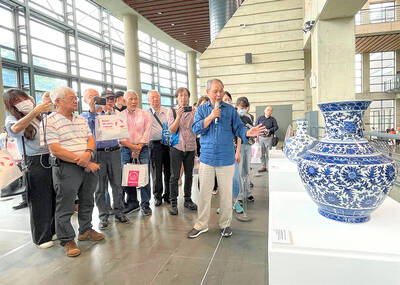
A: Apart from the Danjiang Bridge in New Taipei City, the MRT Sanying Line (Light Blue Line) will open in June. B: Is that the new line leading to Yingge District, the ceramic town? A: Yup, the line will connect the Yingge Ceramics Museum and the Old Streets in Sanxia and Yingge Districts. B: The eastward extension of the Tamsui-Xinyi Line (Red Line) that goes through Taipei’s Xinyi District will also open in June. A: Plus, Taoyuan’s Aerotropolis Line (Green Line) will partially open by the end of the year. In the future, it will connect the

1. 他病了三天。 ˇ He has been sick for three days. χ He has been sick since three days. 註︰這裡現在完成時態 have / has been 表示從過去某一時日到現在的一段時間存在的行為或狀態,與它連用的時間副詞應為 「for +若干時」,如 for a year, for three hours 等,意思是歷時多少。 2. 他自從星期三以來都很忙。 ˇ He has been busy since Wednesday. χ He has been busy from Wednesday. 註︰「自從……以來」,該用 since。說從某一天(某一時刻)到某一天(某一時刻)才用 from,如 from Monday till Friday。 3. 房間角落裡散放著一些零星物件。 ˇ There were some odds and ends lying in the corner of the room. χ There were some odds and ends lying at the corner of the room. 註︰「在房間角落裡」該用介詞 in。例如: He stood in the corner. There is a lamp in the corner of the room. at the corner 指房子外部的拐角。例如: A little boy

Have you ever wondered how people navigate the world when they can’t see a map? For individuals with visual impairments, conventional maps are nearly impossible to use. This is where tactile maps come in — essential tools that allow people to “see” the world through touch. A tactile map is specially designed with raised lines, textures, and symbols to represent geographical features such as roads, rivers, and buildings. Users explore it with their fingertips. However, these maps are not exclusively for people with visual disabilities. They serve as valuable multisensory learning tools that enhance spatial understanding for everyone, making


 RSS
RSS