


Certain gut bacteria may encourage obesity, according to a study that appears on Thursday in Nature, the weekly British science journal.
The intestine has two groups of bacteria — the Firmicutes and the Bacteroidetes — that help to break down food. They account for more than 90 percent of intestinal bacteria types.
Washington University researcher Jeffrey Gordon led a team that found the amount of Bacteroidetes is lower among obese people than among lean people.
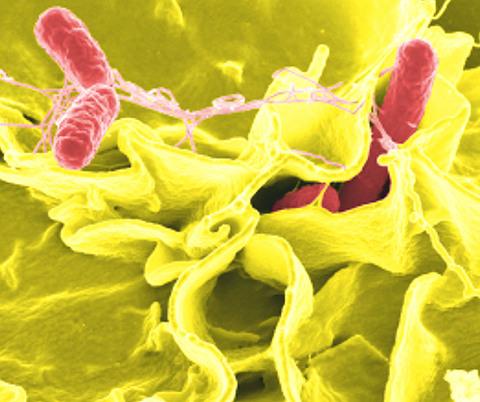
They did further experiments in mice, finding that the gut bacteria of obese mice not only had fewer Bacteroidetes than their skinny counterparts, but also was rich in genes that broke down hard-to-digest foods more easily.
Fewer calories remained in the feces of the obese mice than in those of the lean ones, which suggests the chubby rodents were able to extract more energy from their food thanks to their stomach bacteria.
In another test, 12 obese people went on a diet for a year, eating either food that was low in fat or low in carbohydrates, and their gut germs were monitored during this time.
Before the diet, the intestines of the obese group were higher in Firmicutes and lower in Bacteriodetes than the control group.
After the diet, the Firmicutes fell back and the Bacteriodetes increased.
The human intestine has around 100,000 billion bacteria.
The rise in obesity is blamed almost universally on a shift to high-fat, high-sugar diets and an inactive lifestyle over the past few decades.
But scientists are also interested in additional factors that could explain why the obesity crisis has emerged so quickly and why some individuals are more likely to gain weight than others. (AFP)
根據英國科學週刊《自然》週四的報導,某些腸細可能會引發肥胖。腸內有兩組有助於分解食物的菌叢︰F菌叢與B菌叢。腸內有九成以上的細菌是由它們組成。
華盛頓大學研究員傑夫瑞.高登領導的小組發現,胖子的B菌叢數比瘦子的少。
他們進一步以老鼠實驗發現,胖鼠的腸菌不只比瘦鼠少,也富含更易分解難消化食物的基因。
殘留在胖鼠排泄物的卡路里比留在瘦鼠的少,意指胖齧齒動物的胃菌可以幫牠們從食物吸取較多能量。
另一項實驗中,十二位過重者節食一整年,只吃低脂或低碳水化合物的食物,並觀察這段期間的腸菌。
節食之前,相較於體重節制者,過重者腸內的F菌叢較高,B菌叢也較低。
節食後,人體的F菌叢減少,B菌叢增加。人類腸內約有一百兆個細菌。
數十年以來,一般都把變胖歸咎於高脂高糖飲食的轉變,以及缺乏活力的生活方式。
不過科學家也對其他成因,如肥胖危機為何如此快速浮現,以及有些人為何較容易變胖,相當感興趣。
(法新社/翻譯:賴美君)

A: The Danjiang Bridge in New Taipei City is to open on May 12, and the MRT Sanying Line (Light Blue Line) will also open in June. Isn’t that great? B: Is that the bridge connecting the city’s Tamsui and Bali Districts? What’s so special about this new landmark spanning the Tamsui River? A: The Danjiang Bridge will become the world’s longest-span single-mast asymmetric cable-stayed bridge — with a total river-crossing section of 920 meters and main span of 450 meters. B: The news says there are sidewalks and bike lanes on both sides. Watching the sunset from the
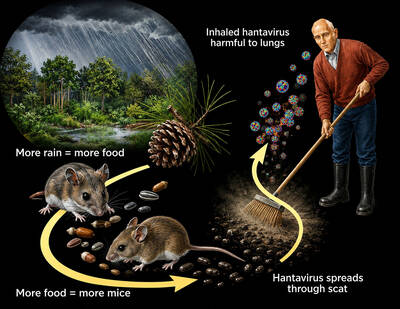
An outbreak aboard a cruise ship of a rare rodent-borne illness called hantavirus has left three passengers dead and sickened others, but global health officials say the risk to the general public remains low because the germ does not easily spread between people. “This is not the next COVID, but it is a serious infectious disease,” said Maria Van Kerkhove, director of epidemic and pandemic preparedness at the World Health Organization (WHO). “Most people will never be exposed to this.” The virus usually spreads when people inhale contaminated residue of rodent droppings. Hantaviruses have been around for centuries and are thought to
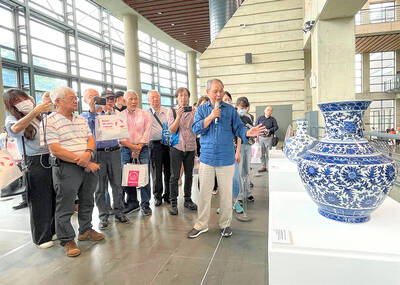
A: Apart from the Danjiang Bridge in New Taipei City, the MRT Sanying Line (Light Blue Line) will open in June. B: Is that the new line leading to Yingge District, the ceramic town? A: Yup, the line will connect the Yingge Ceramics Museum and the Old Streets in Sanxia and Yingge Districts. B: The eastward extension of the Tamsui-Xinyi Line (Red Line) that goes through Taipei’s Xinyi District will also open in June. A: Plus, Taoyuan’s Aerotropolis Line (Green Line) will partially open by the end of the year. In the future, it will connect the

1. 他病了三天。 ˇ He has been sick for three days. χ He has been sick since three days. 註︰這裡現在完成時態 have / has been 表示從過去某一時日到現在的一段時間存在的行為或狀態,與它連用的時間副詞應為 「for +若干時」,如 for a year, for three hours 等,意思是歷時多少。 2. 他自從星期三以來都很忙。 ˇ He has been busy since Wednesday. χ He has been busy from Wednesday. 註︰「自從……以來」,該用 since。說從某一天(某一時刻)到某一天(某一時刻)才用 from,如 from Monday till Friday。 3. 房間角落裡散放著一些零星物件。 ˇ There were some odds and ends lying in the corner of the room. χ There were some odds and ends lying at the corner of the room. 註︰「在房間角落裡」該用介詞 in。例如: He stood in the corner. There is a lamp in the corner of the room. at the corner 指房子外部的拐角。例如: A little boy


 RSS
RSS