


If you live near the beach, you know how much fun playing near the ocean can be. The only thing more fun than playing near the ocean is playing in the ocean.
The man in this picture is surfing. In this picture, he is enjoying the most fun part, but surfing takes a lot of hard work. First, a surfer floats on the board facedown and waits for a good wave. When the surfer sees a good wave, he or she begins to paddle with his or her hands. Then, the wave catches the surfboard and pulls it and the surfer toward the shore. When this happens, the surfer must stand up. If you've never done it before, it can be very hard to balance while riding a wave!
People first began surfing in Hawaii, where they have been surfing since at least 400AD. Today, surfing is popular all over the world. (Kayleen Hartman, Staff writer)

PHOTO : AFP
假如你住在海邊,你知道在海邊玩耍有多快樂。唯一比在海邊玩耍更有趣的事就是與海同樂。
照片中的男子正在衝浪。照片中的他玩得樂不可支,但衝浪其實要費上一番功夫。首先,衝浪者要面朝下在滑板上飄浮,等待合宜的大浪。衝浪者看到合適的大浪時,開始用手划水。接著大浪會湧向滑板,將滑板與衝浪者推往海岸。同時,衝浪者必須站起身來。假如你從未這樣做過,衝浪時可能很難保持平衡。
夏威夷人是最早開始衝浪的人,至少自西元四百年就已開始。現今,衝浪在世界各地都廣受歡迎。 (翻譯:賴美君)
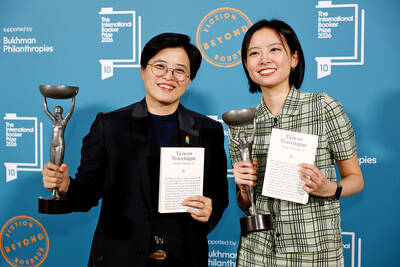
Taiwan Travelogue, the novel by Taiwanese author Yang Shuang-zi and translated into English by Lin King, won the prestigious International Booker Prize in London on May 19. It marks the first time a Taiwanese literary work has received the International Booker Prize, setting a historic milestone both for Taiwanese literature and for the award itself. Prior to this achievement, Taiwan had only once appeared on the Booker radar, when Taiwanese author Wu Ming-yi was longlisted for the Booker Prize in 2018 with The Stolen Bicycle. The International Booker Prize honors works of fiction translated into English and published in the UK or Ireland.
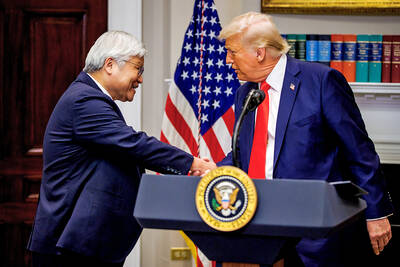
A: Time magazine recently released its list of “The 100 Most Influential People of 2026.” It’s categorized into six groups: Artists, Pioneers, Titans, Icons, Leaders and Innovators. B: TSMC chairman C.C. Wei made the list this year. Which category is he in? A: Wei is actually among the Pioneers, with figures including Disney CEO Josh D’Amaro and MrBeast — the first YouTuber ever to surpass 400 million subscribers. B: Led by Wei, Taiwan’s “silicon shield” TSMC is the sixth-largest company in the world. A: As Nvidia founder Jensen Huang wrote in his introduction, “C.C. Wei is truly one of the
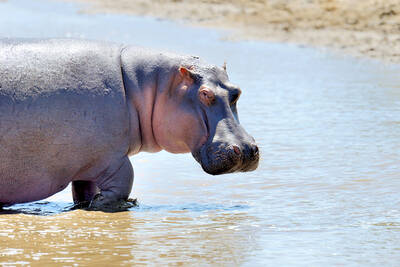
The animal kingdom is full of surprises that challenge our understanding of biology. From remarkable feeding mechanisms to extreme defense strategies, some creatures possess traits so unusual that they seem like pure fiction. Here are four fascinating examples that show nature’s endless creativity. The humble snail may appear simple, but its mouth tells a different story. Snails possess a ribbon-like tongue called a radula, densely covered with anywhere from 1,000 to 12,000 tiny teeth. This structure works like a cheese grater, allowing them to scrape and grind food with surprising efficiency. Far from being passive creatures, snails are actually

A: In the 2026 Time 100 list, besides TSMC chairman C.C. Wei in the Pioneers category, Blackpink’s Jennie also stands out in the Artists group. B: What about the Titans and Icons? A: The Titans include legendary fashion designer Ralph Lauren, Google CEO Sundar Pichai, and Intel CEO Tan Lip-bu. The Icons include actor Wagner Moura, Olympic gold figure skater Alysa Liu and singer Victoria Beckham. B: What about the Leaders and Innovators? I bet US President Donald Trump and Chinese President Xi Jinping are on the list. A: You got it. Other Leaders include Japanese PM Sanae


 RSS
RSS