


Have you ever wondered why people in the military salute? Nobody knows for sure, but there are a few interesting theories.
One theory is that a long time ago in Rome, soldiers were supposed to pretend that bright light came out of the eyes of their superiors. Soldiers saluted to pretend that they needed to protect their eyes from the bright light.
Another theory is that when soldiers wore metal masks, they would lift their mask up to see if another soldier was a friend or enemy. Over time, this turned into saluting.
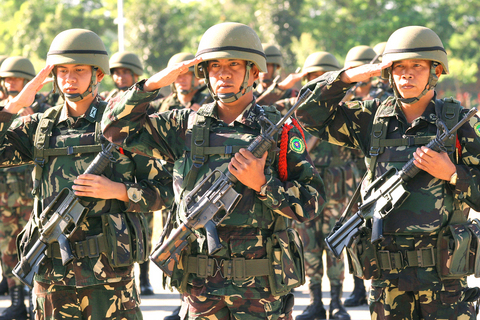
PHOTO : EPA
The most popular theory is that soldiers used to take off their hat when they met their superiors. But because soldiers often wore heavy helmets, it was tiring to have to keep taking them on and off. So instead, they just touched their head with their hand as if they were about to take their helmet off.
Which theory do you think is right? (Marc Langer, staff writer)
你曾經想過軍人為什麼要敬禮嗎?沒有人百分之百說得準,但有幾種有趣的說法。
其中一種說法是,古時候的羅馬士兵應假裝長官的眼裡發出耀眼的光芒。士兵行軍禮,裝作是為了保護眼睛而阻擋光芒。
另一種說法是,軍人戴著金屬面罩時,要將面罩拉高來看他人是隊友還是敵軍,遂逐漸演變成敬禮。
最受歡迎的說法是以前軍人遇到長官時,經常要將帽子脫下來。然而,由於軍人時常戴著沉重的頭盔,把頭盔不斷戴上戴下很累人。因此,他們只用手碰碰頭,作勢要將頭盔取下來。
你認為哪一種說法是對的呢? (翻譯:賴美君)
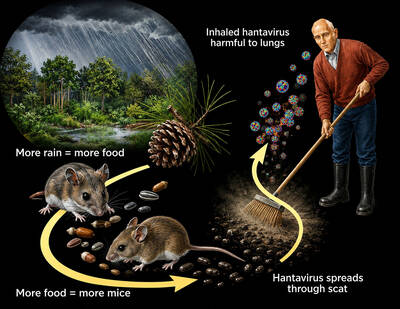
An outbreak aboard a cruise ship of a rare rodent-borne illness called hantavirus has left three passengers dead and sickened others, but global health officials say the risk to the general public remains low because the germ does not easily spread between people. “This is not the next COVID, but it is a serious infectious disease,” said Maria Van Kerkhove, director of epidemic and pandemic preparedness at the World Health Organization (WHO). “Most people will never be exposed to this.” The virus usually spreads when people inhale contaminated residue of rodent droppings. Hantaviruses have been around for centuries and are thought to
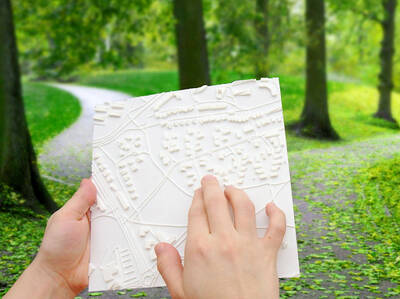
Have you ever wondered how people navigate the world when they can’t see a map? For individuals with visual impairments, conventional maps are nearly impossible to use. This is where tactile maps come in — essential tools that allow people to “see” the world through touch. A tactile map is specially designed with raised lines, textures, and symbols to represent geographical features such as roads, rivers, and buildings. Users explore it with their fingertips. However, these maps are not exclusively for people with visual disabilities. They serve as valuable multisensory learning tools that enhance spatial understanding for everyone, making
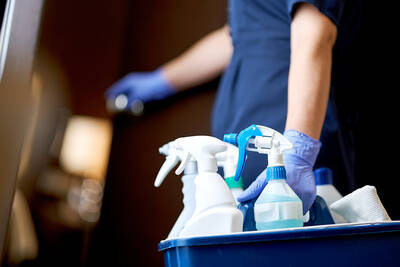
A growing green movement allows hotel guests to fund tree planting projects simply by opting out of daily room cleans. This approach turns an ordinary hotel stay into a direct contribution to nature. Founded in the Netherlands, the nonprofit “Hotels for Trees” operates on the principle that one skipped cleaning equals one new tree. It has planted more than 750,000 trees since 2021. Similarly, Sarnia Hotels in Guernsey donates £2 per refused clean. Since 2024, over 3,300 services have been cancelled, raising sufficient money to plant 1,100 native trees and hedgerows. Simplicity has been central to this success.

1. 他病了三天。 ˇ He has been sick for three days. χ He has been sick since three days. 註︰這裡現在完成時態 have / has been 表示從過去某一時日到現在的一段時間存在的行為或狀態,與它連用的時間副詞應為 「for +若干時」,如 for a year, for three hours 等,意思是歷時多少。 2. 他自從星期三以來都很忙。 ˇ He has been busy since Wednesday. χ He has been busy from Wednesday. 註︰「自從……以來」,該用 since。說從某一天(某一時刻)到某一天(某一時刻)才用 from,如 from Monday till Friday。 3. 房間角落裡散放著一些零星物件。 ˇ There were some odds and ends lying in the corner of the room. χ There were some odds and ends lying at the corner of the room. 註︰「在房間角落裡」該用介詞 in。例如: He stood in the corner. There is a lamp in the corner of the room. at the corner 指房子外部的拐角。例如: A little boy


 RSS
RSS