


There's a whole, wide world out there! All around the world, people just like you are living interesting lives in places you have never heard of. Take a minute to get to know Cyprus, and find out what makes the cypriot people tick.
世界之大,無奇不有!同為地球村民,有些人住在你從未聽過的地方過著有趣的生活。花一點時間來了解塞浦路斯這個國家,看看塞浦路斯人的生活重心為何。
A closer look 說古論今
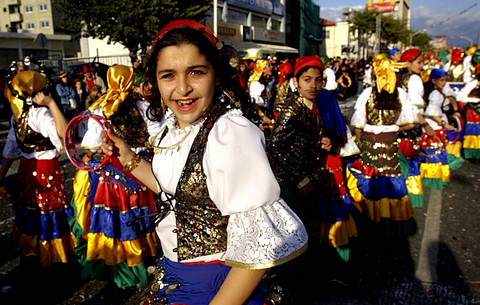
PHOTO: AP
Cyprus, like Taiwan, is a small island nation. And like Taiwan, it has a politically complex past and present. For thousands of years, the island of Cyprus has been controlled by the governments of different countries, including Egypt, Persia, Greece, Rome and England. The country that has had the strongest influence on Cyprus is Greece. Large numbers of Greeks came to Cyprus beginning in 1200BC, so for thousands of years, the culture, language and traditions of Cyprus have been mostly Greek.
Because Cyrpus is located right between Europe, the Middle East and Africa, it has many cultural influences. This also makes it a very convenient place for countries to put their military, so countries have been fighting over Cyprus for centuries. Even now, the British government still uses Cyrpus for its military.
Cyprus also has Turkish cultural influences. About 18 percent of the population is Turkish. When Cyprus became an independant country in 1960, the Turkish Cypriots and the Greek Cypriots shared control of the government. But since many Greek Cypriots wanted Cyprus to become a part of Greece, the Turkish Cypriots broke away from the Greek Cypriots and created their own illegal government in the north of the island. This was a violent and hostile time in the history of Cyprus, and although the two parts of the island are still not friendly, many people hope that they will be able to work together in the future.
塞浦路斯就像台灣一樣,是個小島國,而且和台灣同樣有複雜的政治現況和歷史。幾千年來,塞浦路斯被埃及、波斯、希臘、羅馬和英國等不同政權所掌控,但希臘對塞浦路斯的影響最為深遠。西元前一千兩百年,希臘人開始大舉進入塞浦路斯,幾千年下來,塞浦路斯的文化、語言及傳統,都與希臘息息相關。位於歐洲、中東和非洲交界處的塞浦路斯,亦受到許多不同文化的影響。其方便的戰略位置,更使它成為幾世紀來各國兵家必爭之地。時至今日,英國政府仍以塞浦路斯做為軍事據點。
塞浦路斯也受到土耳其文化的影響,人口有百分之十八是土耳其人。塞浦路斯在一九六○年成為獨立國家時,土裔塞浦路斯人和希裔塞浦路斯人共理朝政,但由於許多希裔塞浦路斯人希望塞浦路斯成為希臘的一部份,土裔塞浦路斯人便與希裔塞浦路斯人絕裂,在北方成立另一政權,造成塞浦路斯動盪衝突,雖然現在島上兩方仍不友好,許多人仍希望他們在未來能攜手合作。

A: Which TV drama series have been global hits so far this year? B: The US drama “Stranger Things 5,” South Korean drama “Can This Love Be Translated?” and Chinese megahit “Pursuit of Jade” are all popular lately. A: Isn’t “Pursuit of Jade” the costume idol drama about the romance between a charming marquis and a pig-slaughterer? Actor Zhang Linghe and actress Tian Xiwei are both so attractive. B: Plus, Netflix’s Korean-Japanese gay romance drama “Soul Mate” — starring Korea’s Ok Taec-yeon and Japan’s Hayato Isomura — is set to premiere in May. A: These hit international dramas
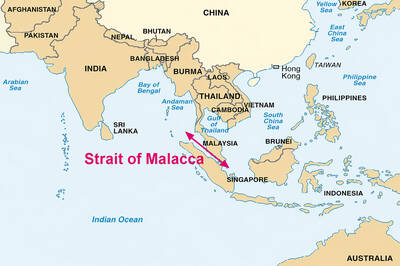
The closure of the Strait of Hormuz has forced policymakers in Asia to face questions over the security of other maritime chokepoints, including the Strait of Malacca, which is the world’s busiest waterway for international trade. WHAT IS THE MALACCA STRAIT? The 900km long Malacca Strait, bounded by Indonesia, Thailand, Malaysia and Singapore, provides the shortest sea route from East Asia to the Middle East and Europe. It carries nearly 22 percent of the world’s maritime trade, according to the Center for Strategic and International Studies (CSIS). This includes oil and gas shipments from the Middle East to the energy-hungry economies of China,
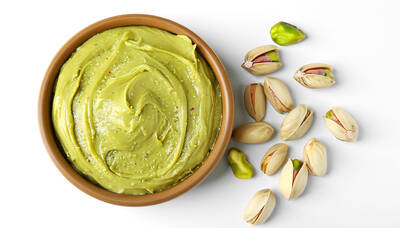
It seems like every year, new foods or drinks start trending and suddenly show up everywhere. A decade ago, avocado __1__ restaurant menus, while oat milk became the must-have addition to your coffee in cafes around five years back. The latest trend to hit this list is the pistachio. This flavorful green nut now features in everything from chocolate bars to Indian curries. While pistachios have long played a central role in certain regional cuisines, their recent global __2__ can be traced to Dubai. There, a specialty chocolate shop went __3__ on TikTok for one of its chocolate bars

One reason pistachios have taken the food world by storm compared to other nuts is their soft, green color. When ground down into a cream or butter, the green hue __6__ nicely with golden pastries or dark-brown chocolate, making it perfect for Instagram photos and TikTok videos. Their labor-intensive cultivation and __7__ also contribute to their image as a premium ingredient. Thus, buying a pistachio-based product often feels like a __8__ treat. Pistachios also stand out for their distinct flavor and health __9__. They have a subtle, sweet, earthy flavor that goes well with both sweet desserts and


 RSS
RSS