

The Ministry of National Defense (MND) has proposed a NT$95.93 million (US$3.03 million) budget for next year to establish a new “military cyber hunt team” that would counter the Chinese Communist Party’s (CCP) increasing cyberinfiltration and “gray zone” threats.
The plan was revealed in the central government’s general budget proposal for the next fiscal year, under the ministry’s Information, Communications and Electronic Force Command.
The initiative marks a shift in the military’s cyberwarfare mindset — upgrading from a “defensive cybersecurity” strategy that relies on setting up firewalls to an “integrated offense and defense” strategy that seeks out and eliminates network blind spots.

Photo: AFP
The command’s training program involves active cyber threat hunting, the highest level of cybersecurity expertise, and has drawn high attention within military and cybersecurity communities.
Military cybersecurity had mostly relied on alerts and would scramble to patch vulnerabilities after a breach was detected, but the initiative’s training program would operate on the premise that “the system has been infiltrated.”
Foreign instructors would introduce live-combat adversarial training modeled after the US military’s Cyber Flag exercise. The goal is to teach Taiwan’s military personnel to act like detectives, sifting through billions of system logs and network traffic to hunt down and uncover enemy hackers who have bypassed defenses in military networks and critical infrastructure during peacetime.
A government official, speaking on condition of anonymity, said command head Lieutenant General Mao Chien-chiu (毛建秋) is establishing the team to counter the CCP’s cyber units, especially threats from their “long-term latency” and “continuous engagement” tactics.
State-sponsored hackers are skilled at advanced persistent threat attacks, often remaining dormant for months or even years after infiltrating Taiwan’s military systems, quietly stealing confidential data or waiting for the suitable time for destruction, they said.
Members of the “military cyber hunt team” would act as “scavengers” of the digital domain, completely eliminating these latent ghosts and backdoors before enemy attacks are launched, the official said.
The initiative also aligns with international standards, and would deepen joint defense between Taiwan and the US.
The US military has emphasized the importance of “persistent engagement” and “defend forward” cybersecurity strategies, saying that one cannot simply sit back and wait to be attacked, but must instead engage adversaries in the gray zone, the official said.
With the combat experience of elite foreign instructors, the command is expected to speed up its transformation into an “elite cyber tactical force,” which would maintain the resilience of key civilian infrastructure and military command systems in peacetime, and — with its shared technical protocols — swiftly engage in cross-border cybercodefense with like-minded allies during wartime, they said.
The initiative’s budget signals a profound strategic shift in the military’s digital warfare mindset.
In modern wars, cyberwarfare and electronic warfare would paralyze the command chain before the first wave of missiles hits. The establishment of the team aims to expose forces hidden in the shadows, and to reclaim dominance in the digital realm, ensuring that military command and communication systems can function reliably in case of a conflict and to safeguard overall national security.

The Hualien District Prosecutors’ Office yesterday launched an investigation following allegations by a former foreign correspondent in Taiwan of widespread vote-buying in Hualien County. In an interview with Formosa TV (FTV, 民視) aired on Saturday, former Financial Times Taiwan correspondent Kathrin Hille spoke about Taiwan’s democracy and said that she now lives in rural Hualien, where “all the votes are bought.” Neighbors would talk about who had come by and leave cash on the table showing “how much each vote was worth that year,” Hille said. The practice needs to be addressed, considering Taiwan has been a democracy for many

SAFETY RISKS: A Taiwanese man who was traveling to Shanghai for business was allegedly questioned for six hours due to his past work for Amnesty International The Mainland Affairs Council (MAC) urged Taiwanese to exercise caution when considering trips to China after a Taiwanese man was allegedly questioned for six hours in Shanghai over past work with Amnesty International. The council on Saturday said in a report that 426 Taiwanese have gone missing or been detained or had their freedom of movement restricted in China since Jan. 1, 2024. The figure is up by seven from the previous week. New Chinese entry and exit regulations are due to take effect on Sept. 15, the council said. Of the 426 cases, 160 people have gone missing, up

Palau’s president yesterday called for a “unified” Pacific response to a missile test by China in July, while Taiwan and its Pacific allies a day earlier at the Pacific Islands Forum (PIF) reaffirmed their commitment to peace, stability and prosperity. China gave only a handful of nations short notice before test-firing an intercontinental ballistic missile in July, sparking condemnation from several Pacific leaders. The 18-member PIF being held in Palau was expected to release a communique after press time last night, with a formal response to the test possibly included. Palau, which invited Taiwan to attend sideline events as an aid partner, urged
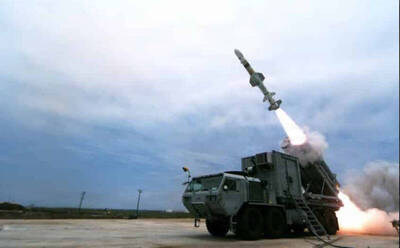
DEFENSE PROCUREMENT: The Pentagon has told a US congressional hearing that Taiwan has ‘top priority worldwide’ in the delivery of Harpoon missile systems The US Navy and Boeing Co have conducted a series of tests for land-based Harpoon anti-ship missile system being supplied to Taiwan and released footage showing the system striking a target vessel at sea. The weapons system and support equipment tested were reportedly tailored for Taiwan, while the first launch vehicles and other components have already begun arriving in Taiwan, with the full delivery of 100 systems scheduled to be completed by the end of 2028. Pentagon officials have previously told a US congressional hearing that Taiwan has “top priority worldwide” in the delivery of Harpoon missile systems, with production


 RSS
RSS