

A two-decade research effort by National Taiwan University Hospital (NTUH) to develop a two-in-one screening program for Helicobacter pylori, bacteria that increase the risk of colorectal and stomach cancer, has been featured in leading international medical journals and could potentially be adopted by some eastern European and South American countries.
The study was published in the Journal of the American Medical Association last month, while guidelines developed in collaboration with experts from 20 countries were published in the New England Journal of Medicine.
NTUH Division of Gastroenterology and Hepatology attending physician Lee Yi-chia (李宜家) yesterday said the hospital has long promoted the policy of screening for H pylori to prevent colorectal cancer, a policy it has helped implement in communities from Lienchiang County (Matsu) to rural townships in Taiwan proper.
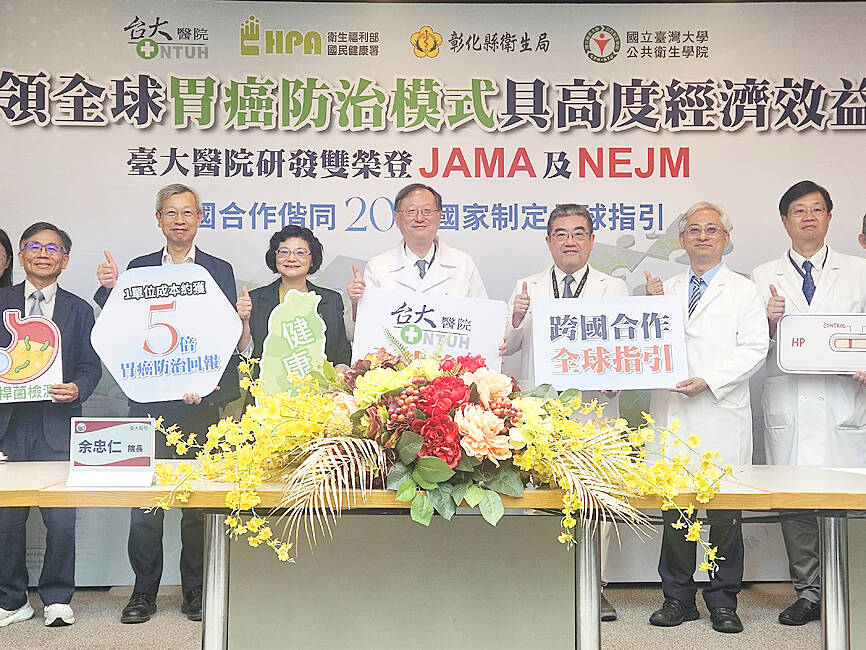
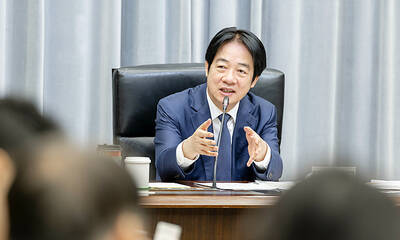
Photo: CNA
H pylori also increases the risk of people being diagnosed with stomach cancer sixfold, but can be treated, Lee said.
While the number of people diagnosed with stomach cancer is lower than those diagnosed with colorectal cancer, the former is deadlier, she said.
While both types of cancer have mature methodologies for diagnoses, the method developed by the hospital allowed doctors to screen for colorectal and stomach cancers via bloody stool, she said.
The hospital’s screening method was financially sound and practical, she said, adding that a global guideline was developed in collaboration with 35 doctors from 20 countries and the International Agency for Research on Cancer (IARC).
The method has also been introduced in Bhutan, and might soon be introduced in eastern Europe, she said.
Some South American countries have expressed interest in introducing the method, but efforts were slow due to political instability in the region, she said, adding that other countries, including the US, are slowly introducing the method.
The US, Japan, South Korea, and China have a higher prevalence rate of H pylori, so they could consider adopting the method, she said.
Health Promotion Agency Deputy Director-general Lin Li-ju (林莉如) said the gastric cancer screening program was initially piloted in indigenous communities, with Lee’s team conducting H pylori testing.
The program was gradually expanded to the general population in 2024 and became the sixth cancer type covered by the government-funded cancer screening program this year, she said.
As of last month, 600,000 people had undergone screening, with a positivity rate of 22.4 percent, she added.
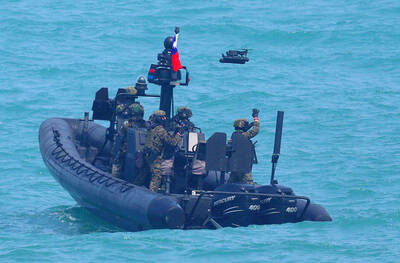
‘UNITED FRONT’ TACTICS: Beijing is pressuring Taiwanese politicians to block the Executive Yuan’s proposed special act to fund military uncrewed vehicles, a source said The Legislative Yuan is slated to hold cross-caucus negotiations on 14 versions of a draft uncrewed vehicle act on Thursday, amid rumors that Beijing is pressuring some Taiwanese politicians to block passage of a special bill proposed by the Ministry of National Defense to procure military drones and uncrewed vessels. A source in Beijing said the Chinese Communist Party has been using its United Front Work Department and Taiwan Affairs Office to pressure Taiwanese politicians who are friendly toward Beijing, pushing them to block the Executive Yuan’s proposed special act to fund military uncrewed vehicles. The proposed legislation would allocate
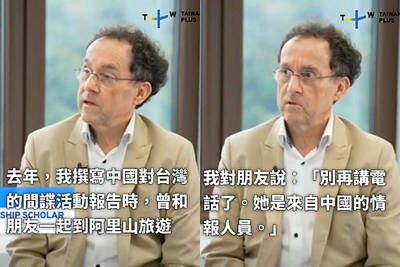
A German veteran journalist and author said the Ministry of Justice Investigation Bureau (MJIB) has confirmed his suspicion that he was followed by a Chinese spy on Alishan (阿里山) last year. Jurgen Kremb, who has long researched Chinese intelligence agencies, Asian geopolitics and cross-strait relations, made the comment during an interview with Taiwan Plus on Sunday. A video of the interview was subsequently shared by the Canadian Trade Office in Taipei on its Facebook page. Kremb said that last year, while writing a report on Chinese espionage activities targeting Taiwan, he traveled to Alishan with friends. A young Asian woman approached them and
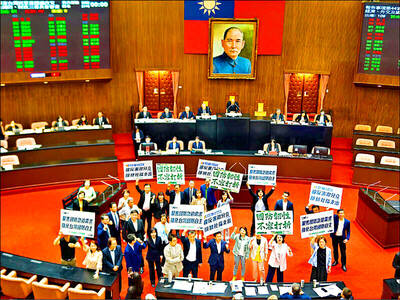
The Chinese Nationalist Party (KMT) and other opposition politicians are “taking Taiwan’s democracy hostage” for selfish gain, The Economist said in a column published online on Tuesday. “Taiwan’s freedoms should be a strength, raising the costs to China of a takeover. Shamefully, they are being betrayed from within,” the British news magazine said. While a lot of countries have toxic politicians, Taiwan’s stand out as particularly irresponsible, and “the blame is not evenly distributed,” it said. Although President William Lai (賴清德) is stubborn and, unlike his predecessor, does not consult KMT moderates, the opposition has triggered a “rolling constitutional crisis,”
2027 BUDGET: Given the nation’s strong economic growth, the government has proposed the universal cash handout to allow everyone to share in the ‘AI dividend’ The government would allocate NT$235.7 billion (US$7.4 billion) in next year’s budget to fund a NT$10,000 cash payment for every citizen next year as the economy continues to grow, President William Lai (賴清德) announced yesterday. Lai made the announcement after being briefed on the Executive Yuan’s proposed central government budget for next year for the second time. The government would still maintain a balanced budget with no net increase in debt after incorporating the universal cash handout into the general budget, he said. The latest statistics from the Directorate-General of Budget, Accounting and Statistics show Taiwan’s economy performing more strongly than previously


 RSS
RSS