


New Zealand and India yesterday announced the creation of a strategic partnership encompassing defense and security, during a landmark visit by Indian Prime Minister Narendra Modi.
New Zealand Prime Minister Christopher Luxon feted his guest with an indigenous Maori welcome and a guard of honor, seeking to expand relations after signing a free-trade pact in April that he has touted as an economic boon.
Modi’s visit, at the tail end of a tour that has also taken him to Indonesia and Australia, came in the aftermath of China test-firing a ballistic missile into the Pacific Ocean on Monday, stirring unease in the region.
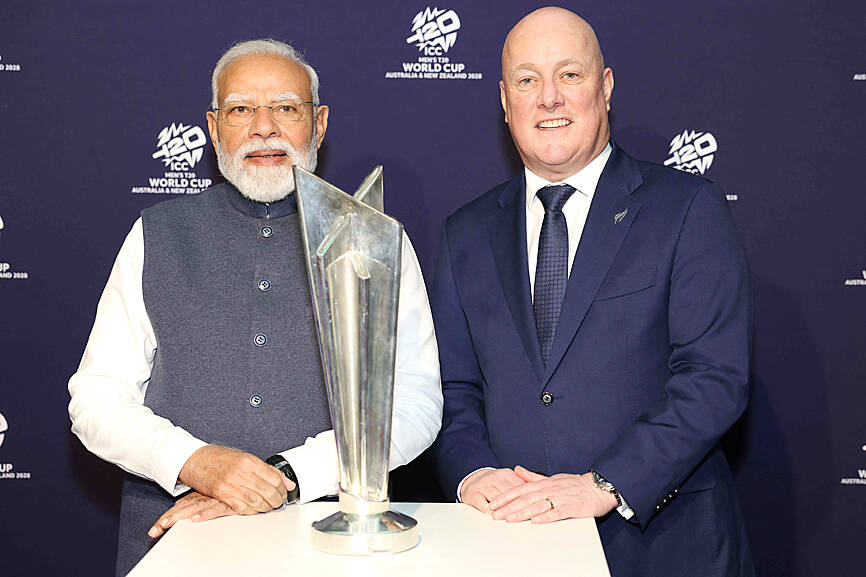
Photo: AFP
It was the first visit to New Zealand by an Indian prime minister in 40 years, a sign of New Delhi’s deeper engagement at a time of increased Chinese diplomatic and military presence in the Pacific region.
Modi described the strategic partnership as a “milestone” that would inspire greater energy and confidence, as he was hosted by the New Zealand leader for discussions at Government House in Auckland.
“Our firm belief in democratic values makes us natural partners,” he said.
The pact covers tighter defense cooperation, including naval exercises, as well as stronger ties in trade, diplomacy, culture, sports and science, the two countries said in a joint statement.
The nations have a shared interest in a “free, open, peaceful and prosperous Indo-Pacific,” they said.
The two countries “quickly canvassed” the Chinese missile test, Luxon said.
He skirted a question about whether closer New Zealand-India ties would curb China’s ambitions in the region.
“We are a small trading nation. We are a maritime nation. We need to have as many relationships as we possibly can with partners around the world that are like-minded, and some of those are around defense, and some of those around trade, some around both,” Luxon said.
In the evening, the two leaders fronted about 10,000 or more cheering Modi fans from the country’s 300,000-strong Indian diaspora who packed into Auckland’s Spark Arena.
“Before me I see a wonderful audience in which there is the light of a developed India and the prosperity of New Zealand,” Modi told supporters.
Luxon praised the Indian diaspora, saying: “Without you we simply would not be the New Zealand we are today.”
Outside the stadium, about 20 Sikh protesters demonstrated with a mannequin of Modi in prison clothes, describing the Hindu nationalist as the face of “Hindu terror” in India.
That sparked more than 100 supporters of the Indian leader to chant: “Modi, Modi,” leading scores of police to intervene to keep the two sides apart.
Luxon, who faces New Zealand general elections in November, has been promoting the jobs and economic benefits of the free trade deal with India, which is awaiting parliamentary approval.
The trade agreement has faced pushback from some in New Zealand, in particular over its provisions for easier immigration and visa access for Indian students and workers.
New Zealand First party lawmakers, part of Luxon’s governing coalition, railed against parts of the agreement.
“I don’t care how much criticism we get, I am just never going to agree with a butter chicken tsunami coming to New Zealand,” New Zealand Minister for Oceans and Fisheries Shane Jones told a local radio show.
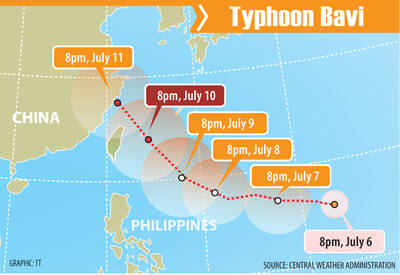
Typhoon Bavi’s center is looking more likely to pass north of Taiwan than to make landfall in the northern part of the country, the Central Weather Administration (CWA) said yesterday, adding that the storm is still too far away to forecast its exact track. As of 2pm yesterday, the center of Typhoon Bavi was about 2,560km east-southeast of Taiwan, moving west-northwest at 27kph, according to the agency. The storm, which has a radius of 350km, had sustained winds of 216kph near its center, with gusts of up to 270kph, CWA data showed. Bavi is expected to pass closest to Taiwan on Friday or
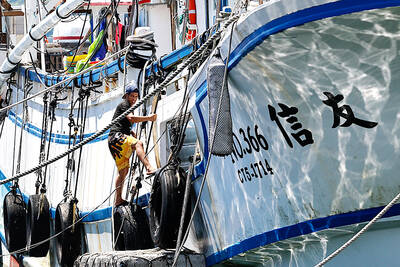
BAVI: Taipei, New Taipei City, Taoyuan and others announced work and class closures today, with the storm expected to affect Taiwan through tomorrow The outer rain bands of Typhoon Bavi would begin affecting Taiwan today, with its storm circle reaching land this evening and its level-10 wind radius covering all of northern Taiwan by noon tomorrow, an official said yesterday. The Central Weather Administration (CWA) issued a sea warning for the storm at 2:30pm yesterday, advising of heightened danger in eastern areas and in the Bashi Channel south of Taiwan. Typhoon Bavi is expected to bring strong winds, extremely heavy rainfall and rough seas to Taiwan today and tomorrow, with the heaviest rain forecast for mountainous areas and sustained winds of up to 12 on

A 33-year-old Chinese man was arrested yesterday at Taichung International Airport after he allegedly assaulted a Japanese media personality following his speech on cross-strait relations in a hotel in Taichung’s Situn District (西屯). After giving a speech in Taichung yesterday morning, Akio Yaita, was attacked by a man wearing black inside a hotel lobby, who police identified as a Chinese man surnamed Liao (廖). Yaita, formerly the Sankei Shimbun Taipei bureau chief, was invited as a keynote speaker at a conference hosted by the Spring Rain Culture and Education Foundation, where he spoke on cross-strait relations and Indo-Pacific security, according
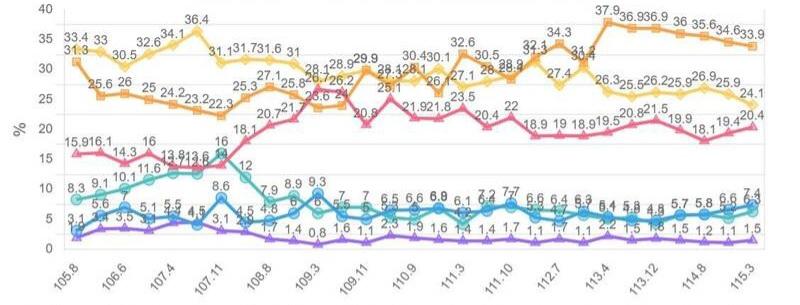
TRENDS: The survey results released by the MAC showed that support for maintaining the ‘status quo’ indefinitely had risen to 33.9%, while 61% opposed unification Despite Beijing intensifying its legal warfare against Taiwan, public opposition to unification with China has grown significantly over the past two decades, with the proportion of Taiwanese who reject unification rising to 61.7 percent this year from 39 percent in 2005, polling trends released by the Mainland Affairs Council (MAC) showed. In addition to the “Anti-Secession” Law enacted in 2005 and the “22 guidelines to punish Taiwanese independence,” China on Wednesday last week promulgated the Ethnic Unity and Progress Promotion Law, that critics in Taiwan say aims to reinforce the false identification of Taiwanese as members of the Chinese nation.


 RSS
RSS