


Domestic oil and gas supplies would remain stable through September amid tensions in the Middle East, thanks to Taiwan’s diversified procurement, Deputy Minister of Economic Affairs Lai Chien-hsin (賴建信) yesterday said.
CPC Corp, Taiwan (CPC, 台灣中油) has also begun planning winter procurement, and overall supply is not expected to be an issue, Lai said at an energy forum in Taipei.
CPC has built a database covering more than 180 energy products from more than 40 countries, allowing it to quickly switch procurement sources when disruptions occur and to ensure stable supply through September, he said.
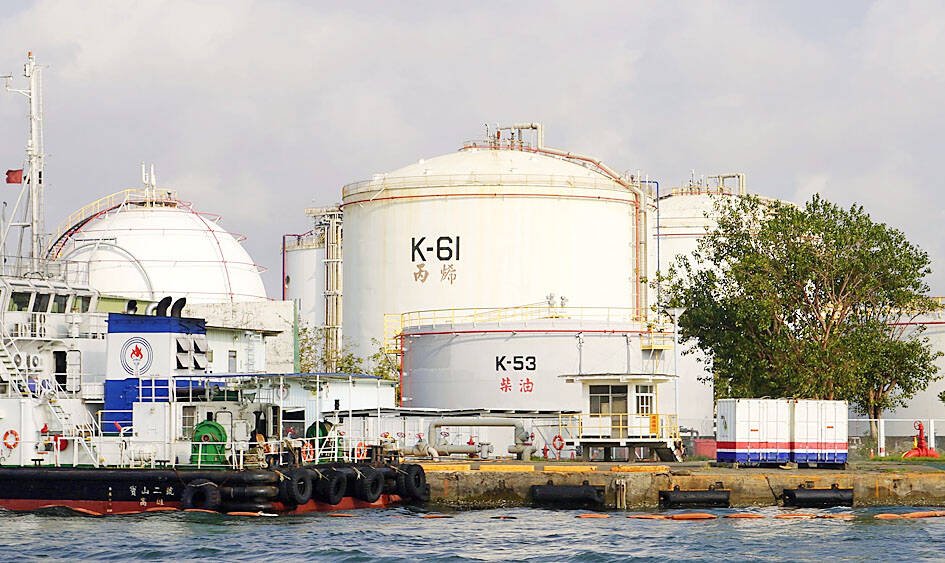
Photo: CNA
Regarding broader energy policy, Taiwan is advancing a “second energy transition” centered on energy resilience, focusing on renewable energy development, diversified supply, grid upgrades, energy conservation and storage, he added.
In terms of renewable energy, Taiwan ranked third globally in newly installed offshore wind capacity last year, attracting attention from Japan, South Korea and other countries, Lai said.
In addition to ongoing zone development, the government plans to launch floating offshore wind demonstration projects by the end of this year, with installed capacity projected to increase by 8 gigawatts (GW) to 10GW by 2035, beyond the original 10.93GW target for 2030, he added.
Green electricity has mainly been supplied to industries through feed-in tariff mechanisms, limiting public awareness, but future policies would promote broader adoption through microgrids and energy storage systems to improve public acceptance and bolster grid resilience during extreme weather events or disasters, Lai said.
Taiwan saved 770 million kilowatt-hours of electricity in the first quarter, equivalent to about 1.6 cargoes of liquefied natural gas, underscoring the importance of efficiency in improving energy resilience, he said.
The government plans to further expand energy-saving measures through energy service company models, he added.
Many industries viewed last year as the beginning of Taiwan’s energy storage era, Lai said.
In addition to grid-level storage systems, the government plans to expand behind-the-meter storage, particularly as companies pursuing RE100 goals increase their purchases of renewable electricity and storage capacity, he said.
The government also aims to integrate microgrids and fuel cells into rural and community applications while supporting the development of Taiwan’s domestic energy storage industry, he added.
Electricity is not only a pillar of economic growth, but also a reflection of national strength, Lai said.
With electricity demand expected to continue growing, the government would gradually optimize the energy system through policy and market mechanisms to ensure stable, secure and affordable supplies for industries and households, he added.
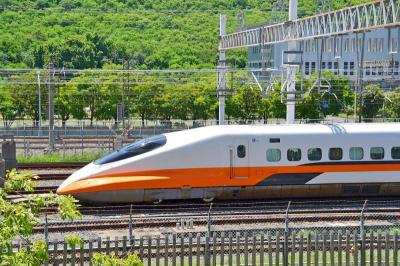
A signaling system malfunction disrupted high-speed rail (HSR) services beginning at 8am today, with trains temporarily reduced to three northbound and three southbound trains per hour as authorities conduct inspections. The malfunction occurred on a section of track in Miaoli County during pre-operation checks early this morning, forcing northbound and southbound trains to use a single track, the HSR operator said. The regular schedule has been replaced with three hourly trains offering only nonreserved seating in each direction, stopping at every station, it said, adding that business class cars would still have reserved seating. Departures from terminal stations are scheduled at the top
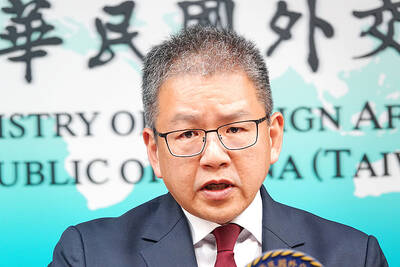
Taiwan is still in the process of assessing the possibility of recruiting workers from Eswatini, the Ministry of Foreign Affairs said yesterday, adding that its goal is to help Eswatini upgrade its vocational training centers. If there are plans to recruit workers from Eswatini, safeguarding national security, protecting public health and ensuring the employment rights of Taiwanese would be prerequisites, Department of West Asian and African Affairs Director-General Yen Chia-liang (顏嘉良) told a news conference. Key considerations would also include filling labor shortages in specific industries, and fostering bilateral professional and technical exchanges, he said. Yen was asked about the progress of labor

A US uncrewed surface vessel (USV) encountered multiple Chinese warships during an autonomous transit of the Taiwan Strait, US defense company Seasats said in a statement on Wednesday. Seasats announced that a Lightfish USV had completed the first autonomous transit of the Taiwan Strait. Over five days, the USV traversed the entire length of the Strait while constantly monitoring surface vessel traffic, the company said. The Lightfish encountered multiple Chinese warships, one of which was a Chinese People’s Liberation Army Navy (PLAN) Type 056 corvette, it said. The Chinese vessels were operating “well within Taiwan’s exclusive economic zone without transmitting their identity via the
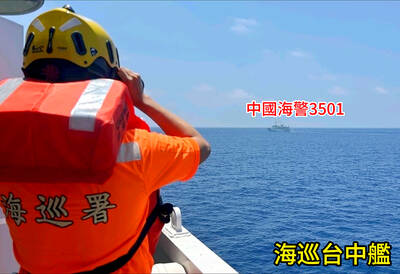
VERBOSE VESSELS: A CGA cutter and a China Coast Guard exchanged verbal barbs for more than a day in Taiwanese-controlled waters before the Chinese vessel left The Taiwanese and Chinese coast guards had a standoff near the strategically located Pratas Islands (Dongsha Islands, 東沙群島) in the north of the South China Sea, the Coast Guard Administration (CGA) said yesterday. The two sides engaged in intense radio exchanges over sovereignty claims during the 33-hour standoff. China Coast Guard vessel 3501 eventually left the restricted waters, 26.6 nautical miles (49.2km) west of the Pratas Islands, at 5pm yesterday, the CGA said. Lying approximately between southern Taiwan and Hong Kong, the Taiwan-controlled Pratas are seen by some security experts as vulnerable to Chinese attack due to their distance — more than


 RSS
RSS