


A senior Iranian military officer yesterday said renewed fighting with the US was “likely,” hours after US President Donald Trump said he was not satisfied with an Iranian negotiating proposal.
Iran delivered the new draft to mediator Pakistan on Thursday evening, state media reported, without detailing its contents.
The war, launched by the US and Israel in late February, has been on hold since April 8, with one failed round of peace talks having taken place in Pakistan since then.
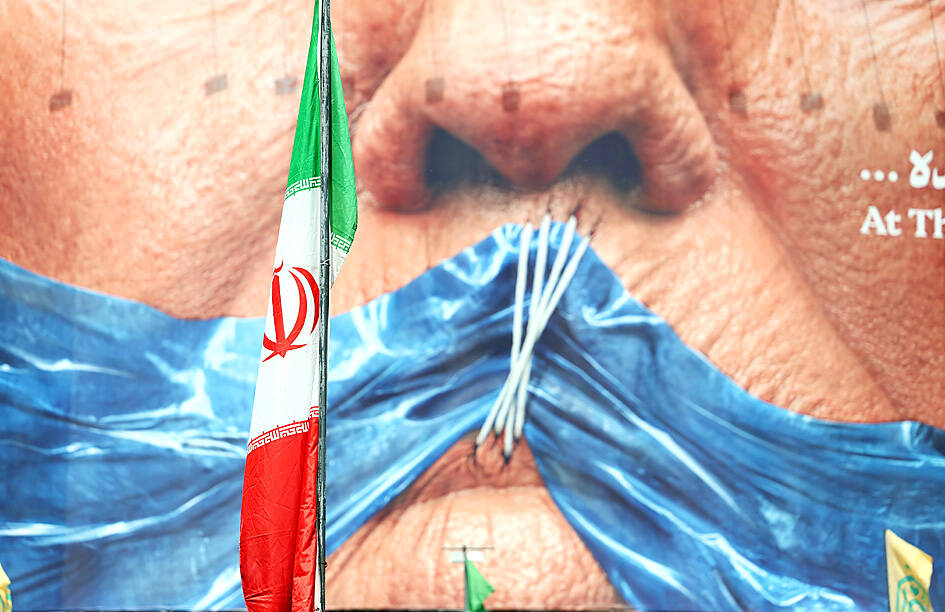
Photo: EPA
“At this moment I’m not satisfied with what they’re offering,” Trump told reporters, blaming stalled talks on “tremendous discord” within Iran’s leadership.
“Do we want to go and just blast the hell out of them and finish them forever — or do we want to try and make a deal?” he said, adding that he would “prefer not” to take the first option “on a human basis.”
Iran’s Fars news agency quoted Mohammad Jafar Asadi, a senior figure in the Iranian military’s central command, as saying that “a renewed conflict between Iran and the United States is likely.”
“Evidence has shown that the United States is not committed to any promises or agreements,” he added.
Iran’s judiciary chief Gholamhossein Mohseni Ejei said his country had “never shied away from negotiations,” but would not accept an “imposition” of peace terms.
The White House has declined to provide details on the latest Iranian proposal, but news site Axios reported that US envoy Steve Witkoff had submitted amendments to a previous one putting Tehran’s nuclear program back on the negotiating table.
The changes reportedly include demands that Iran not move enriched uranium from bombed sites or resume activity there during talks.
News of the Iranian proposal briefly pushed oil prices down nearly 5 percent, although they remain about 50 percent above pre-war levels amid the ongoing closure of the Strait of Hormuz.
Iran has maintained a stranglehold on the strait since the war began, choking off major flows of oil, gas and fertilizer to the world economy, while the US has imposed a counter-blockade on Iranian ports.
Speaking at a rally on Friday, Trump said “we’re like pirates” as he described an earlier helicopter raid on an oil tanker under the blockade.
In Iran, the war’s economic toll is deepening.
Washington has imposed new sanctions on three Iranian currency firms and warned others against paying a “toll” for safe passage through the Strait of Hormuz, as demanded by Iran.
The US military said its blockade of Iranian ports has stopped US$6 billion in Iranian oil exports, while inflation in Iran, already high before the war, has surged past 50 percent.
“Everyone is trying to endure it, but ... they are falling apart,” 40-year-old Tehran resident Amir said. “We still have not seen much of the economic effects, because everyone had a bit of savings. They had some gold and dollars for a rainy day. When they run out, things will change.”
Meanwhile, Iranian authorities yesterday executed two men convicted of spying for Israel, the judiciary said, the latest in a string of recent executions.
One of the men was found guilty of assisting Israel during last year’s 12-day war.
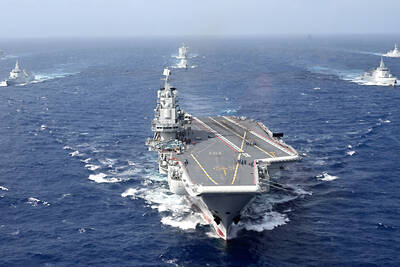
PROVOCATIVE: Chinese Deputy Ambassador to the UN Sun Lei accused Japan of sending military vessels to deliberately provoke tensions in the Taiwan Strait China denounced remarks by Japan and the EU about the South China Sea at a UN Security Council meeting on Monday, and accused Tokyo of provocative behavior in the Taiwan Strait and planning military expansion. Ayano Kunimitsu, a Japanese vice foreign minister, told the Council meeting on maritime security that Tokyo was seriously concerned about the situation in the East China and South China seas, and reiterated Japan’s opposition to any attempt to change the “status quo” by force, and obstruction of freedom of navigation and overflight. Stavros Lambrinidis, head of the EU delegation to the UN, also highlighted South China Sea
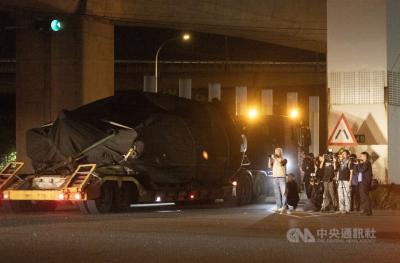
The final batch of 28 M1A2T Abrams tanks purchased from the US arrived at Taipei Port last night and were transported to the Armor Training Command in Hsinchu County’s Hukou Township (湖口), completing the military’s multi-year procurement of 108 of the tanks. Starting at 12:10am today, reporters observed more than a dozen civilian flatbed trailers departing from Taipei Port, each carrying an M1A2T tank covered with black waterproof tarps. Escorted by military vehicles, the convoy traveled via the West Coast Expressway to the Armor Training Command, with police implementing traffic control. The army operates about 1,000 tanks, including CM-11 Brave Tiger
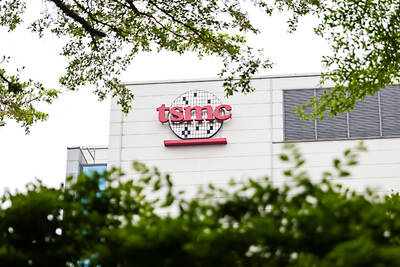
Taiwan Semiconductor Manufacturing Co (TSMC, 台積電), the world’s largest contract chipmaker, said it expects its 2-nanometer (2nm) chip capacity to grow at a compound annual rate of 70 percent from this year to 2028. The projection comes as five fabs begin volume production of 2-nanometer chips this year — two in Hsinchu and three in Kaohsiung — TSMC senior vice president and deputy cochief operating officer Cliff Hou (侯永清) said at the company’s annual technology symposium in Silicon Valley, California, last week. Output in the first year of 2-nanometer production, which began in the fourth quarter of last year, is expected to
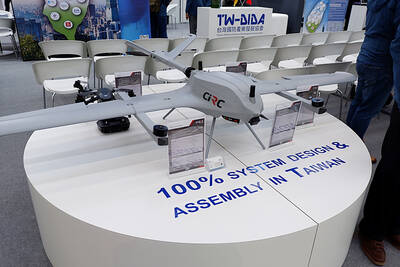
Taiwan’s drone exports surged past US$100 million in the first quarter, exceeding last year’s full-year total, with the Czech Republic emerging as the largest buyer, the Ministry of Economic Affairs said. Exports of complete drones reached US$115.85 million in the period, about 1.2 times the total recorded for all of last year, the ministry said in a report. Exports to the Czech Republic accounted for about US$100 million, far outpacing other markets. Poland, last year’s top destination, recorded about US$11.75 million in the first quarter. Taiwan’s drone exports have expanded rapidly in the past few years, with last year’s total


 RSS
RSS