


Vietnam’s National Assembly yesterday elected Communist Party General Secretary To Lam as president, consolidating the nation’s top party and state roles in a rare concentration of power, as he moves to tighten control and tackle economic headwinds.
Lam was the sole nominee for the five-year post, with the assembly’s approval largely a formality in the one-party state. The 68-year-old received 99 percent of the vote in results announced at the parliamentary session in Hanoi. Former central bank governor Le Minh Hung, the son of a former public security minister who was Lam’s mentor, was elected prime minister for the next five years.
Lam told delegates that his top priority “is to secure peace and stability while promoting rapid, sustainable national development.”
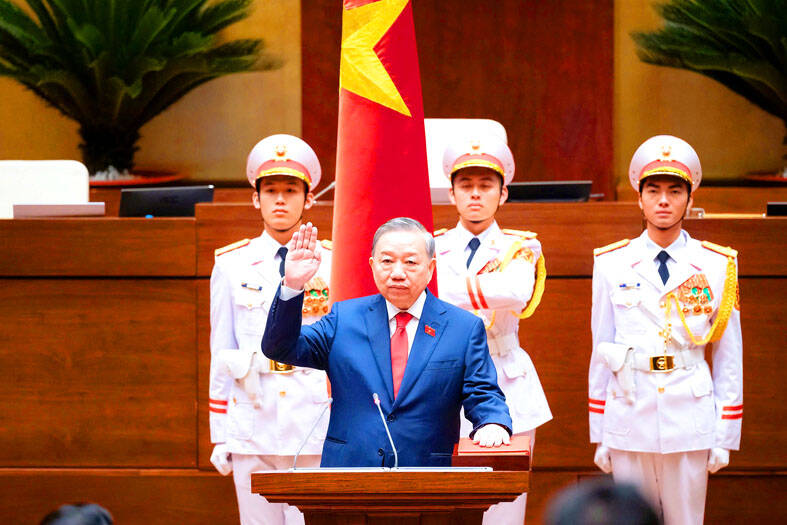
Photo: EPA / National Assembly of Vietnam
While Lam held both jobs briefly in 2024, he is the first person to secure the twin roles at a party congress. Only a small group of Vietnam’s most powerful leaders have simultaneously held the party’s top post and the presidency, including Nguyen Phu Trong, who took on the role after the sitting president’s death in 2018, and Ho Chi Minh in the early years of the modern Vietnamese state.
Vietnam’s leadership structure now moves closer to its communist neighbor, where Chinese President Xi Jinping (習近平) holds both the party’s top post and the state presidency. Lam has outlined an ambitious reform agenda aimed at streamlining bureaucracy since taking up the party chief post in 2024, cutting red tape and removing barriers to investment as the country seeks to sustain growth.
“While widely expected, this is still a pivotal moment for Vietnamese politics,” said Nguyen Khac Giang, a visiting fellow at Singapore’s ISEAS-Yusof Ishak Institute. “The presidency on its own is largely ceremonial, but in combination with the general secretary role, it becomes politically far more consequential. The real test now is whether he can secure not just compliance, but genuine buy-in from the party’s different factions.”
The Southeast Asian nation, which is targeting annual growth of at least 10 percent this year, is navigating escalating tensions in the Middle East and uncertainty over US tariff policy. Economic momentum slowed in the first quarter, as rising energy costs and price volatility added to inflationary pressures, complicating Lam’s push for double-digit growth.
A former police officer, Lam rose through the public security ministry to eventually become minister, where he was the primary enforcer of a sweeping anti-corruption campaign that netted everyone from presidents to deputy prime ministers and tycoons.
Since taking over as party chief in August 2024 after the death of his predecessor, Lam has sped through a clutch of reforms, shrinking the number of provinces by half and cutting a whole tier of local government. The promise is to make doing business easier and faster, but the changes have also caused delays and confusion given the haste with which they have been rolled out.
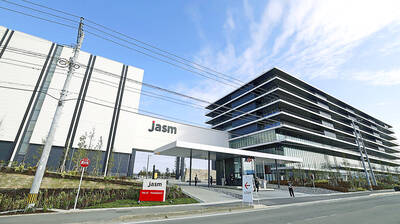
The subsidiary of Taiwan Semiconductor Manufacturing Co (TSMC, 台積電) in Kumamoto, Japan, turned a profit in the first quarter of this year, marking the first time the first fab of the unit has become profitable since mass production started at the end of 2024. According to the contract chipmaker’s financial statement released on Friday, Japan Advanced Semiconductor Manufacturing Inc (JASM), a joint venture running the fab in Kumamoto, posted NT$951 million (US$30.19 million) in profit in the January-to-March period, compared with a loss of NT$1.39 billion in the previous quarter, and a loss of NT$3.25 billion in the first quarter of
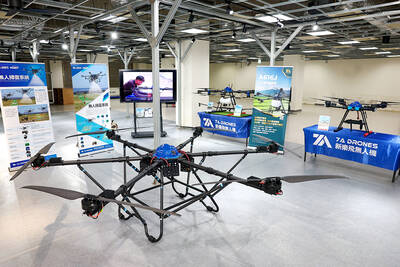
DRONE CENTRAL: Taiwan aims to become Asia’s democratic hub for drones, with most exports focused on high-quality military-grade models, an official said Taiwan’s drone industry is expected to expand significantly by 2030, producing 100,000 units per month and exporting half of them, the Ministry of Economic Affairs said yesterday. Current drone production capacity is about 15,000 units per month, but the industry can quickly scale up as demand increases, Industrial Development Administration Director-General Chiou Chyou-huey (邱求慧) told a news conference in Taipei. Taiwan’s drone output grew 2.5-fold last year to NT$12.9 billion (US$408.3 million) under a government program to develop the uncrewed vehicle sector, he said. The Executive Yuan in October last year approved plans to invest NT$44.2 billion into domestic production of uncrewed aerial
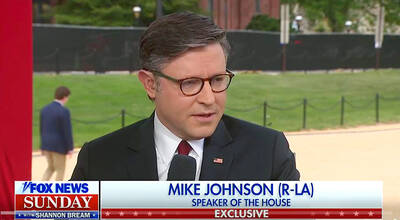
RESOLUTE BACKING: Two Republican senators are planning to introduce legislation that would impose immediate sanctions on China if it attempts to invade Taiwan US House of Representatives Speaker Mike Johnson on Sunday reaffirmed US congressional support for Taiwan, saying the US and “all freedom-loving people” have a stake in preventing China from seizing Taiwan by force. Johnson made the remarks in an interview with Fox News Sunday on US President Donald Trump’s summit with Chinese President Xi Jinping (習近平) last week. In an interview that aired on Friday on Fox News, just as Trump wrapped up a high-stakes visit to China, he said he has yet to green-light a new US$14 billion arms package to Taiwan and that it “depends on China.” “It’s a very good
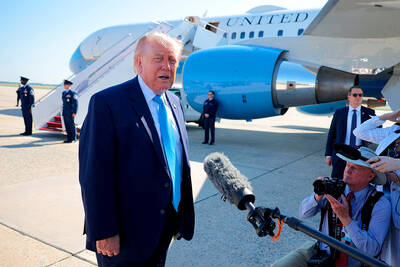
US President Donald Trump yesterday said he would speak to President William Lai (賴清德) as his administration considers whether to move ahead with a US$14 billion weapons sale to Taiwan — a potential arms deal that has drawn criticism from China. “Well, I’ll speak to him. I speak to everybody,” Trump told reporters yesterday when asked if he had any plans to call his counterpart, although he did not offer a time frame for when such a conversation could take place. Trump previously said he would speak to the person “that’s running Taiwan,” without specifying who he meant. “We have that situation very


 RSS
RSS