


Separating the Executive Yuan’s proposed eight-year NT$1.25 trillion (US$39.21 billion) special defense budget from the general budget would help avoid crowding out spending on public needs, the Ministry of National Defense (MND) said.
The ministry made the remarks in a report to the legislature, delivered ahead of Minister of National Defense Wellington Koo’s (顧立雄) scheduled appearance at the Foreign Affairs and National Defense Committee today to present a special report on military investment planning and fiscal capacity.
Including the defense special budget in the annual budget would limit government fiscal flexibility, the report said, citing the need to prioritize technology to accelerate weapons system modernization.
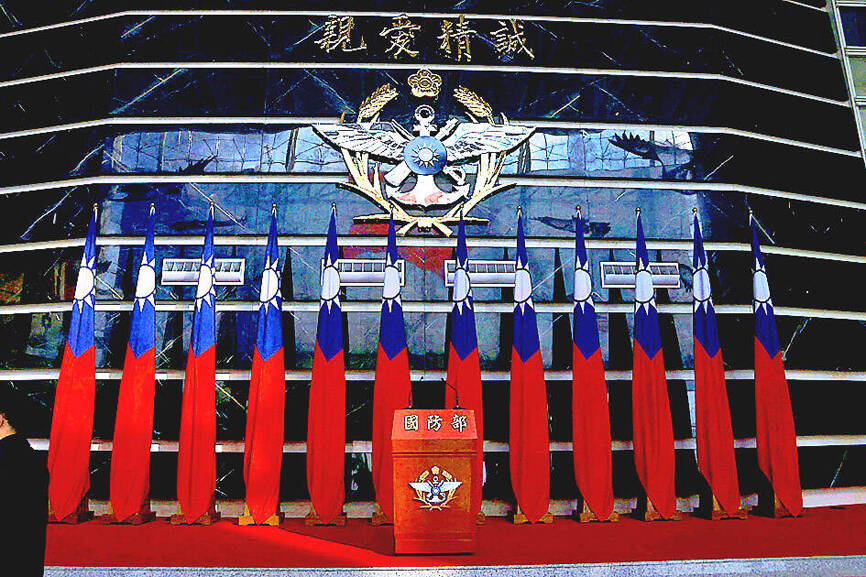
Photo: Ann Wang, Reuters
Military investment priorities include developing a resilient non-red supply chain and building the “T-Dome” — a proposed multi-layered air and missile defense system designed to integrate air defense assets into a cohesive “shield” over the nation, it said.
Meeting emerging needs over the next eight years is projected to cost NT$1.25 trillion, it said.
The plan covers US military acquisitions, research and development by the Chungshan Institute of Science and Technology, domestic procurement and expansion of military factory production lines. It also involves integrating artificial intelligence-assisted decisionmaking with satellites, radar, various weapons systems, and drones.
In addition to these priorities, the ministry said it has planned long-term military investment projects to maintain defense resilience, including the Land Sword II (陸射劍二), Tien Kung III (天弓, Sky Bow), and Hsiung Feng II and III missiles, upgraded night vision equipment for the army, and runway repair equipment, totaling over NT$70 billion.
Other ongoing projects include the procurement of M1A2T tanks, High Mobility Artillery Rocket Systems, portable short-range air defense missiles, Altius-600M attack uncrewed aerial vehicle (UAV) systems, Harpoon missile coastal defense systems, Patriot missile systems, new advanced trainer aircraft, MQ-9B high-altitude UAVs, National Advanced Surface-to-Air Missile Systems and mobile radar upgrades for battle management, it said.
The expansion of the Zuoying naval base and Kaohsiung-class vessel combat system upgrades are also included, the report said.
Over the next three years, these projects face peak delivery payments estimated at NT$570 billion, it said.
“In the face of imminent military threats, it is essential to ensure the armed forces have sufficient financial resources to build key combat capabilities to protect national sovereignty,” the report said.
Defense spending as a share of total government expenditure has grown from 15.2 percent in 2023 to 18.5 percent this year, it said, adding that defense needs cannot be stably met through the general budget.
A special budget allows the government to allocate funds at once, demonstrating long-term commitment to defense investment, it said.
“The ministry is also promoting defense industry development, encouraging domestic companies to invest and build production capacity, achieving local supply, autonomous production and maintenance goals,” it said.
The special budget is expected to generate about NT$400 billion in economic output and create about 90,000 jobs, supporting local defense and high-tech industries as a new engine of economic growth, it added.
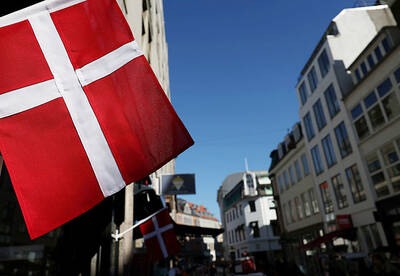
‘UNFRIENDLY’: Changing the nationality listing of Taiwanese residents to ‘China’ goes against EU foreign policy as well as democratic and human rights principles, MOFA said Taiwan yesterday called on Denmark to correct its designation of the nationality of Taiwanese residents as “China” or face retaliatory measures. The Danish government in 2024 changed the nationality of Taiwanese citizens on their residence permits from “Taiwan” to “China.” The decision goes against EU foreign policy and contravenes democratic and human rights principles, Ministry of Foreign Affairs (MOFA) spokesman Hsiao Kuang-wei (蕭光偉) said. Denmark should present a solution acceptable to Taiwan as soon as possible and correct the erroneous designation to preserve the longstanding friendship between the two nations, Hsiao said. The issue could damage Denmark’s image and business reputation in Taiwan,
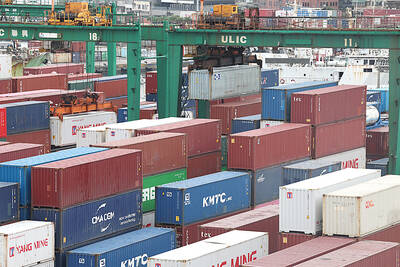
Taiwan climbed to its highest position in global export rankings in more than three decades last year, buoyed by demand linked to artificial intelligence (AI) that lifted shipments of semiconductors and technology products, Ministry of Finance data released yesterday showed. Taiwan accounted for 2.4 percent of global exports last year, or about US$640 billion, ranking 12th worldwide, the data showed. That was up four places from a year earlier and marked the nation’s best ranking since 1994, the ministry said. Taiwan’s share of global exports rose by 0.5 percentage points from the previous year, the largest increase among major economies, reflecting the nation’s
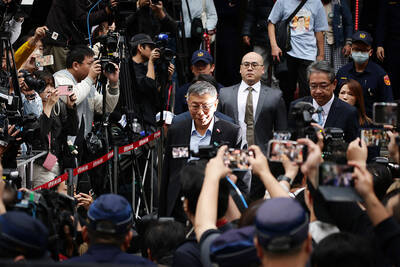
FIRST TRIAL: Ko’s lawyers sought reduced bail and other concessions, as did other defendants, but the bail judge denied their requests, citing the severity of the sentences Former Taipei mayor Ko Wen-je (柯文哲) was yesterday sentenced to 17 years in prison and had his civil rights suspended for six years over corruption, embezzlement and other charges. Taipei prosecutors in December last year asked the Taipei District Court for a combined 28-year, six-month sentence for the four cases against Ko, who founded the Taiwan People’s Party (TPP). The cases were linked to the Core Pacific City (京華城購物中心) redevelopment project and the mismanagement of political donations. Other defendants convicted on separate charges included Chinese Nationalist Party (KMT) Taipei City Councilor Angela Ying (應曉薇), who was handed a 15-year, six-month sentence; Core Pacific
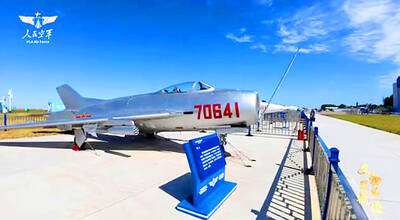
J-6 REMODEL: The converted drones are part of Beijing’s expanding mix of airpower weapons, including bombers with stand-off missiles and UAV swarms, the report said China has stationed obsolete supersonic fighters converted to attack drones at six air bases close to the Taiwan Strait, a report published this month by the Arlington, Virginia-based Mitchell Institute for Aerospace Studies said. Satellite imagery of the airfields from the institute’s “China Airpower Tracker” shows what appear to be lines of stubby, swept-winged aircraft matching the shape of J-6 fighters that first flew with the Chinese People’s Liberation Army (PLA) Air Force in the 1960s. Since their conversion to drones, the aircraft have been identified at five bases in China’s Fujian Province and one in Guangdong Province, the report said. J.


 RSS
RSS