


Iran yesterday launched new attacks at Israel and Gulf Arab countries as it kept up pressure on the Middle East in a war started by Israel and the US that has rattled world markets and shows no signs of a letup.
In Bahrain, authorities said an Iranian attack hit a residential building in the capital, Manama, killing a 29-year-old woman and wounding eight people.
Saudi Arabia said it destroyed two drones over its oil-rich eastern region and Kuwait’s National Guard said it shot down six drones.
Photo: EPA
In the United Arab Emirates, firefighters battled a blaze in the industrial city of Ruwais — home to petrochemical plants — after an Iranian drone strike, officials said. No injuries were reported.
Sirens also sounded in Jerusalem, and sounds of explosions could be heard in Tel Aviv, as Israel’s defense systems worked to intercept barrages from Iran.
At the Pentagon, US Secretary of Defense Pete Hegseth warned that yesterday would “be yet again our most intense day of strikes inside Iran: The most fighters, the most bombers, the most strikes, intelligence more refined and better than ever.”
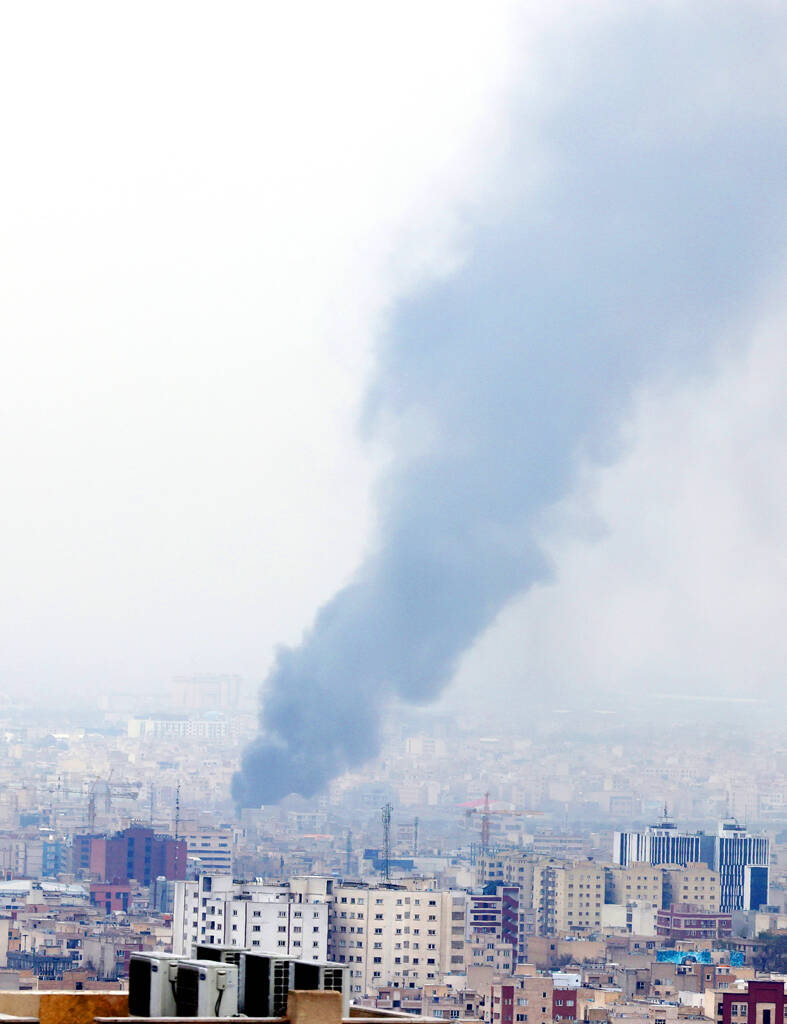
Photo: EPA
Shortly before the statement, he said “the last 24 hours have seen Iran fire the lowest amount of missiles they have fired yet.”
US General Dan Caine, chairman of the Joint Chiefs of Staff, said US forces hit more than 5,000 targets, and that their three objectives included destruction of Iranian ballistic missile and drone capability; hitting Iran’s navy to allow movement through the Strait of Hormuz; and hitting “deeper into Iran’s military and industrial base.”
The rhetoric was equally sharp from Tehran. Iranian Speaker of the Parliament Mohammad Bagher Qalibaf wrote on X that Tehran was “definitely not looking for a ceasefire.”
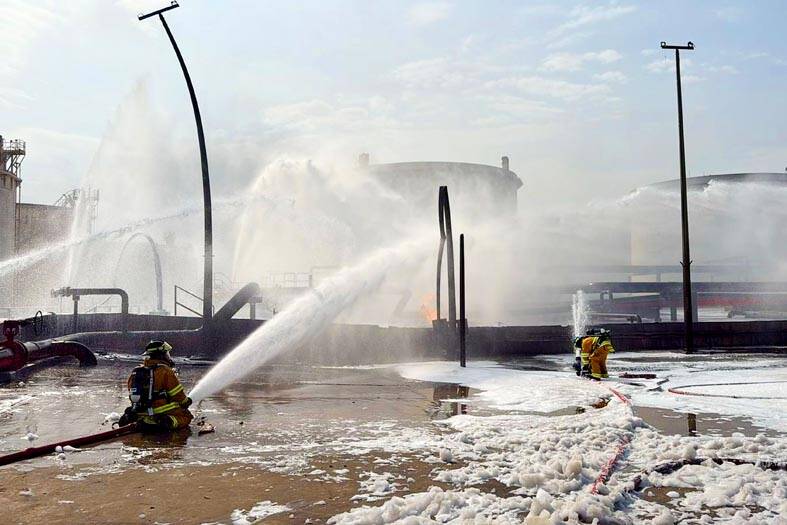
Photo: AP / Bahrain Ministry of the Interior
“We believe that the aggressor should be punched in the mouth so that he learns a lesson so that he will never think of attacking our beloved Iran again,” he wrote.
Another top Iranian security official, Ali Larijani, appeared to threaten US President Donald Trump himself, writing on X: “Iran doesn’t fear your empty threats. Even those bigger than you couldn’t eliminate Iran. Be careful not to get eliminated yourself.”
Witnesses reported hearing several explosions in Tehran in the afternoon as Israel commenced a new wave of airstrikes.
Along with firing missiles and drones at Israel and at US bases in the region, Iran has also been targeting energy infrastructure and traffic through the Strait of Hormuz, a vital waterway for traded oil, sending oil prices soaring.
The attacks appear aimed at generating enough global economic pain to pressure the US and Israel to end their strikes.
Brent crude, the international standard, spiked to nearly US$120 on Monday before falling back, but was still at about US$90 a barrel yesterday, nearly 24 percent higher than when the war started on Feb. 28.

‘NO SECURITY RISK’: The Railway Bureau reassured the public that the technicians’ activities were limited to technical guidance and did not involve sensitive systems The Railway Bureau yesterday said it had invited eight Chinese technicians to assist with an airport MRT construction project. The bureau issued the confirmation after an Internet user said Chinese nationals had entered the construction zone of Taiwan Taoyuan International Airport’s Terminal 3 project. They asked why “individuals from an enemy state” were allowed access to such a major national infrastructure project, which raised serious concerns over Taiwan’s industrial safety, sensitive systems and information security. The bureau’s Northern Region Engineering Branch Office said subcontractor Taiwan Handle Industrial Co (台灣手把工業) of the Taoyuan airport MRT’s “Contract No. CU05 Project A14 Station Civil, MEP &

A US uncrewed surface vessel (USV) encountered multiple Chinese warships during an autonomous transit of the Taiwan Strait, US defense company Seasats said in a statement on Wednesday. Seasats announced that a Lightfish USV had completed the first autonomous transit of the Taiwan Strait. Over five days, the USV traversed the entire length of the Strait while constantly monitoring surface vessel traffic, the company said. The Lightfish encountered multiple Chinese warships, one of which was a Chinese People’s Liberation Army Navy (PLAN) Type 056 corvette, it said. The Chinese vessels were operating “well within Taiwan’s exclusive economic zone without transmitting their identity via the
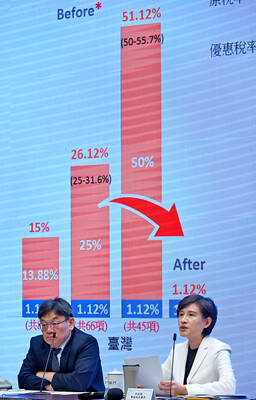
GREATER REACH? Auto parts and wood products would face tariffs of up to 15%, matching those targeting the EU, Japan and South Korea, Vice Premier said The US has announced that preferential tariff treatment for Taiwan’s non-semiconductor Section 232 goods would take effect retroactively from May 1, the Executive Yuan said yesterday. The US government yesterday posted a notice on the Federal Register’s public inspection Web site previewing tariff concessions for Taiwan under a memorandum of understanding (MOU) on Taiwan-US investment after two months of negotiations. The MOU signed on Jan. 15 stipulated three major preferential tariff arrangements: a 15 percent “reciprocal” tariff rate for Taiwan without stacking most-favored nation (MFN) rates; preferential Section 232 treatment for semiconductors and related products; and preferential Section 232 treatment for non-semiconductor

The National Chungshan Institute of Science and Technology yesterday showcased its locally developed variants of the Vision 60 robotic patrol dog, which it plans to deploy on the nation’s outlying territories in the South China Sea. The variants were produced under the Joint Lab project — created by the institute and domestic companies — and assembled with domestically produced motors, lenses and artificial intelligence (AI) systems alongside licensed tech from the US, Missile and Rocket Systems Research Division deputy director Jen Kuo-kang (任國光) told the media event at a military base in Taipei’s Dazhi (大直) area. Taiwan has built up its strengths


 RSS
RSS