


The US Department of Defense intends to allocate US$850 million for the US Indo-Pacific Command to replenish weapons stockpiles used for military aid to Taiwan, an unclassified department spending plan delivered to the US Congress on Monday showed.
The funds would be sourced from the US$152 billion the department obtained through a reconciliation bill passed last year, the report said.
The funds are to be used to strengthen joint task forces’ combat capabilities and to purchase new equipment to replace equipment being provided to Taiwan, it said.
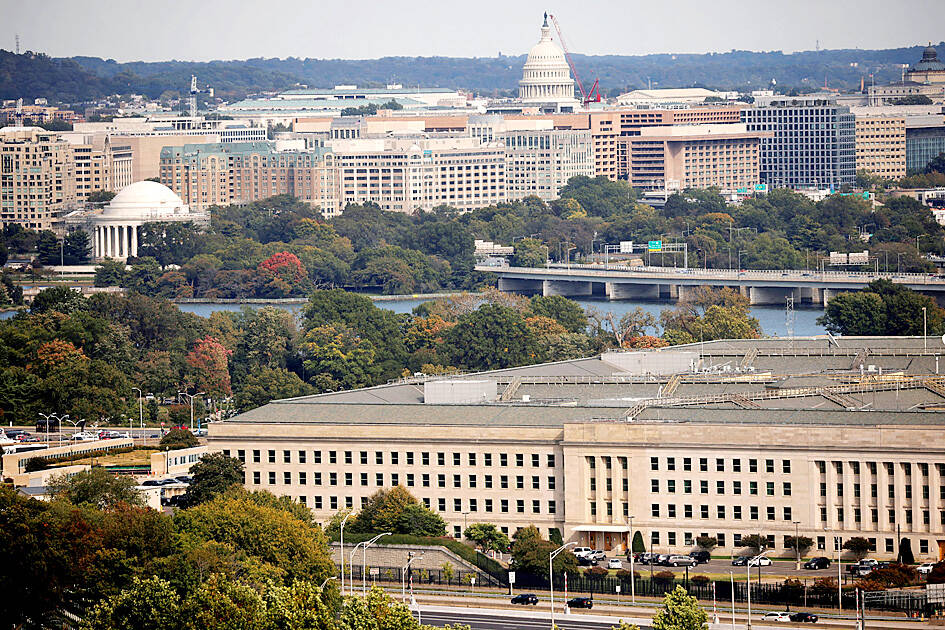
Photo: Reuters
The decision to use existing stockpiles to support Taiwan stemmed from the Taiwan Enhanced Resilience Act, which authorizes the US to provide Taiwan with equipment from the defense department’s stocks to accelerate the pace of deliveries.
“US arms transfers have been the most concrete US contribution to Taiwan’s defense capabilities. Most of these transfers are Foreign Military Sales (FMS)... From 2015 to 2025, the executive branch notified Congress of more than US$39 billion in FMS to Taiwan. The executive branch has announced three PDA [Presidential Drawdown Authority] packages for Taiwan totaling US$1.5 billion,” to date, a US Congressional Research Service report published on Feb. 3 said.
Separately, a US Department of State strategic plan for this year through 2030 states that “how the US responds to the rise of China will be defining story of the 21st century,” and is key to peace and stability in the Indo-Pacific region.
“The US must establish a favorable military balance in the Indo-Pacific to keep the trade routes free and open and to deter aggression,” the report said, while citing China’s unprecedented military buildup in the region over the past decade.
“The [state] department will work to deepen relationships with allies,” and encourage increased defense spending, invest in deterrence measures, and allow the US military greater access to critical infrastructure and resources, it said.
The US maintains a strong interest in a peaceful and prosperous Indo-Pacific region and desires neither war nor regime change, it said, adding that the US would consistently seek open lines of communication with China, and the means to reduce misunderstandings and risks.
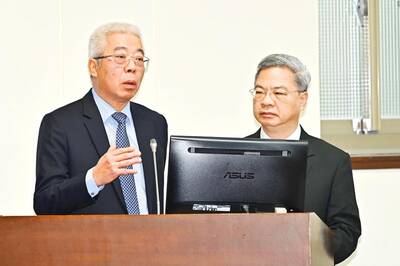
Taiwan has arranged for about 8 million barrels of crude oil, or about one-third of its monthly needs, to be shipped from the Red Sea this month to bypass the Strait of Hormuz and ease domestic supply pressures, CPC Corp, Taiwan (CPC, 台灣中油) said yesterday. The state-run oil company has worked with Middle Eastern suppliers to secure routes other than the Strait of Hormuz, through which about 20 percent of the world’s oil and liquefied natural gas typically passes, CPC chairman Fang Jeng-zen (方振仁) said at a meeting of the legislature’s Economics Committee in Taipei. Suppliers in Saudi Arabia have indicated they
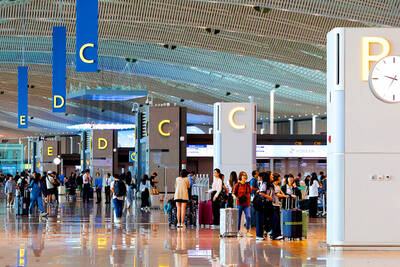
South Korea has adjusted its electronic arrival card system to no longer list Taiwan as a part of China, a move that the Ministry of Foreign Affairs said would help facilitate exchanges between the two sides. South Korea previously listed “Taiwan” as “Taiwan (China)” in the drop-down menus of its online arrival card system, where people had to fill out where they came from and their next destination. The ministry had requested South Korea make a revision and said it would change South Korea’s name on Taiwan’s online immigration system from “Republic of Korea” to “Korea (South),” should the issue not be

CCP ‘PAWN’? Beijing could use the KMT chairwoman’s visit to signal to the world that many people in Taiwan support the ‘one China’ principle, an academic said Chinese Nationalist Party (KMT) Chairwoman Cheng Li-wun (鄭麗文) yesterday arrived in China for a “peace” mission and potential meeting with Chinese President Xi Jinping (習近平), while a Taiwanese minister detailed the number of Chinese warships currently deployed around the nation. Cheng is visiting at a time of increased Chinese military pressure on Taiwan, as the opposition-dominated Legislative Yuan stalls a government plan for US$40 billion in extra defense spending. Speaking to reporters before going to the airport, Cheng said she was going on a “historic journey for peace,” but added that some people felt uneasy about her trip. “If you truly love Taiwan,

Tainan, Taipei and New Taipei City recorded the highest fines nationwide for illegal accommodations in the first quarter of this year, with fines issued in the three cities each exceeding NT$7 million (US$220,639), Tourism Administration data showed. Among them, Taipei had the highest number of illegal short-term rental units, with 410. There were 3,280 legally registered hotels nationwide in the first quarter, down by 14 properties, or 0.43 percent, from a year earlier, likely indicating operators exiting the market, the agency said. However, the number of unregistered properties rose to 1,174, including 314 illegal hotels and 860 illegal short-term rental


 RSS
RSS