


Hong Kong’s Court of Appeal yesterday rejected an appeal by 12 pro-democracy activists and upheld their jail terms in a national security case that critics say highlights Beijing’s crackdown on dissent.
The appeal stems from the “Hong Kong 47” case, where many leading pro-democracy activists and politicians were arrested en masse in early 2021 and charged with conspiracy to commit subversion. Following marathon legal proceedings, most of the activists were eventually sentenced in late 2024 to between four and 10 years in prison, with two others acquitted.
Rights groups and some countries, including the US and the UK, condemned the case as persecution of Hong Kong’s political opposition and called for the immediate release of all those arrested.
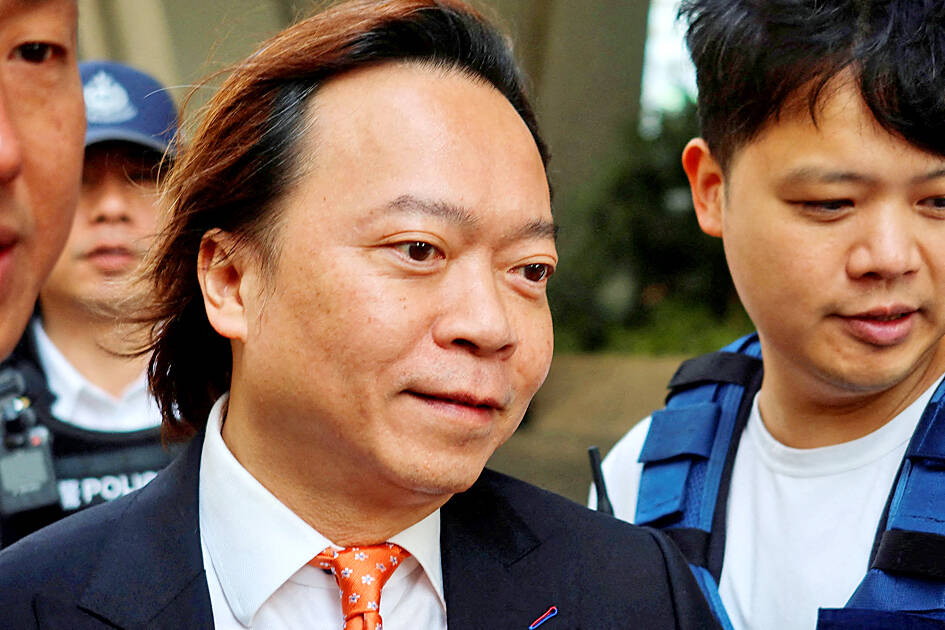
Photo: Reuters
Australian Minister for Foreign Affairs Penny Wong (黃英賢) said she was “deeply concerned” that Australian citizen Gordon Ng (吳政亨) had lost his appeal, adding that Canberra has “expressed our strong objections to Chinese and Hong Kong authorities on the continuing broad application of national security legislation.”
Judges Jeremy Poon (潘兆初), Derek Pang (彭偉昌) and Anthea Pang (彭寶琴) wrote in their judgement that the defendants were part of a conspiracy conceived, advocated and pursued by legal academic Benny Tai (戴耀廷) to produce a “constitutional mass destruction weapon” aimed at toppling the constitutional order in Hong Kong.
The case centered on an unofficial “primary election” organized by the democrats in mid-2020 to select the strongest candidates for a legislative council election.
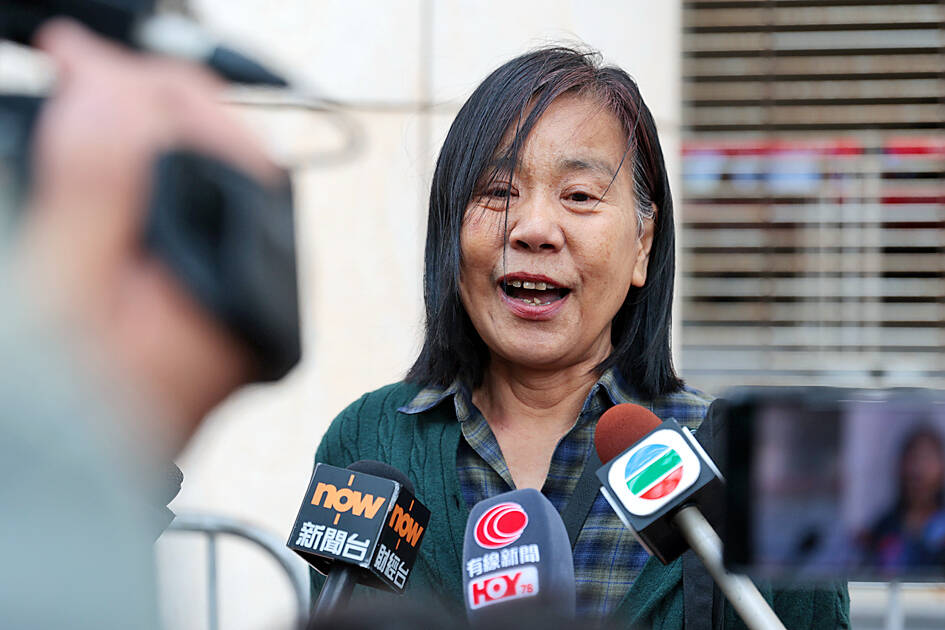
Photo: AP
The prosecution alleged that the democrats were conspiring to win a majority in order to paralyze the government by indiscriminately vetoing the territory’s annual budget in a bid to force Hong Kong’s leader to resign.
The 11 democrats who lost appeals against their convictions were former lawmakers Helena Wong (黃碧雲), Lam Cheuk-ting (林卓廷), Raymond Chan (陳志全) and “Long Hair” Leung Kwok-hung (梁國雄); former district councilors Clarisse Yeung (楊雪盈), Kalvin Ho (何啟明) and Tat Cheng (鄭達鴻); and activists Gwyneth Ho (何桂藍), Owen Chow (鄒家成), Winnie Yu (余慧明) and Ng.
The democrats, and one other activist, Prince Wong (黃子悅), also failed in their appeals against their sentences, with the exception of Gwyneth Ho who only appealed her conviction.
After hearing the result, the defendants appeared calm and waved to their families and supporters.
“What crimes have they committed?” Chan Po-ying (陳寶瑩), the wife of activist Leung Kwok-hung, said after the ruling, echoing the arguments of some defense lawyers that legislators in Hong Kong were free to vote against any bills and veto the budget as a lawful “check and balance” under the territory’s mini-constitution.
Despite the international criticism, Hong Kong and Beijing insist the democrats received a fair trial, and say a China-imposed National Security Law in 2020 helped restore order to Hong Kong after mass pro-democracy protests the year before.
The judges said any plan to veto the budget indiscriminately, regardless of its content or merits, was “clearly an abuse of the power [of legislators].”
However, the judges dismissed an appeal by the Department of Justice against the acquittal of barrister Lawrence Lau (劉國昌), saying he had never openly and directly advocated for the vetoing of the budget, like the others.
Lau told reporters he was “happy” with the result.
So far, 18 of the 45 convicted democrats have been released after serving their jail terms.
“By failing to overturn these wrongful convictions and sentences today, the court has missed a critical opportunity to correct this mass injustice,” said Fernando Cheung (張超雄), a spokesman for Amnesty International Hong Kong Overseas.
“Peaceful opposition to a government is not a crime, and all remaining jailed members of the Hong Kong 47 should be released immediately and unconditionally,” he said.
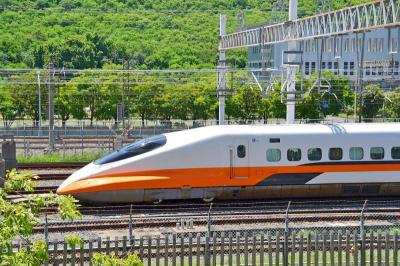
A signaling system malfunction disrupted high-speed rail (HSR) services beginning at 8am today, with trains temporarily reduced to three northbound and three southbound trains per hour as authorities conduct inspections. The malfunction occurred on a section of track in Miaoli County during pre-operation checks early this morning, forcing northbound and southbound trains to use a single track, the HSR operator said. The regular schedule has been replaced with three hourly trains offering only nonreserved seating in each direction, stopping at every station, it said, adding that business class cars would still have reserved seating. Departures from terminal stations are scheduled at the top

Taiwan is still in the process of assessing the possibility of recruiting workers from Eswatini, the Ministry of Foreign Affairs said yesterday, adding that its goal is to help Eswatini upgrade its vocational training centers. If there are plans to recruit workers from Eswatini, safeguarding national security, protecting public health and ensuring the employment rights of Taiwanese would be prerequisites, Department of West Asian and African Affairs Director-General Yen Chia-liang (顏嘉良) told a news conference. Key considerations would also include filling labor shortages in specific industries, and fostering bilateral professional and technical exchanges, he said. Yen was asked about the progress of labor

VERBOSE VESSELS: A CGA cutter and a China Coast Guard exchanged verbal barbs for more than a day in Taiwanese-controlled waters before the Chinese vessel left The Taiwanese and Chinese coast guards had a standoff near the strategically located Pratas Islands (Dongsha Islands, 東沙群島) in the north of the South China Sea, the Coast Guard Administration (CGA) said yesterday. The two sides engaged in intense radio exchanges over sovereignty claims during the 33-hour standoff. China Coast Guard vessel 3501 eventually left the restricted waters, 26.6 nautical miles (49.2km) west of the Pratas Islands, at 5pm yesterday, the CGA said. Lying approximately between southern Taiwan and Hong Kong, the Taiwan-controlled Pratas are seen by some security experts as vulnerable to Chinese attack due to their distance — more than

A US uncrewed surface vessel (USV) encountered multiple Chinese warships during an autonomous transit of the Taiwan Strait, US defense company Seasats said in a statement on Wednesday. Seasats announced that a Lightfish USV had completed the first autonomous transit of the Taiwan Strait. Over five days, the USV traversed the entire length of the Strait while constantly monitoring surface vessel traffic, the company said. The Lightfish encountered multiple Chinese warships, one of which was a Chinese People’s Liberation Army Navy (PLAN) Type 056 corvette, it said. The Chinese vessels were operating “well within Taiwan’s exclusive economic zone without transmitting their identity via the


 RSS
RSS