


The US has barred a Chilean Cabinet minister and two other officials from being able to enter the country, part of a diplomatic rebuke over Chile’s trade ties with China, including a proposed undersea cable that could link them.
US Secretary of State Marco Rubio on Friday said the Chilean officials were undermining regional security, and he triggered individual travel bans.
“These individuals and their immediate family members will be generally ineligible for entry into the United States, and any US visas held by them have been revoked,” he said.
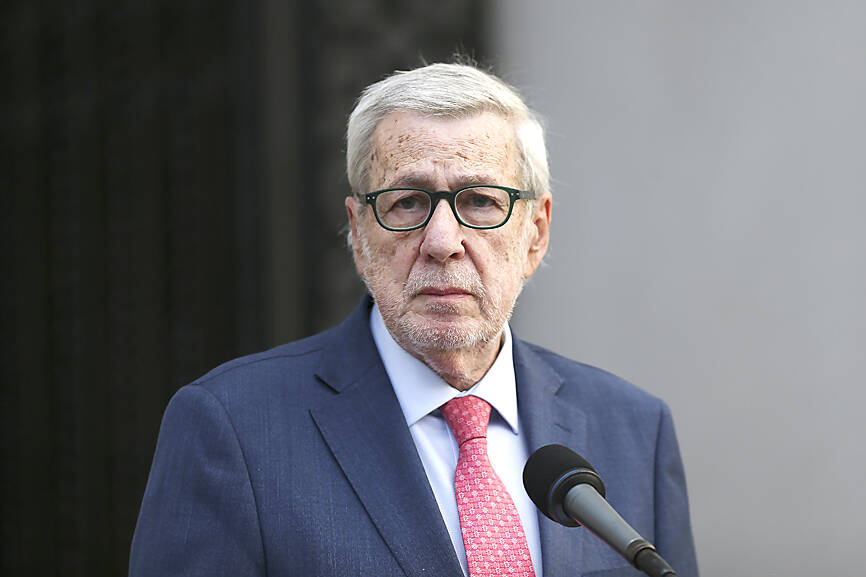
Photo: EPA
Chilean Minister of Foreign Affairs Alberto van Klaveren said the US’ concerns relate to a request by two private companies to lay a submarine cable linking Chile to Hong Kong.
“The US government believes that cable could in some way pose a threat to its security,” van Klaveren said.
The proposal remains in an early stage and a final decision has not yet been made, he added.
Chilean Transportation and Telecommunications Minister Juan Carlos Munoz confirmed that he is among the three officials targeted with the visa cancelations.
Munoz, widely seen as a technocrat, has led Chile’s efforts to become a digital hub by establishing a series of undersea cables to shore up connectivity. The latest project is cofinanced by Alphabet Inc’s Google and would run from Chile to Australia.
“We don’t discriminate with respect to the origins of different projects and analyze them based on their own merits,” he said, adding that such projects cannot be approved if they threaten Chile’s sovereignty or national security.
Chile’s Ministry of Foreign Affairs said it was surprised by the visa cancelations and rejected the accusation that it had compromised “the security of the continent or third countries.”
It described the US announcement as out of step with its historic ties to Washington, which it sees as a “strategic ally,” and added that US Ambassador to Chile Brandon Judd had been summoned to explain the reasons behind the decision.
“This is a warning sign that should not be taken lightly,” New York University political scientist Patricio Navia said. “The growing confrontation between China and the US is putting South American countries between a rock and a hard place.”
Chile might be forced to take sides, he said.
“It is in the best interest of Chile to remain friends with the US and keep strong trade and cooperation ties with China. Having to choose sides would be devastating for Chile,” Navia added.
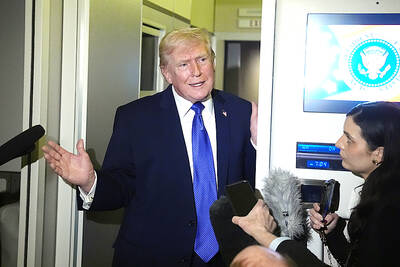
NON-NEGOTIABLE: The US president’s action ran counter to one of the US’ ‘six assurances’ on not consulting China about arms sales to Taiwan, US lawmakers said US President Donald Trump’s admission that he is discussing arms sales to Taiwan with Chinese President Xi Jinping (習近平) is “alarming and a blatant violation of US policy and the six assurances,” US Representative Ro Khanna said on Tuesday. Trump on Monday said he would decide soon on whether to send more weapons to Taiwan, after Xi warned him not to do so. “I’m talking to him about it. We had a good conversation, and we’ll make a determination pretty soon,” Trump told reporters aboard Air Force One when asked about warnings raised by Beijing during a phone call with Xi over
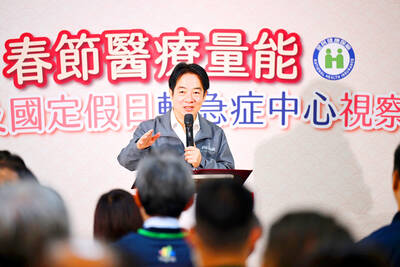
REAL EMERGENCIES: To avoid overcrowding, the health minister urged people with mild or moderate symptoms to go to UCCs, while the ER should be for critical cases President William Lai (賴清德) yesterday inspected the nation’s Lunar New Year medical preparedness with a visit to an urgent care center (UCC) in Taipei and expressed confidence in the Ministry of Health and Welfare’s plans to prevent emergency room (ER) overcrowding during the nine-day holiday. The ministry in November last year launched a pilot UCC program to provide urgent medical care at 13 clinics in the nation’s six special municipalities over weekends and on holidays, aimed at relieving pressure on crowded ERs. To ease ER overcrowding during the Lunar New Year, when most hospitals and primary care clinics are closed, the National
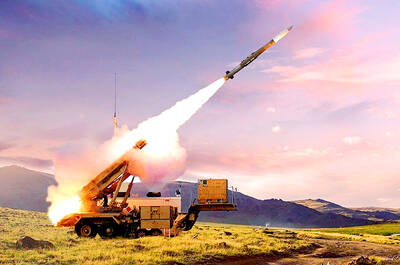
VACILLATING? Some US officials are concerned that Trump’s April visit to Beijing might be affected if Washington pushes through additional weapons sales to Taiwan A major US arms sales package for Taiwan is in limbo following pressure from Chinese President Xi Jinping (習近平) and concerns among some US officials that greenlighting the deal would derail US President Donald Trump’s upcoming visit to Bejing, the Wall Street Journal (WSJ) reported on Wednesday. Trump on Monday said that he would decide soon on whether to send more weapons to Taiwan, after Xi warned him not to do so. “I’m talking to him about it. We had a good conversation, and we’ll make a determination pretty soon,” Trump told reporters aboard Air Force One when asked about warnings raised

OPTIMISTIC: The DGBAS sharply upgraded its GDP growth estimate from 3.54 percent to 7.71 percent after the Taiwan-US trade agreement signing and given AI optimism The US imported more from Taiwan than China for the first time in decades, as US President Donald Trump’s tariffs reshape trade flows while a global boom in artificial intelligence (AI) fuels demand for tech products. US purchases of goods from China plunged almost 44 percent in December last year from 2024 to US$21.1 billion, US Department of Commerce data showed on Thursday. By contrast, shipments from Taiwan more than doubled during the same period to US$24.7 billion. The soaring Taiwanese shipments to the US reflect the huge expansion in supplies of chips and servers for AI companies, which has completely changed


 RSS
RSS