


Taiwan is to open a space rocket research center by 2030 with the goal of achieving the capability to launch rockets domestically, the Taiwan Space Agency (TASA) said yesterday.
The research center, which is to be built in Tainan’s Shalun Township (沙崙), would focus on subsystems, and component research and development, aiming to enable the production of a Taiwanese rocket of about 25m to 28m in length, it said.
The rocket center would by 2030 give the nation the ability to launch satellites that weigh about 200kg into orbit without using other launch service providers, the agency said.
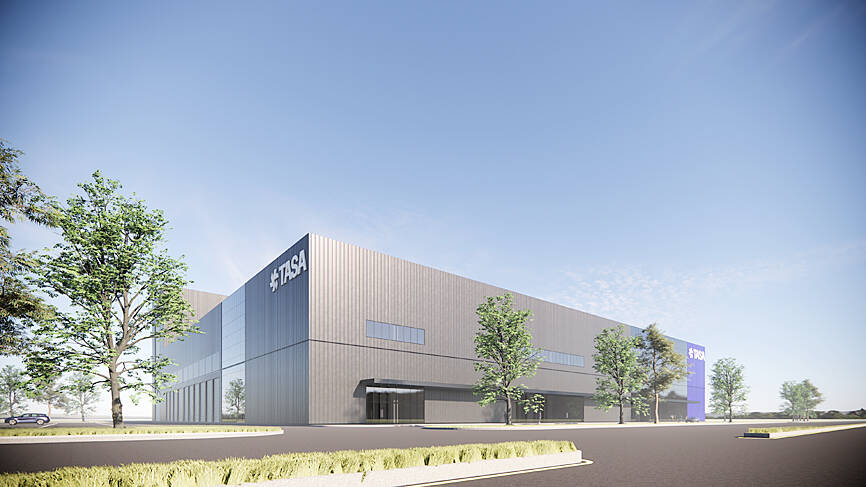
Photo courtesy of the Taiwan Space Agency via CNA
The project would be part of a strategy to facilitate satellite research in the north and rocket research in the south, it said.
The Executive Yuan approved the proposal to fund the rocket research center in October last year, tentatively authorizing NT$3.39 billion (US$108 million) for construction from this year to 2029, the agency said.
The center would not launch rockets on site nor conduct work on rocket engines that generate noise, it said.
The project would facilitate the development of national space industry supply chains, it added.
A national rocket launch center would be built in Pingtung County, it said, adding that the site has completed the fourth phase of its environmental impact assessment.
The agency aims to submit the final launch site construction plans to the Ministry of Environment by the second quarter and be ready to operate the launch base by 2032, it said.
The nation has invested in satellite technology for many years, but does not yet possess independent launch capabilities, so it depends on launch services in the private sector, such as SpaceX, the agency said.
Using commercial services means that the government cannot determine its launch schedule and has to make allowances for delays due to competition from other clients, leading to a reduction in autonomous space missions, it said.
The agency in 2023 initiated the program for space rockets to establish mechanisms for facilitating the certification of satellites and space flight components, it said.
The program would upgrade the nation’s space industry, oversee industry-academia cooperation, and help Taiwanese manufacturers obtain flight time and quality standard certificates, the agency said.
More than 50 Taiwanese companies are collaborating with the agency to develop avionics, remote control, guidance, propulsion and lightweight systems used in spaceflight, it said.
The agency is working to allow the nation to source rocket and satellite parts domestically as a key step in creating a national rocket industry, it said.
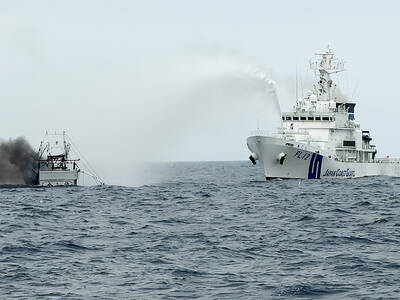
CREDIT-GRABBER: China said its coast guard rescued the crew of a fishing vessel that caught fire, who were actually rescued by a nearby Taiwanese boat and the CGA Maritime search and rescue operations do not have borders, and China should not use a shipwreck to infringe upon Taiwanese sovereignty, the Coast Guard Administration (CGA) said yesterday. The coast guard made the statement in response to the China Coast Guard (CCG) saying it saved a Taiwanese fishing boat. The Chuan Yu No. 6 (全漁6號), a fishing vessel registered in Keelung, on Thursday caught fire and sank in waters northeast of Diaoyutai Islands (釣魚台). The vessel left Keelung’s Badouzih Fishing Harbor (八斗子漁港) at 3:35pm on Sunday last week, with seven people on board — a 62-year-old Taiwanese captain surnamed Chang (張) and six
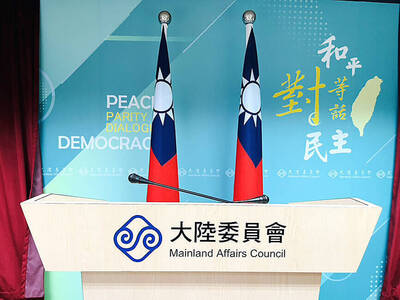
RISKY BUSINESS: The ‘incentives’ include initiatives that get suspended for no reason, creating uncertainty and resulting in considerable losses for Taiwanese, the MAC said China’s “incentives” failed to sway sentiment in Taiwan, as willingness to work in China hit a record low of 1.6 percent, a Ministry of Labor survey showed. The Directorate-General of Budget, Accounting and Statistics (DGBAS) also reported that the number of Taiwanese workers in China has nearly halved from a peak of 430,000 in 2012 to an estimated 231,000 in 2024. That marked a new low in the proportion of Taiwanese going abroad to work. The ministry’s annual survey on “Labor Life and Employment Status” includes questions respondents’ willingness to seek employment overseas. Willingness to work in China has steadily declined from

The Legislative Yuan’s Finance Committee yesterday approved proposed amendments to the Amusement Tax Act (娛樂稅法) that would abolish taxes on films, cultural activities and competitive sporting events, retaining the fee only for dance halls and golf courses. The proposed changes would set the maximum tax rate for dance halls and golf courses at 50 and 20 percent respectively, with local governments authorized to suspend the levies. Article 2 of the act says that “amusement tax shall be levied on tickets sold or fees charged by amusement places, facilities or activities” in six categories: “Cinema; professional singing, story-telling, dancing, circus, magic show, acrobatics
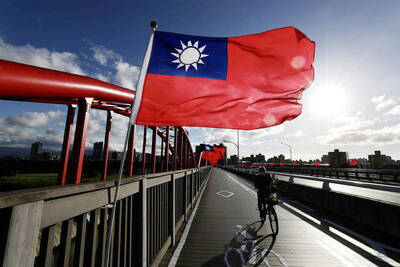
INFLATION UP? The IMF said CPI would increase to 1.5 percent this year, while the DGBAS projected it would rise to 1.68 percent, with GDP per capita of US$44,181 The IMF projected Taiwan’s real GDP would grow 5.2 percent this year, up from its 2.1 percent outlook in January, despite fears of global economic disruptions sparked by the US-Iran conflict. Taiwan’s consumer price index (CPI) is projected to increase to 1.5 percent, while unemployment would be 3.4 percent, roughly in line with estimates for Asia as a whole, the international body wrote in its Global Economic Outlook Report published in the US on Monday. The figures are comparatively better than the IMF outlook for the rest of the world, which pegged real GDP growth at 3.1 percent, down from 3.3 percent


 RSS
RSS