


Taiwan’s government has sharply upgraded its economic outlook, buoyed by easing trade uncertainties with the US and sustained powerful global demand for artificial intelligence (AI) hardware.
The Directorate-General of Budget, Accounting and Statistics (DGBAS) yesterday raised its GDP growth forecast to 7.71 percent for this year, more than doubling its November estimate of 3.54 percent in the largest upward revision on record.
DGBAS Minister Chen Shu-tzu (陳淑姿) said the adjustment reflects a convergence of clearer external trade conditions and powerful technology demand, adding that Taiwan is now poised to see GDP exceed US$1 trillion for the first time.
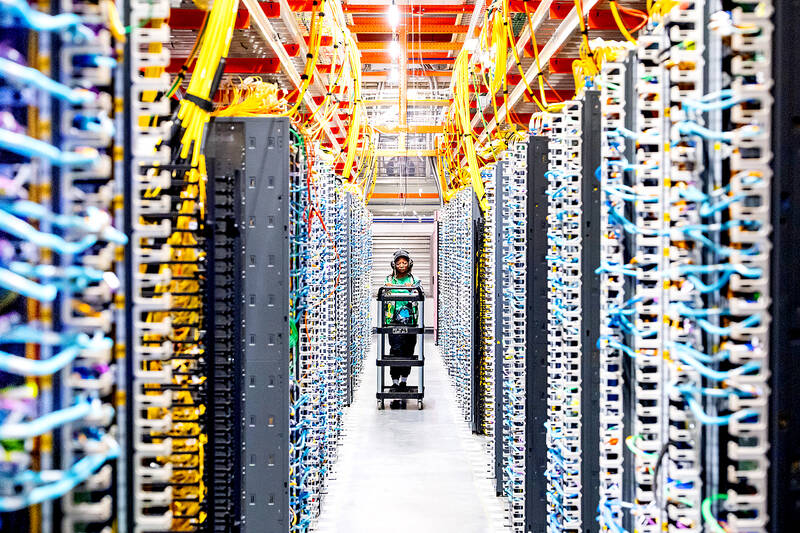
Photo: Amazon Web Services via AP
“The overall performance can be described as remarkable,” Chen said, noting that the economy is expanding from an already high base of an 8.68 percent growth last year, indicating durable momentum rather than a short-term rebound.
A key driver of the revision was improved clarity in trade relations with Washington, which had previously clouded prospects for Taiwan’s export-oriented manufacturing sector.
Earlier concerns about possible 100 percent tariffs on semiconductors prompted a cautious stance, but those uncertainties have largely receded, allowing companies to accelerate orders and investment planning, Chen said.
DGBAS statistics department head Tsai Yu-tai (蔡鈺泰) said export performance in the fourth quarter of last year far exceeded expectations, prompting the agency to reassess assumptions about global demand.
Semiconductor shipments and related technology products continue to benefit from strong procurement by hyperscale cloud service providers building AI data centers, driving demand for advanced chips, servers and networking equipment produced by Taiwanese firms, he said.
The agency now forecasts exports will grow 22.22 percent this year, up 7.84 percentage points from the previous projection, cementing their role as the primary engine of economic expansion.
Improved trade arrangements with the US, including preferential treatment for certain automotive components, are also expected to support traditional manufacturing industries by boosting their competitiveness abroad, Tsai said.
Investment for this year is projected to remain resilient despite a cooling property market. While major semiconductor makers continue expanding capacity overseas, a tight global supply of AI infrastructure is prompting them to scale up advanced processes and high-end packaging at home, with suppliers across the value chain following suit, he said.
Private investment is expected to rise 4.24 percent this year, while total capital formation is forecast to grow 4.08 percent, aided by public infrastructure programs and airline fleet expansion, the DGBAS projected.
Consumer spending is also set to strengthen, with private consumption forecast to increase 2.51 percent, as robust corporate earnings, wage growth and dividend payouts lift household incomes, the agency said, adding that wealth effects from equity market gains are expected to provide an additional tailwind.
Inflation for this year is forecast to remain contained, with the consumer price index projected to rise 1.68 percent, below the central bank’s 2 percent alert threshold, it said.
DGBAS officials characterized the outlook as one of “rapid growth paired with price stability,” positioning Taiwan to sustain expansion even as the global economy remains uneven.
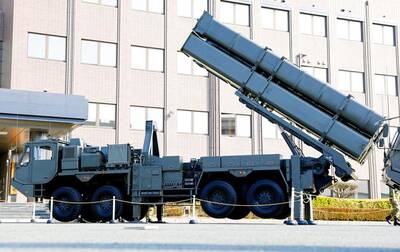
Japan has deployed long-range missiles in a southwestern region near China, the Japanese defense minister said yesterday, at a time when ties with Beijing are at their lowest in recent years. The missiles were installed in Kumamoto in the southern region of Kyushu, as Japan is attempting to shore up its military capacity as China steps up naval activity in the East China Sea. “Standoff defense capabilities enable us to counter the threat of enemy forces attempting to invade our country ... while ensuring the safety of our personnel,” Japanese Minister of Defense Shinjiro Koizumi said. “This is an extremely important initiative for
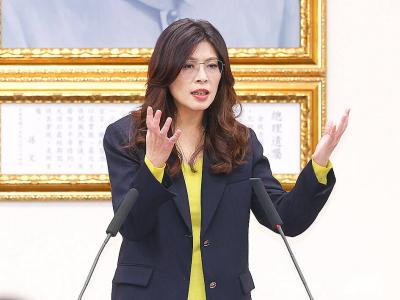
Chinese Nationalist Party (KMT) Chairwoman Cheng Li-wun (鄭麗文) today accepted an invitation from Chinese President Xi Jinping (習近平) to lead a delegation to China next month, saying she hopes to promote the peaceful development of cross-strait relations and bring stability to the Taiwan Strait. “I am grateful and happy to accept this invitation,” Cheng said in a statement from the KMT chairperson’s office. Cheng said she hopes both sides can work together to promote the peaceful development of cross-strait relations, enhance exchange and cooperation, bring stability to the Taiwan Strait and improve people’s livelihoods. At today's news conference, Cheng said any efforts to
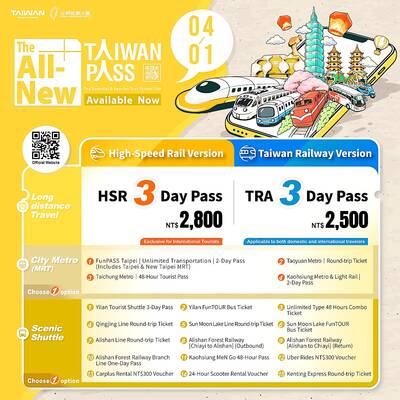
MORE POPULAR: Taiwan Pass sales increased by 59 percent during the first quarter compared with the same period last year, the Tourism Administration said The Tourism Administration yesterday said that it has streamlined the Taiwan Pass, with two versions available for purchase beginning today. The tourism agency has made the pass available to international tourists since 2024, allowing them to access the high-speed rail, Taiwan Railway Corp services, four MRT systems and four Taiwan Tourist Shuttles. Previously, five types of Taiwan Pass were available, but some tourists have said that the offerings were too complicated. The agency said only two types of Taiwan Pass would be available, starting from a three-day pass with the high-speed rail and a three-day pass with Taiwan Railway Corp. The former costs NT$2,800
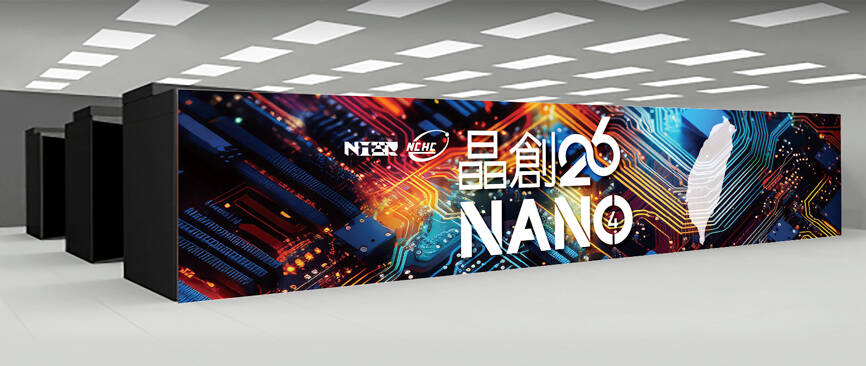
The nation’s fastest supercomputer, Nano 4 (晶創26), is scheduled to be launched in the third quarter, and would be used to train large language models in finance and national defense sectors, the National Center for High-Performance Computing (NCHC) said. The supercomputer, which would operate at about 86.05 petaflops, is being tested at a new cloud computing center in the Southern Taiwan Science Park in Tainan. The exterior of the server cabinet features chip circuitry patterns overlaid with a map of Taiwan, highlighting the nation’s central position in the semiconductor industry. The center also houses Taiwania 2, Taiwania 3, Forerunner 1 and


 RSS
RSS