


Ten lawmakers from the two main political parties yesterday were indicted for causing bodily injury and other offenses during a spate of brawls inside the legislative chamber and a committee room in 2024 and last year.
Chinese Nationalist Party (KMT) legislators Hsieh Lung-chieh (謝龍介), Liao Wei-hsiang (廖偉翔), Chiu Cheng-chun (邱鎮軍), Huang Chien-hao (黃健豪), Huang Jen (黃仁), Wang Hung-wei (王鴻薇) and Chen Yu-jen (陳玉珍), as well as Democratic Progressive Party (DPP) legislators Lin Shu-fen (林淑芬), Michelle Lin (林楚茵) and Ker Chien-ming (柯建銘) were charged following the investigation of criminal complaints, the Taipei District Prosecutors’ Office said.
Four other lawmakers named in the complaints were not charged due to insufficient evidence, prosecutors said.
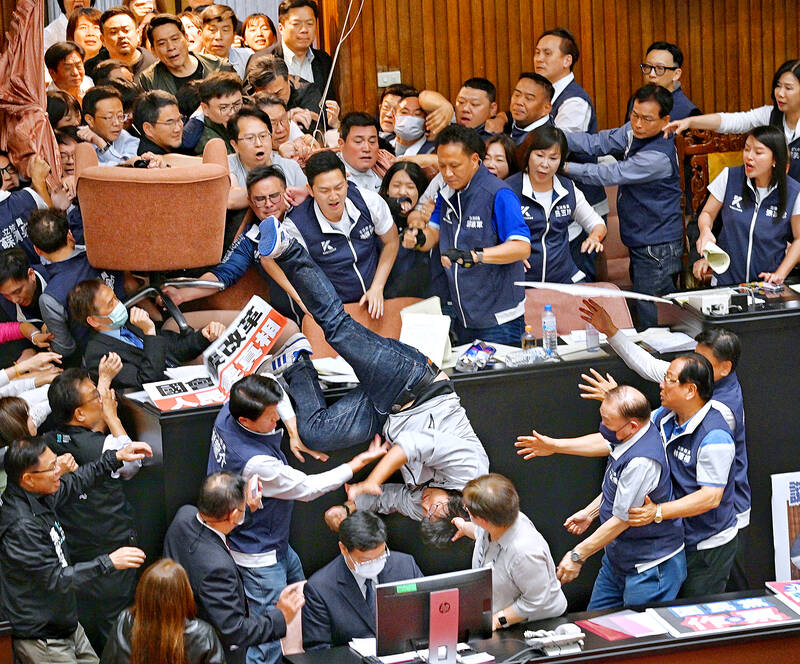
Photo: Fang Pin-chao, Taipei Times
The first and largest of the fights broke out on May 17, 2024, during a debate on revisions to the Act Governing the Legislative Yuan’s Power (立院職權行使法), the indictment said.
DPP Legislator Chiu Chih-wei (邱志偉) alleged that during a struggle to occupy the speaker’s rostrum, Liao, Chiu Cheng-chun and Huang Chien-hao pushed him down into the chamber’s well.
As he tried to grab a table to prevent himself from falling, Hsieh dragged him to the ground headfirst, resulting in a concussion and external head injuries, Chiu Chih-wei said.
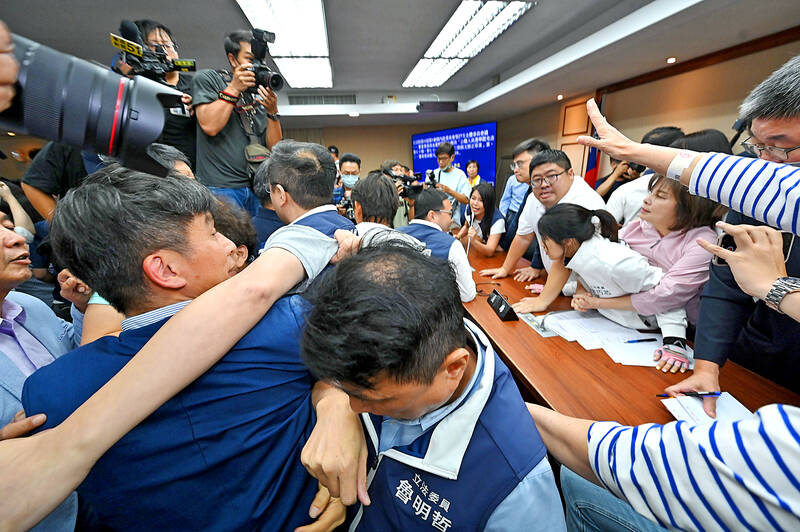
Photo: Tu Chien-jung, Taipei Times
All four KMT lawmakers were indicted for roughing up Chiu Chih-wei.
Meanwhile, Huang Jen was indicted for a similar pushing incident that left DPP Legislator Kuo Kuo-wen (郭國文) with a fractured tailbone.
Chiu Cheng-chun was also indicted for a second scuffle later that day, during which he grabbed DPP Legislator Puma Shen’s (沈伯洋) clothes and pulled him to the ground headfirst, resulting in a concussion, prosecutors said.
Lin Shu-fen was charged with causing bodily injury when during a debate on the same legislation a week later, which also devolved into physical conflict, she punched Taiwan People’s Party Legislator Mai Yu-chen (麥玉珍) in the face, prosecutors said.
Michelle Lin and Wang were charged for slapping and kicking each other during a July 8, 2024, committee hearing on revisions to the Public Officials Election and Recall Act (公職人員選舉罷免法) as they fought to seize the convener’s chair, the indictment said.
On Dec. 6, 2024, the KMT’s move to place the same bill on the legislature’s agenda without prior announcement sparked another attempt by the DPP to halt the session by occupying the speaker’s chair.
During the tussle that followed, Chen grappled DPP Legislator Lin Yue-chin (林月琴), carried her off the rostrum, threw her to the ground and kicked her, prosecutors said, adding that she was charged with causing bodily injury.
During an incident on March 25 last year, DPP caucus whip Ker, irritated by two KMT-initiated referendum proposals that had been placed on the agenda, slammed his retractable cane twice against a table on the speaker’s rostrum, causing the bottom half of it to fly off and strike KMT Legislator Hsu Chiao-hsin (徐巧芯) in the arm, the indictment said.
However, as prosecutors said they found no evidence that Ker was trying to hit Hsu, he was only charged with negligence leading to bodily injury.
During the investigation, prosecutors said that several legislators told them their actions fell within the speech immunity granted to lawmakers under Constitutional Court Interpretation No. 435 of 1997.
Prosecutors ultimately determined that the deliberate physical actions were unrelated to the exercise of official powers, and were therefore not subject to constitutional protections, the indictment said.
Under the Criminal Code, causing bodily injury is punishable by up to five years in prison or a fine of up to NT$500,000. Negligence leading to injury is punishable by a maximum of one year imprisonment or a fine of up to NT$100,000.
KMT Deputy Secretary-General Lin Pei-hsiang (林沛祥) said he “strongly condemns” the indictments and that the KMT caucus would support its members in their efforts to defend their innocence, the legislature’s dignity, and Taiwan’s democracy and rule of law.
Michelle Lin and Wang have filed suits against each other over the incident.
Michelle Lin said she respects the justice system and would fight the charges in court.
Videos show that Wang was the aggressor and bragged about the attack in the immediate aftermath, Michelle Lin said.
Wang said that Michelle Lin threw the first punch.
Lin Yue-chin said she has no intention of settling after being subjected to a “malicious attack” by Chen, who has expressed no remorse.
Additional reporting by Liu Wan-lin and Chen Cheng-yu
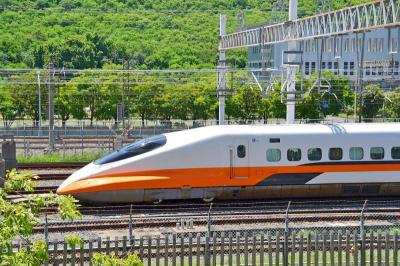
A signaling system malfunction disrupted high-speed rail (HSR) services beginning at 8am today, with trains temporarily reduced to three northbound and three southbound trains per hour as authorities conduct inspections. The malfunction occurred on a section of track in Miaoli County during pre-operation checks early this morning, forcing northbound and southbound trains to use a single track, the HSR operator said. The regular schedule has been replaced with three hourly trains offering only nonreserved seating in each direction, stopping at every station, it said, adding that business class cars would still have reserved seating. Departures from terminal stations are scheduled at the top
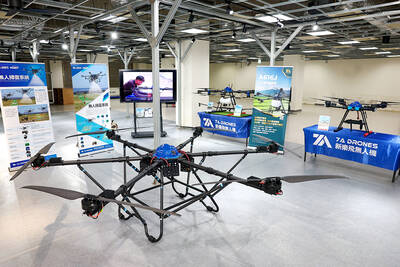
DRONE CENTRAL: Taiwan aims to become Asia’s democratic hub for drones, with most exports focused on high-quality military-grade models, an official said Taiwan’s drone industry is expected to expand significantly by 2030, producing 100,000 units per month and exporting half of them, the Ministry of Economic Affairs said yesterday. Current drone production capacity is about 15,000 units per month, but the industry can quickly scale up as demand increases, Industrial Development Administration Director-General Chiou Chyou-huey (邱求慧) told a news conference in Taipei. Taiwan’s drone output grew 2.5-fold last year to NT$12.9 billion (US$408.3 million) under a government program to develop the uncrewed vehicle sector, he said. The Executive Yuan in October last year approved plans to invest NT$44.2 billion into domestic production of uncrewed aerial
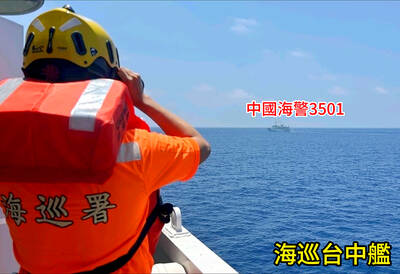
VERBOSE VESSELS: A CGA cutter and a China Coast Guard exchanged verbal barbs for more than a day in Taiwanese-controlled waters before the Chinese vessel left The Taiwanese and Chinese coast guards had a standoff near the strategically located Pratas Islands (Dongsha Islands, 東沙群島) in the north of the South China Sea, the Coast Guard Administration (CGA) said yesterday. The two sides engaged in intense radio exchanges over sovereignty claims during the 33-hour standoff. China Coast Guard vessel 3501 eventually left the restricted waters, 26.6 nautical miles (49.2km) west of the Pratas Islands, at 5pm yesterday, the CGA said. Lying approximately between southern Taiwan and Hong Kong, the Taiwan-controlled Pratas are seen by some security experts as vulnerable to Chinese attack due to their distance — more than
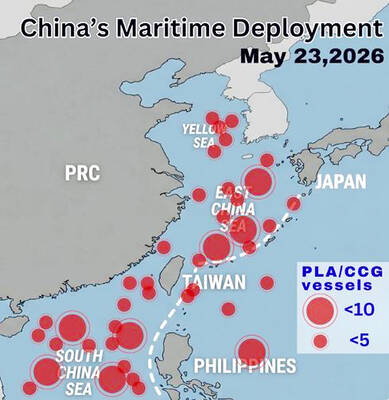
WARNING: China should stop engaging in actions that undermine regional peace and stability, as it would only build resentment among people across the Strait, the CGA said China has deployed more than 100 navy, coast guard and other vessels in waters from the Yellow Sea to the South China Sea and the western Pacific since US President Donald Trump and Chinese President Xi Jinping (習近平) met in Beijing, National Security Council Secretary-General Joseph Wu (吳釗燮) said yesterday. “In this part of the world, #China is the one & only PROBLEM wrecking the #StatusQuo & threatening regional peace & stability,” Wu wrote on X. In a separate post, he said Beijing was coercing Taiwan’s maritime domain, calling it illegal and provocative, after the Coast Guard Administration (CGA) expelled a


 RSS
RSS