


Vote counting was under way last night in Thailand’s early general election, seen as a three-way race among competing visions of progressive, populist and old-fashioned patronage politics.
The battle for support from 53 million registered voters came against a backdrop of slow economic growth and heightened nationalist sentiment. While more than 50 parties contested the polls, only three — the People’s Party, Bhumjaithai and Pheu Thai — have the nationwide organization and popularity to gain a winning mandate.
A simple majority of the 500 elected lawmakers selects the next prime minister.
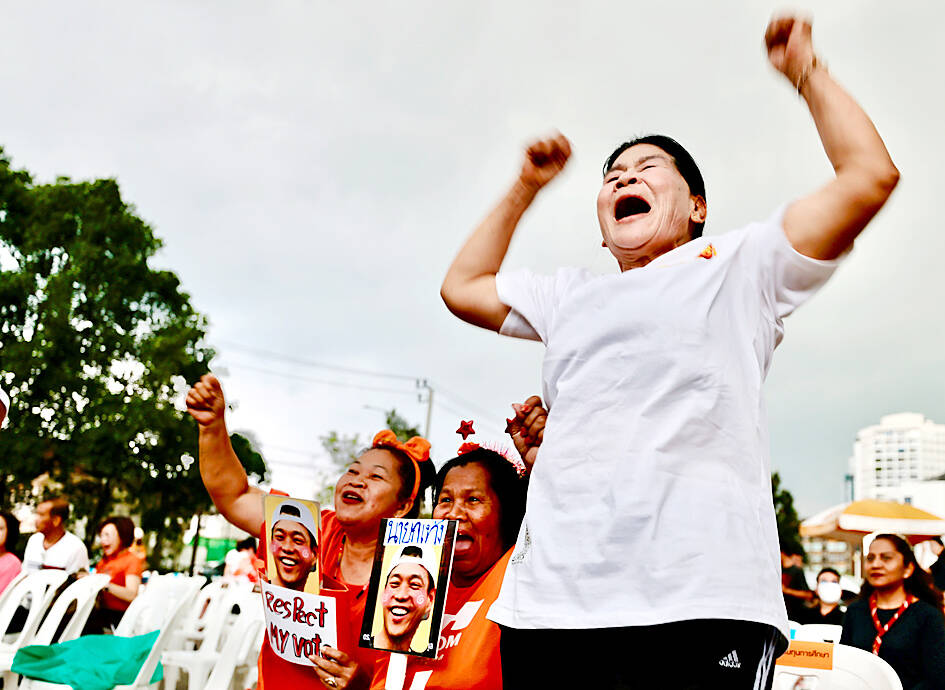
Photo: AP
Local polls consistently projected that no single party would gain a majority, necessitating the formation of a coalition government.
Although the progressive People’s Party is seen as favored to win a plurality, its reformist politics are not shared by its leading rivals, which might freeze it out by joining forces to form a government.
The People’s Party, led by Natthaphong Ruengpanyawut, is the successor to the Move Forward Party, which won the most seats in the Thai House of Representatives in 2023, but was blocked from forming a government by conservative lawmakers and forced to dissolve.
“I think we will get the mandate from the people, and we promised the people that we will form the people’s government to bring policies that benefit all, not a few in the country,” Natthaphong told reporters after casting his ballot in Bangkok.
His party’s platform continues to promise sweeping reforms of the military, police and judiciary, appealing to youth and urban voters. Legal constraints have led it to set aside demands for reform of a law that metes out harsh penalties for criticism of the monarchy, while putting new emphasis on economic issues.
Softening its politics risks weakening its core support, already at risk, because the last election had positioned it squarely as the alternative to nine previous years of military-led government, a situation it cannot fruitfully exploit this time.
At the same time, its positions critical of the military can be a political liability with the surge of patriotism that emerged during last year’s border clashes with Cambodia, said Napon Jatusripitak, director of the Center for Politics and Geopolitics at Thailand Future, a Bangkok-based think tank.
The Bhumjaithai Party, headed by incumbent Thai Prime Minister Anutin Charnvirakul, is seen as the main defender and preferred choice of the royalist-military establishment.
Anutin has been prime minister only since September last year, after serving in the Thai Cabinet of his immediate predecessor, Paetongtarn Shinawatra, who was forced out of office for an ethics violation regarding mishandling relations with Cambodia.
He dissolved parliament in December last year to call a new election after he was threatened with a no-confidence vote.
Subsequent border clashes with Cambodia allowed Anutin to recast himself as a wartime leader after his popularity initially slipped because of floods and financial scandals. His campaign focuses on national security and economic stimulus.
“We have done everything that we had to, but we cannot force the mind of the people. We can only present ourselves, and hope that the people will have faith in us,” Anutin said after casting ballots in northeastern Buriram Province, his party’s stronghold.
Bhumjaithai, seen as the likeliest party to form the next government, benefits from an electoral strategy employing old-style patronage politics and a machine skilled at grassroots-level organizing in the vote-rich northeast.
The Pheu Thai Party is the latest political vehicle for billionaire former Thai prime minister Thaksin Shinawatra. Thaksin-backed parties staged repeated electoral comebacks, only to be ousted by conservative-leaning courts and state watchdog agencies.
It softened its politics enough by the 2023 election to be returned to power after being judged by the previously hostile royalist-military establishment as an acceptable alternative to the more progressive Move Forward Party.
The conservative court system rounded on it anyway — ousting two of its prime ministers over two years and ordering Thaksin imprisoned on old charges. The party now campaigns on economic revival and populist pledges such as cash handouts, nominating Thaksin’s nephew, Yodchanan Wongsawat, as its lead candidate for prime minister.
“I’m excited, because I think today will be another busy day for the country’s democracy,” Yodchanan told reporters after voting.
Yesterday’s polls include a referendum asking voters whether Thailand should replace its 2017 military-drafted constitution.
The vote is not on a proposed draft, but rather to decide whether to authorize parliament to begin a formal drafting process, which would require many further steps before coming to fruition.
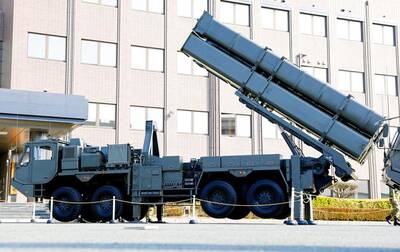
Japan has deployed long-range missiles in a southwestern region near China, the Japanese defense minister said yesterday, at a time when ties with Beijing are at their lowest in recent years. The missiles were installed in Kumamoto in the southern region of Kyushu, as Japan is attempting to shore up its military capacity as China steps up naval activity in the East China Sea. “Standoff defense capabilities enable us to counter the threat of enemy forces attempting to invade our country ... while ensuring the safety of our personnel,” Japanese Minister of Defense Shinjiro Koizumi said. “This is an extremely important initiative for
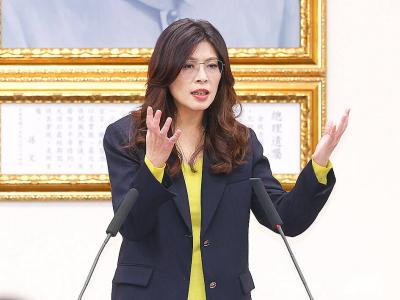
Chinese Nationalist Party (KMT) Chairwoman Cheng Li-wun (鄭麗文) today accepted an invitation from Chinese President Xi Jinping (習近平) to lead a delegation to China next month, saying she hopes to promote the peaceful development of cross-strait relations and bring stability to the Taiwan Strait. “I am grateful and happy to accept this invitation,” Cheng said in a statement from the KMT chairperson’s office. Cheng said she hopes both sides can work together to promote the peaceful development of cross-strait relations, enhance exchange and cooperation, bring stability to the Taiwan Strait and improve people’s livelihoods. At today's news conference, Cheng said any efforts to

MORE POPULAR: Taiwan Pass sales increased by 59 percent during the first quarter compared with the same period last year, the Tourism Administration said The Tourism Administration yesterday said that it has streamlined the Taiwan Pass, with two versions available for purchase beginning today. The tourism agency has made the pass available to international tourists since 2024, allowing them to access the high-speed rail, Taiwan Railway Corp services, four MRT systems and four Taiwan Tourist Shuttles. Previously, five types of Taiwan Pass were available, but some tourists have said that the offerings were too complicated. The agency said only two types of Taiwan Pass would be available, starting from a three-day pass with the high-speed rail and a three-day pass with Taiwan Railway Corp. The former costs NT$2,800

The nation’s fastest supercomputer, Nano 4 (晶創26), is scheduled to be launched in the third quarter, and would be used to train large language models in finance and national defense sectors, the National Center for High-Performance Computing (NCHC) said. The supercomputer, which would operate at about 86.05 petaflops, is being tested at a new cloud computing center in the Southern Taiwan Science Park in Tainan. The exterior of the server cabinet features chip circuitry patterns overlaid with a map of Taiwan, highlighting the nation’s central position in the semiconductor industry. The center also houses Taiwania 2, Taiwania 3, Forerunner 1 and


 RSS
RSS