


Ukraine and Russia swapped more than 300 prisoners following “productive” talks in Abu Dhabi yesterday, while a US mediator conceded that “significant” work lay ahead in the quest for a broader deal to end the war.
As talks were underway, large swathes of the Ukrainian capital were still without heating in sub-zero temperatures, after successive Russian strikes knocked out energy supplies to hundreds of apartment blocks in Kyiv.
“Today, delegations from the United States, Ukraine and Russia agreed to exchange 314 prisoners — the first such exchange in five months,” US special envoy Steve Witkoff said.
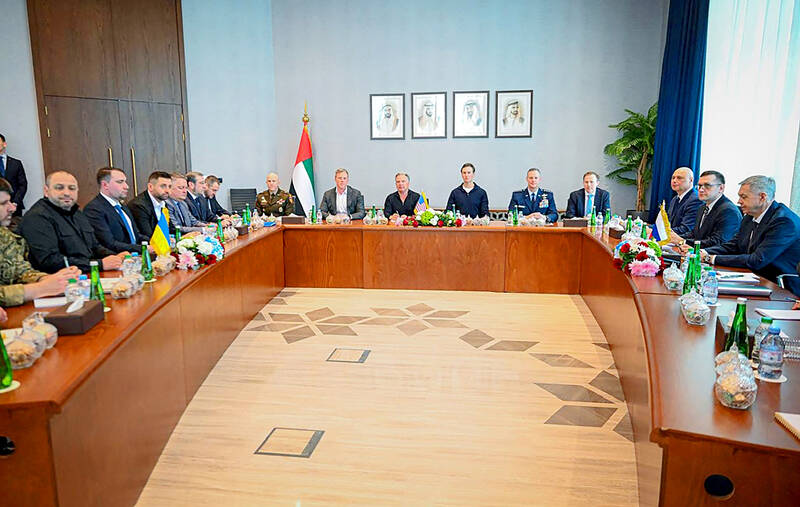
Photo: Qatari Ministry of Foreign Affairs / AFP
The Russian Ministry of Defense confirmed the two sides changed 157 prisoners each.
While Witkoff described the negotiations as “detailed and productive,” he dimmed hopes for a breakthrough, saying “significant work remains.”
Kyiv had described the first day of negotiations as “substantive and productive,” while Russian negotiator Kirill Dmitriev said talks were going well.
“There is definitely progress, things are moving forward in a good, positive direction,” Dmitriev said.
There was no update on the contentious issue of territory, or any sign of concessions from Moscow, which entered the talks refusing to compromise on its key demands.
Dmitriev also slammed what he called attempts from European nations to “disrupt the progress,” without elaborating.
Ahead of the two-day talks, Russia launched a massive attack on Ukraine’s power infrastructure, leaving many people without power and shivering through temperatures as low as minus-20°C.
Ukraine’s chief negotiator, Rustem Umerov, said “concrete steps and practical solutions” had been discussed in the first day of the talks.
However, Kremlin spokesman Dmitry Peskov said fighting would persist “until the Kyiv regime makes the appropriate decisions.”
The main sticking point in the negotiations is the long-term fate of territory in eastern Ukraine.
Moscow is demanding that Kyiv pull its troops out of swathes of the Donbas, including heavily fortified cities atop vast natural resources, before any deal.
It also wants international recognition that land seized in the invasion belongs to Russia.
Kyiv has said the conflict should be frozen along the current front line and rejected a pull-back of forces.
US President Donald Trump has been pushing both sides to negotiate an end to the war since he returned to office.
Ukrainian President Volodymyr Zelenskiy said Trump’s role was crucial, saying “Putin is only scared of Trump.”
Trump could use economic sanctions against Russia or transfer weapons to Ukraine to “maintain this pressure on Putin,” Zelenskiy said, adding that Kyiv would not compromise on sovereignty.
Ukraine has warned that ceding ground would embolden Moscow, and that it would not sign a deal that fails to deter Russia from invading again.
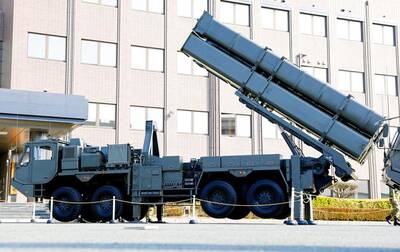
Japan has deployed long-range missiles in a southwestern region near China, the Japanese defense minister said yesterday, at a time when ties with Beijing are at their lowest in recent years. The missiles were installed in Kumamoto in the southern region of Kyushu, as Japan is attempting to shore up its military capacity as China steps up naval activity in the East China Sea. “Standoff defense capabilities enable us to counter the threat of enemy forces attempting to invade our country ... while ensuring the safety of our personnel,” Japanese Minister of Defense Shinjiro Koizumi said. “This is an extremely important initiative for
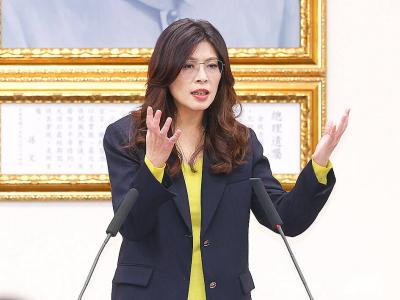
Chinese Nationalist Party (KMT) Chairwoman Cheng Li-wun (鄭麗文) today accepted an invitation from Chinese President Xi Jinping (習近平) to lead a delegation to China next month, saying she hopes to promote the peaceful development of cross-strait relations and bring stability to the Taiwan Strait. “I am grateful and happy to accept this invitation,” Cheng said in a statement from the KMT chairperson’s office. Cheng said she hopes both sides can work together to promote the peaceful development of cross-strait relations, enhance exchange and cooperation, bring stability to the Taiwan Strait and improve people’s livelihoods. At today's news conference, Cheng said any efforts to

MORE POPULAR: Taiwan Pass sales increased by 59 percent during the first quarter compared with the same period last year, the Tourism Administration said The Tourism Administration yesterday said that it has streamlined the Taiwan Pass, with two versions available for purchase beginning today. The tourism agency has made the pass available to international tourists since 2024, allowing them to access the high-speed rail, Taiwan Railway Corp services, four MRT systems and four Taiwan Tourist Shuttles. Previously, five types of Taiwan Pass were available, but some tourists have said that the offerings were too complicated. The agency said only two types of Taiwan Pass would be available, starting from a three-day pass with the high-speed rail and a three-day pass with Taiwan Railway Corp. The former costs NT$2,800

The nation’s fastest supercomputer, Nano 4 (晶創26), is scheduled to be launched in the third quarter, and would be used to train large language models in finance and national defense sectors, the National Center for High-Performance Computing (NCHC) said. The supercomputer, which would operate at about 86.05 petaflops, is being tested at a new cloud computing center in the Southern Taiwan Science Park in Tainan. The exterior of the server cabinet features chip circuitry patterns overlaid with a map of Taiwan, highlighting the nation’s central position in the semiconductor industry. The center also houses Taiwania 2, Taiwania 3, Forerunner 1 and


 RSS
RSS