


President William Lai (賴清德) today said that the US-Taiwan Economic Prosperity Partnership Dialogue (EPPD) highlighted three key strategic directions for bilateral cooperation: economic security, an innovative economy and a prosperous future.
The sixth round of talks under the framework concluded in Washington on Tuesday last week under the auspices of the American Institute in Taiwan and the Taipei Economic and Cultural Representative Office in the United States.
The dialogue encompassed plans to cooperate in areas such as artificial intelligence (AI), critical minerals and semiconductor supply chains.
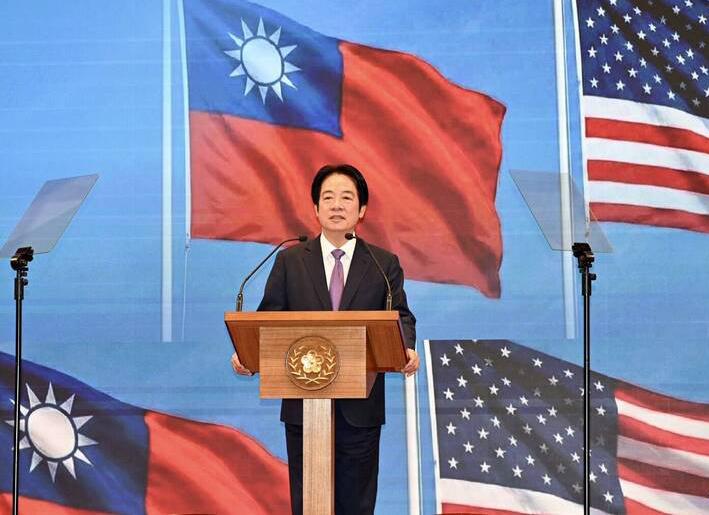
Photo: Luo Pei-de, Taipei Times
"Taiwan is on the right economic path and is striding confidently onto the world stage. Taiwan has both the capability and the confidence to work with its democratic partners to lead the next generation of prosperity," Lai said.
Taipei and Washington earlier this month reached an agreement on US President Donald Trump’s reciprocal tariff policies, with Taiwan securing a reduced tariff rate of 15 percent that would not be stacked on top of existing most-favored-nation rates.
The agreement also grants semiconductors and related products the most favorable treatment under Section 232 of the US Trade Expansion Act.
It was also confirmed that Taiwanese semiconductor, electronics manufacturing service, AI and energy companies would invest US$250 billion in the US, while the government would provide up to US$250 billion in credit guarantees for financial institutions to support investments in the US market.
The two nations have yet to lock in the agreement by signing a memorandum of understanding labeled the US-Taiwan Agreement on Reciprocal Trade.
However, tariff negotiations are just one aspect of Taiwan-US cooperation and the goal has always been to deepen strategic economic partnership through dialogue, exchange and expanded cooperation, Lai said.
The EPPD covered four key concerns: strategic alignment on supply chain security, cooperation on critical minerals, third-country cooperation and bilateral cooperation, he said.
First, to bolster economic security amid a shifting geopolitical landscape, high-tech industries such as AI and semiconductors are placing increasing emphasis on security, reliability and resilience, establishing a “non-red supply chain” independent of China, Lai said.
At this year’s meeting, Taipei and Washington signed a joint statement endorsing the Pax Silica Declaration — a US-led initiative to secure supply chains for advanced technologies and critical minerals — and US-Taiwan Cooperation on Economic Security, he said.
Second, to build an innovative economy, the two sides agreed to advance initiatives in areas such as supply-chain security, certification of uncrewed aerial vehicles and the removal of investment-related tax barriers, Lai said.
The move would ensure that the partnership keeps pace with technology-driven industrial restructuring and moves toward a next generation of prosperity, he said.
Taiwan possesses world-class manufacturing capabilities, while the US has an advantageous ecosystem of innovation, core key technologies and connections to global markets, making a partnership between the two highly complementary and strategic, he said.
Third, Taiwan-US cooperation no longer revolves around a single industry, but incorporates AI, digital infrastructure, critical minerals and drones, diversifying into cross-sector engagement, Lai said.
This year’s EPPD covered a wide range of topics, making it the most diverse and comprehensive dialogue to date, he said.
Looking to the future, Taiwan would take steps to accelerate alignment with international trade and economic standards and create a transparent and mutually beneficial legal environment, Lai said.
Moreover, Taiwan is boosting cooperation with nations worldwide, from signing agreements to renew investment protection and avoid double taxation with key Southeast Asian partners, to signing a digital trade agreement with Japan, he said.
It also signed “three pillar” agreements with the UK last year under the UK-Taiwan Enhanced Trade Partnership to enhance bilateral exchanges and cooperation in investments, digital trade, energy and net zero, he added.
Taipei is in negotiations to establish new agreements with Southeast Asian countries, including India, Philippines, Thailand and Vietnam, he said.
Lai said he hoped that the Legislative Yuan would review the Taiwan-US tariff agreement in accordance with the law, without involving partisan divisions or cross-party politics, to safeguard the hard-won results of the US trade negotiations.
Additional reporting by CNA and Reuters

The Legislative Yuan’s Finance Committee yesterday approved proposed amendments to the Amusement Tax Act (娛樂稅法) that would abolish taxes on films, cultural activities and competitive sporting events, retaining the fee only for dance halls and golf courses. The proposed changes would set the maximum tax rate for dance halls and golf courses at 50 and 20 percent respectively, with local governments authorized to suspend the levies. Article 2 of the act says that “amusement tax shall be levied on tickets sold or fees charged by amusement places, facilities or activities” in six categories: “Cinema; professional singing, story-telling, dancing, circus, magic show, acrobatics

Tainan, Taipei and New Taipei City recorded the highest fines nationwide for illegal accommodations in the first quarter of this year, with fines issued in the three cities each exceeding NT$7 million (US$220,639), Tourism Administration data showed. Among them, Taipei had the highest number of illegal short-term rental units, with 410. There were 3,280 legally registered hotels nationwide in the first quarter, down by 14 properties, or 0.43 percent, from a year earlier, likely indicating operators exiting the market, the agency said. However, the number of unregistered properties rose to 1,174, including 314 illegal hotels and 860 illegal short-term rental
INFLATION UP? The IMF said CPI would increase to 1.5 percent this year, while the DGBAS projected it would rise to 1.68 percent, with GDP per capita of US$44,181 The IMF projected Taiwan’s real GDP would grow 5.2 percent this year, up from its 2.1 percent outlook in January, despite fears of global economic disruptions sparked by the US-Iran conflict. Taiwan’s consumer price index (CPI) is projected to increase to 1.5 percent, while unemployment would be 3.4 percent, roughly in line with estimates for Asia as a whole, the international body wrote in its Global Economic Outlook Report published in the US on Monday. The figures are comparatively better than the IMF outlook for the rest of the world, which pegged real GDP growth at 3.1 percent, down from 3.3 percent
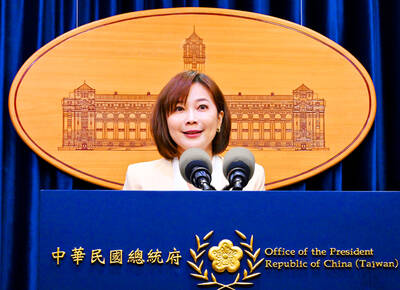
ECONOMIC COERCION: Such actions are often inconsistently applied, sometimes resumed, and sometimes just halted, the Presidential Office spokeswoman said The government backs healthy and orderly cross-strait exchanges, but such arrangements should not be made with political conditions attached and never be used as leverage for political maneuvering or partisan agendas, Presidential Office spokeswoman Karen Kuo (郭雅慧) said yesterday. Kuo made the remarks after China earlier in the day announced 10 new “incentive measures” for Taiwan, following a landmark meeting between Chinese President Xi Jinping (習近平) and Chinese Nationalist Party (KMT) Chairwoman Cheng Li-wun (鄭麗文) in Beijing on Friday. The measures, unveiled by China’s Xinhua news agency, include plans to resume individual travel by residents of Shanghai and China’s Fujian


 RSS
RSS