


The UK and Japan agreed to deepen defense and economic ties, visiting British Prime Minister Keir Starmer said yesterday.
“We set out a clear priority to build an even deeper partnership in the years to come,” Starmer said after a bilateral meeting in Tokyo. “That includes working together to strengthen our collective security, across the Euro-Atlantic and in the Indo-Pacific.”
Japanese Prime Minister Sanae Takaichi said they agreed to hold a meeting of British and Japanese foreign and defense ministers this year, adding that she wanted to discuss “cooperation towards realizing a free and open Indo-Pacific, the Middle East situation and Ukraine situation” with Starmer.
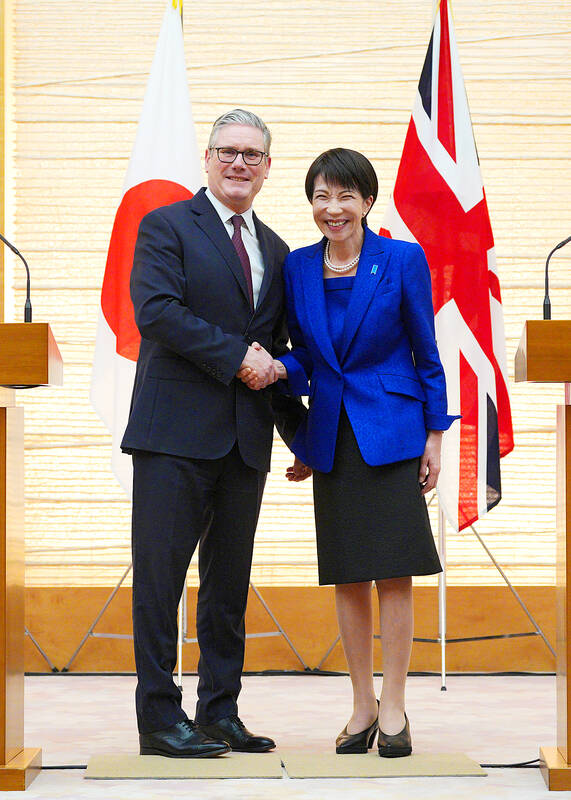
Photo: AP
Starmer arrived on a one-day Tokyo stop after a four-day visit in China, which drew warnings from US President Donald Trump.
Trump said it was “very dangerous” for its close ally to be dealing with China, although Starmer brushed off those comments.
Tokyo’s ties with Beijing have deteriorated since Takaichi suggested in November that Japan could intervene militarily during a potential attack on Taiwan.
Starmer met with Chinese President Xi Jinping (習近平) and Premier Li Qiang (李強) on Thursday, with both sides highlighting the need for closer ties.
He also signed a series of agreements there, with Downing Street announcing Beijing had agreed to visa-free travel for British citizens visiting China for less than 30 days.
No start date for that arrangement has been given yet.
Takaichi said the two leaders agreed that a bolstering of supply chains “including important minerals is urgently needed.”
There is concern that Beijing could choke off exports of the rare earths crucial for making everything from electric cars to missiles.
China, the world’s leading producer of such minerals, announced new export controls in October on rare earths and associated technologies.
They have also been a major sticking point in trade negotiations between China and the US.
The UK, Japan and Italy are also developing a new fighter jet after Tokyo relied for decades on the US for military hardware.
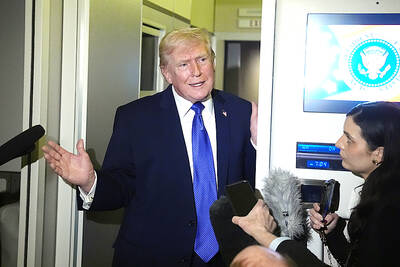
NON-NEGOTIABLE: The US president’s action ran counter to one of the US’ ‘six assurances’ on not consulting China about arms sales to Taiwan, US lawmakers said US President Donald Trump’s admission that he is discussing arms sales to Taiwan with Chinese President Xi Jinping (習近平) is “alarming and a blatant violation of US policy and the six assurances,” US Representative Ro Khanna said on Tuesday. Trump on Monday said he would decide soon on whether to send more weapons to Taiwan, after Xi warned him not to do so. “I’m talking to him about it. We had a good conversation, and we’ll make a determination pretty soon,” Trump told reporters aboard Air Force One when asked about warnings raised by Beijing during a phone call with Xi over

OPTIMISTIC: The DGBAS sharply upgraded its GDP growth estimate from 3.54 percent to 7.71 percent after the Taiwan-US trade agreement signing and given AI optimism The US imported more from Taiwan than China for the first time in decades, as US President Donald Trump’s tariffs reshape trade flows while a global boom in artificial intelligence (AI) fuels demand for tech products. US purchases of goods from China plunged almost 44 percent in December last year from 2024 to US$21.1 billion, US Department of Commerce data showed on Thursday. By contrast, shipments from Taiwan more than doubled during the same period to US$24.7 billion. The soaring Taiwanese shipments to the US reflect the huge expansion in supplies of chips and servers for AI companies, which has completely changed
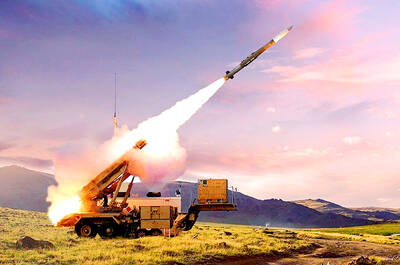
VACILLATING? Some US officials are concerned that Trump’s April visit to Beijing might be affected if Washington pushes through additional weapons sales to Taiwan A major US arms sales package for Taiwan is in limbo following pressure from Chinese President Xi Jinping (習近平) and concerns among some US officials that greenlighting the deal would derail US President Donald Trump’s upcoming visit to Bejing, the Wall Street Journal (WSJ) reported on Wednesday. Trump on Monday said that he would decide soon on whether to send more weapons to Taiwan, after Xi warned him not to do so. “I’m talking to him about it. We had a good conversation, and we’ll make a determination pretty soon,” Trump told reporters aboard Air Force One when asked about warnings raised
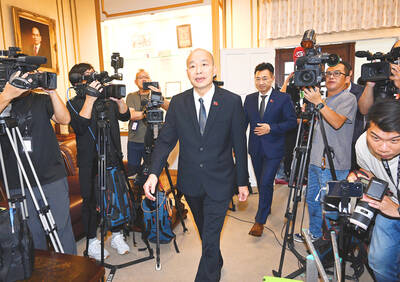
TEAMWORK: All parties should prioritize national defense and key security issues, which requires cooperation and long-term, stable support, the DPP’s Chen Pei-yu said A proposed NT$1.25 trillion (US$39.66 billion) special defense budget would be a top priority for the Legislative Yuan when it reconvenes after the Lunar New Year holiday, Legislative Speaker Han Kuo-yu (韓國瑜) said yesterday after a group of 37 US lawmakers sent letters to Taiwanese politicians expressing concern over the stalled budget. Chinese Nationalist Party (KMT) members Han and Deputy Legislative Speaker Johnny Chiang (江啟臣) in a statement said they would help party caucuses deliberate about the special defense budget, adding that they value open, candid and sincere exchanges with the US Congress and take US lawmakers’ concerns seriously. Taiwan-US relations are


 RSS
RSS