


More than 3,000 people have died in Iran’s nationwide protests, rights activists said yesterday, while a “very slight rise” in Internet activity was reported in the country after an eight-day blackout.
The US-based Human Rights Activists News Agency group said it had verified 3,090 deaths, including 2,885 protesters, after residents said the crackdown appeared to have broadly quelled protests for now and state media reported more arrests.
Tehran has been comparatively quiet for four days, several residents reached by Reuters said.
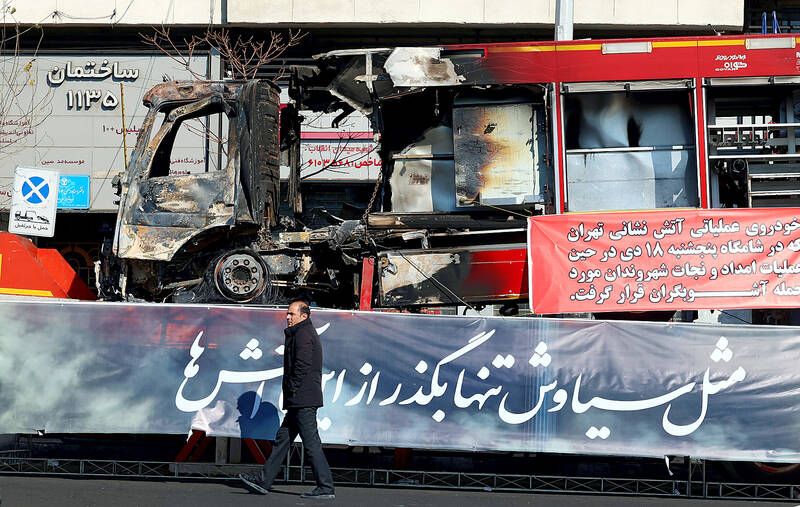
Photo: EPA
Drones were flying over the city, but there were no signs of major protests on Thursday or Friday, said the residents, who asked not to be identified for their safety.
A resident of a northern city on the Caspian Sea said the streets there also appeared calm.
The protests erupted on Dec. 28 last year over economic hardship and swelled into widespread demonstrations calling for the end of clerical rule in the Islamic republic, culminating in mass violence late last week.
According to opposition groups and an Iranian official, more than 2,000 people were killed in the worst domestic unrest since Iran’s 1979 Islamic Revolution.
“Metrics show a very slight rise in internet connectivity in #Iran this morning” after 200 hours of shutdown, the Internet monitoring group NetBlocks wrote on social media.
Connectivity remained around 2 percent of ordinary levels, it said.
A few Iranians overseas said on social media that they had been able to message users living inside Iran early yesterday.
US President Donald Trump, who had threatened “very strong action” if Iran executed protesters, said Tehran’s leaders had called off mass hangings.
“I greatly respect the fact that all scheduled hangings, which were to take place yesterday (Over 800 of them), have been cancelled by the leadership of Iran. Thank you!” he wrote on social media.
Iran had not announced plans for such executions or said it had canceled them.
Indian students and pilgrims returning from Iran said they were largely confined to their accommodations while in the country, unable to communicate with their families back home.
“We only heard stories of violent protests, and one man jumped in front of our car holding a burning baton, shouting something in the local language, with anger visible in his eyes,” said Z. Syeda, a third-year medical student at a university in Tehran.
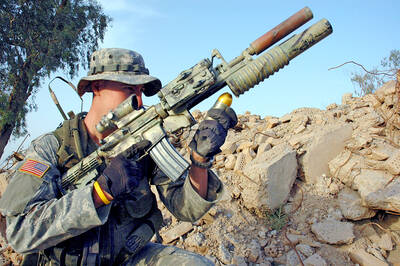
PREPAREDNESS: Given the difficulty of importing ammunition during wartime, the Ministry of National Defense said it would prioritize ‘coproduction’ partnerships A newly formed unit of the Marine Corps tasked with land-based security operations has recently replaced its aging, domestically produced rifles with more advanced, US-made M4A1 rifles, a source said yesterday. The unnamed source familiar with the matter said the First Security Battalion of the Marine Corps’ Air Defense and Base Guard Group has replaced its older T65K2 rifles, which have been in service since the late 1980s, with the newly received M4A1s. The source did not say exactly when the upgrade took place or how many M4A1s were issued to the battalion. The confirmation came after Chinese-language media reported
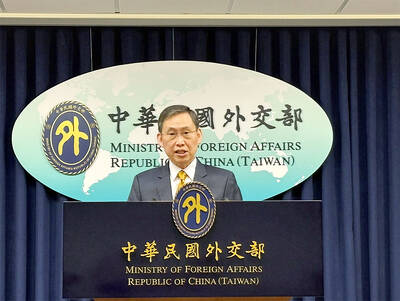
A Ministry of Foreign Affairs official yesterday said that a delegation that visited China for an APEC meeting did not receive any kind of treatment that downgraded Taiwan’s sovereignty. Department of International Organizations Director-General Jonathan Sun (孫儉元) said that he and a group of ministry officials visited Shenzhen, China, to attend the APEC Informal Senior Officials’ Meeting last month. The trip went “smoothly and safely” for all Taiwanese delegates, as the Chinese side arranged the trip in accordance with long-standing practices, Sun said at the ministry’s weekly briefing. The Taiwanese group did not encounter any political suppression, he said. Sun made the remarks when
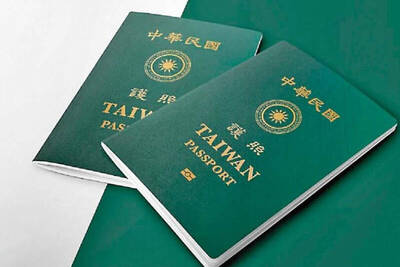
The Taiwanese passport ranked 33rd in a global listing of passports by convenience this month, rising three places from last month’s ranking, but matching its position in January last year. The Henley Passport Index, an international ranking of passports by the number of designations its holder can travel to without a visa, showed that the Taiwan passport enables holders to travel to 139 countries and territories without a visa. Singapore’s passport was ranked the most powerful with visa-free access to 192 destinations out of 227, according to the index published on Tuesday by UK-based migration investment consultancy firm Henley and Partners. Japan’s and
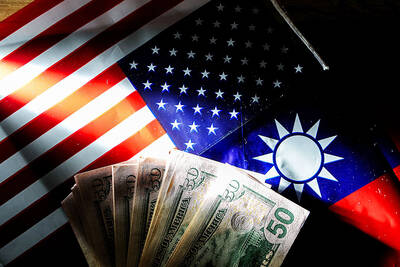
BROAD AGREEMENT: The two are nearing a trade deal to reduce Taiwan’s tariff to 15% and a commitment for TSMC to build five more fabs, a ‘New York Times’ report said Taiwan and the US have reached a broad consensus on a trade deal, the Executive Yuan’s Office of Trade Negotiations said yesterday, after a report said that Washington is set to reduce Taiwan’s tariff rate to 15 percent. The New York Times on Monday reported that the two nations are nearing a trade deal to reduce Taiwan’s tariff rate to 15 percent and commit Taiwan Semiconductor Manufacturing Co (TSMC, 台積電) to building at least five more facilities in the US. “The agreement, which has been under negotiation for months, is being legally scrubbed and could be announced this month,” the paper said,


 RSS
RSS