


The US has agreed to lower tariffs on Taiwanese goods from 20 percent to 15 percent, without stacking them on existing most-favored-nation (MFN) rates, the Executive Yuan said in a statement today.
The agreement, reached in trade negotiations that concluded yesterday in Washington, also grants semiconductors and related products the most favorable treatment under Section 232 of the Trade Expansion Act, the Cabinet said.
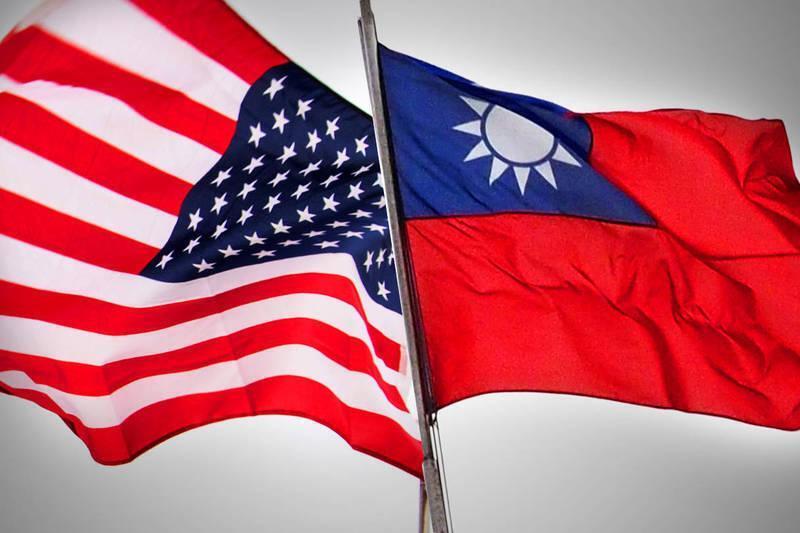
Photo: AFP
It also includes commitments to expand supply chain investment cooperation and deepen Taiwan-US strategic collaboration on artificial intelligence, according to the statement.
The new tariff rate of 15 percent matches US rates on goods from major trade partners such as Japan, South Korea and the EU.
As part of the agreement, Taiwanese semiconductor, electronics manufacturing service (EMS), artificial intelligence and energy companies would invest US$250 billion in the US based on their own plans, the Cabinet statement said, although no timetable was given.
At the same time, Taiwan's government has also agreed to provide up to US$250 billion in credit guarantees for financial institutions to support investments in the US market by the semiconductor and information and communication technology sectors, the statement said.
On Monday, the New York Times reported that Taiwan Semiconductor Manufacturing Co (TSMC, 台積電) would commit to building at least five more fabs in exchange for a possible reduction in . tariffs on Taiwanese goods.
TSMC chairman and CEO C.C. Wei (魏哲家) did not directly respond to the report at an investor conference yesterday, but he said his company was "speeding up" its capacity expansion in the US to satisfy client needs.
With the deal, Taiwan has become the first country in the world to secure the most favorable treatment for its semiconductor and related product suppliers, which should significantly ease uncertainties for the local semiconductor industry, the Cabinet statement said.
The US has also pledged to grant most favorable status to Taiwanese semiconductor firms when they import raw materials, equipment and electronics components for their US operations, the statement said, without elaborating.
According to the Cabinet, Washington has recognized and accepted a "Taiwan model" that Taipei proposed to allow Taiwanese companies to follow their own plans for investing in the US and moving closer geographically to their US clients.
The "Taiwan model" is expected to encourage Taiwanese companies to enter the supply chain in the US market and build industrial clusters there, the Cabinet said.
Taiwan has the sixth-biggest trade surplus with the US of any country in the world, and about 90 percent of that is from sales of semiconductors, information and communications products, and electronic components, the statement said.
In a separate statement, the US Department of Commerce described the arrangement as "a historic trade deal that will drive a massive reshoring of America's semiconductor sector" and "strengthen US economic resilience, create high-paying jobs and bolster national security."
Beyond the tech sector, the reduction of the import duty on Taiwanese goods imported to the US to 15 percent without stacking them on existing MFN rates should help make Taiwan's non-tech sectors more competitive, as they would now be on an equal footing with Japan, South Korea and the EU, the Cabinet said.
Taiwan has also secured the most favorable treatment for other items such as auto parts, wooden furniture and aircraft components under Section 232, and Taipei and Washington have agreed to set up a negotiation mechanism under Section 232.

‘NO SECURITY RISK’: The Railway Bureau reassured the public that the technicians’ activities were limited to technical guidance and did not involve sensitive systems The Railway Bureau yesterday said it had invited eight Chinese technicians to assist with an airport MRT construction project. The bureau issued the confirmation after an Internet user said Chinese nationals had entered the construction zone of Taiwan Taoyuan International Airport’s Terminal 3 project. They asked why “individuals from an enemy state” were allowed access to such a major national infrastructure project, which raised serious concerns over Taiwan’s industrial safety, sensitive systems and information security. The bureau’s Northern Region Engineering Branch Office said subcontractor Taiwan Handle Industrial Co (台灣手把工業) of the Taoyuan airport MRT’s “Contract No. CU05 Project A14 Station Civil, MEP &

A US uncrewed surface vessel (USV) encountered multiple Chinese warships during an autonomous transit of the Taiwan Strait, US defense company Seasats said in a statement on Wednesday. Seasats announced that a Lightfish USV had completed the first autonomous transit of the Taiwan Strait. Over five days, the USV traversed the entire length of the Strait while constantly monitoring surface vessel traffic, the company said. The Lightfish encountered multiple Chinese warships, one of which was a Chinese People’s Liberation Army Navy (PLAN) Type 056 corvette, it said. The Chinese vessels were operating “well within Taiwan’s exclusive economic zone without transmitting their identity via the

Taiwan is still in the process of assessing the possibility of recruiting workers from Eswatini, the Ministry of Foreign Affairs said yesterday, adding that its goal is to help Eswatini upgrade its vocational training centers. If there are plans to recruit workers from Eswatini, safeguarding national security, protecting public health and ensuring the employment rights of Taiwanese would be prerequisites, Department of West Asian and African Affairs Director-General Yen Chia-liang (顏嘉良) told a news conference. Key considerations would also include filling labor shortages in specific industries, and fostering bilateral professional and technical exchanges, he said. Yen was asked about the progress of labor
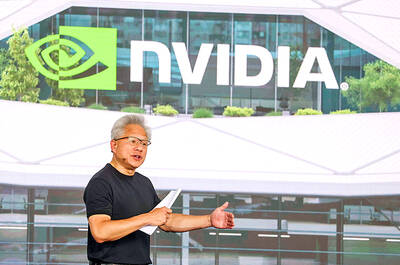
‘BOOMING’: ’ The number of partners we have here is incredible. You can see from their stock prices. They’re doing so well, they’re so happy,’ Jensen Huang said Nvidia Corp’s spending in Taiwan has ballooned to about US$150 billion a year, 10 times the US$10 billion to US$15 billion the company spent five years ago, Nvidia chief executive officer Jensen Huang (黃仁勳) said yesterday, suggesting Taiwan’s strategic importance in the global artificial intelligence (AI) supply chain. “Taiwan is the epicenter of the AI revolution. This is where the chips come, packaging comes. This is where the systems are made. This is where AI supercomputers were created,” Huang said at a meeting for the company’s employees in Beitou-Shilin Technology Park (北投士林科技園區) in Taipei, the planned site of Nvidia’s Taipei headquarters. “Taiwan


 RSS
RSS