


Canadian Prime Minister Mark Carney yesterday hailed his nation’s improving ties with China, as well as the leadership of Chinese President Xi Jinping (習近平), declaring that their nations were charting a new course in cooperation amid global division and disorder.
The four-day visit to China was the first by a Canadian prime minister since 2017, following up on Carney’s positive meeting with Xi in South Korea in October. The two are set to meet again today.
“We’re heartened by the leadership of President Xi Jinping and the speed with which our relationship has progressed,” Carney told Chinese National People’s Congress Standing Committee Chairman Zhao Leji (趙樂際) in a meeting in Beijing.
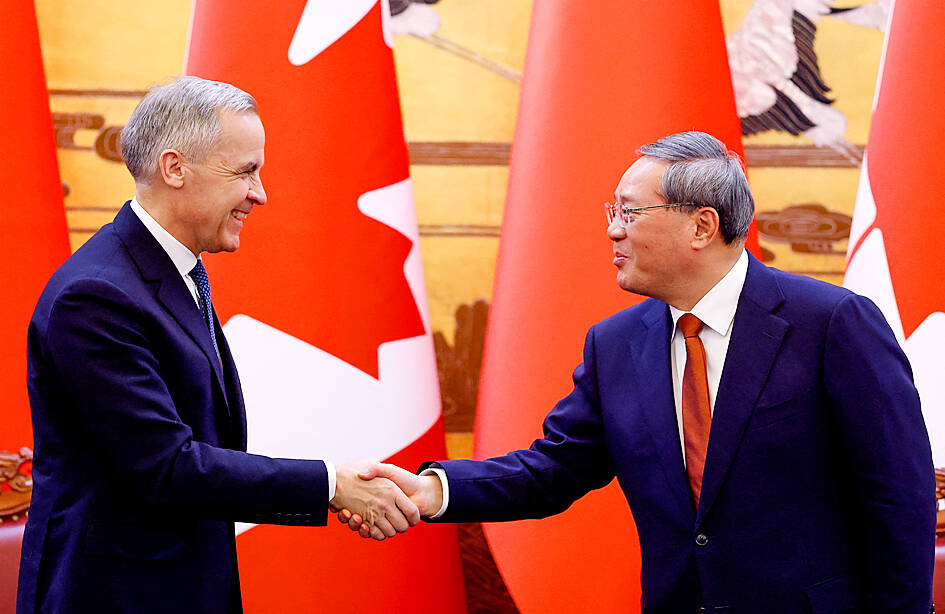
Photo: Reuters
“It sets the stage for these important discussions on a wide range of issues where we can be strategic partners from energy to agriculture, to people-to-people ties, multilateralism, to issues on security,” he said.
Carney’s optimism follows months of intense re-engagement by both countries aimed at recalibrating ties that had soured under former Canadian prime minister Justin Trudeau.
The efforts have also been fueled by a push to diversify export markets after US President Donald Trump imposed tariffs on Canada last year and suggested the longtime US ally could become his country’s 51st state.
“Our teams have worked hard, addressing trade irritants and creating platforms for new opportunities,” Carney told Chinese Premier Li Qiang (李強) in a separate meeting. “I believe that together, we are bringing this relationship back toward where it should be.”
Periods of tension in the past decade have roiled ties, most recently after Trudeau’s government imposed tariffs on Chinese electric vehicles (EVs) in 2024, following similar US curbs.
China retaliated in March last year with tariffs on more than US$2.6 billion of Canadian farm and food products, such as canola oil and meal, leading to a slump of 10.4 percent in Chinese imports of Canadian goods last year, customs data released on Wednesday showed.
Efforts to strike up new dialogue gathered pace after Carney took the helm last year, with top officials of both sides setting up meetings and telephone calls that resulted in the leaders’ meeting in South Korea.
Canada and China have yet to directly address the issue of the EV and canola tariffs in public.
In a trade and economic road map signed yesterday, Ottawa welcomes Chinese investments in energy, agriculture and consumer products, while Beijing looks forward to Canada’s investment in services, new materials, aerospace and advanced manufacturing, among other fields.
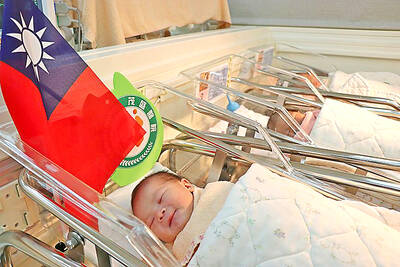
AGING: As of last month, people aged 65 or older accounted for 20.06 percent of the total population and the number of couples who got married fell by 18,685 from 2024 Taiwan has surpassed South Korea as the country least willing to have children, with an annual crude birthrate of 4.62 per 1,000 people, Ministry of the Interior data showed yesterday. The nation was previously ranked the second-lowest country in terms of total fertility rate, or the average number of children a woman has in her lifetime. However, South Korea’s fertility rate began to recover from 2023, with total fertility rate rising from 0.72 and estimated to reach 0.82 to 0.85 by last year, and the crude birthrate projected at 6.7 per 1,000 people. Japan’s crude birthrate was projected to fall below six,
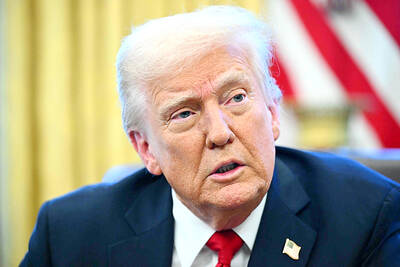
US President Donald Trump in an interview with the New York Times published on Thursday said that “it’s up to” Chinese President Xi Jinping (習近平) what China does on Taiwan, but that he would be “very unhappy” with a change in the “status quo.” “He [Xi] considers it to be a part of China, and that’s up to him what he’s going to be doing, but I’ve expressed to him that I would be very unhappy if he did that, and I don’t think he’ll do that. I hope he doesn’t do that,” Trump said. Trump made the comments in the context
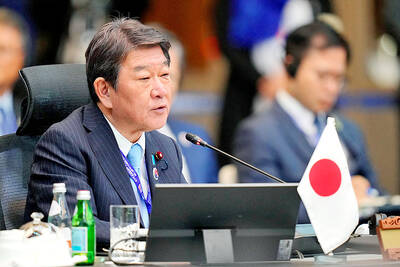
SELF-DEFENSE: Tokyo has accelerated its spending goal and its defense minister said the nation needs to discuss whether it should develop nuclear-powered submarines China is ramping up objections to what it sees as Japan’s desire to acquire nuclear weapons, despite Tokyo’s longstanding renunciation of such arms, deepening another fissure in the two neighbors’ increasingly tense ties. In what appears to be a concerted effort, China’s foreign and defense ministries issued statements on Thursday condemning alleged remilitarism efforts by Tokyo. The remarks came as two of the country’s top think tanks jointly issued a 29-page report framing actions by “right-wing forces” in Japan as posing a “serious threat” to world peace. While that report did not define “right-wing forces,” the Chinese Ministry of Foreign Affairs was

PREPAREDNESS: Given the difficulty of importing ammunition during wartime, the Ministry of National Defense said it would prioritize ‘coproduction’ partnerships A newly formed unit of the Marine Corps tasked with land-based security operations has recently replaced its aging, domestically produced rifles with more advanced, US-made M4A1 rifles, a source said yesterday. The unnamed source familiar with the matter said the First Security Battalion of the Marine Corps’ Air Defense and Base Guard Group has replaced its older T65K2 rifles, which have been in service since the late 1980s, with the newly received M4A1s. The source did not say exactly when the upgrade took place or how many M4A1s were issued to the battalion. The confirmation came after Chinese-language media reported


 RSS
RSS