


Taiwan’s trade negotiation team, led by Vice Premier Cheng Li-chiun (鄭麗君) and chief trade negotiator Minister Without Portfolio Yang Jen-ni (楊珍妮), has departed for the US for a new round of in-person trade talks that officials say are in the final stages, the Cabinet said yesterday.
The delegation left Taiwan late on Wednesday after coordinating with its US counterparts, the Cabinet’s Taiwan-US trade working group said.
Following the talks, the two sides are expected to announce the substance of any consensus reached, the group said.
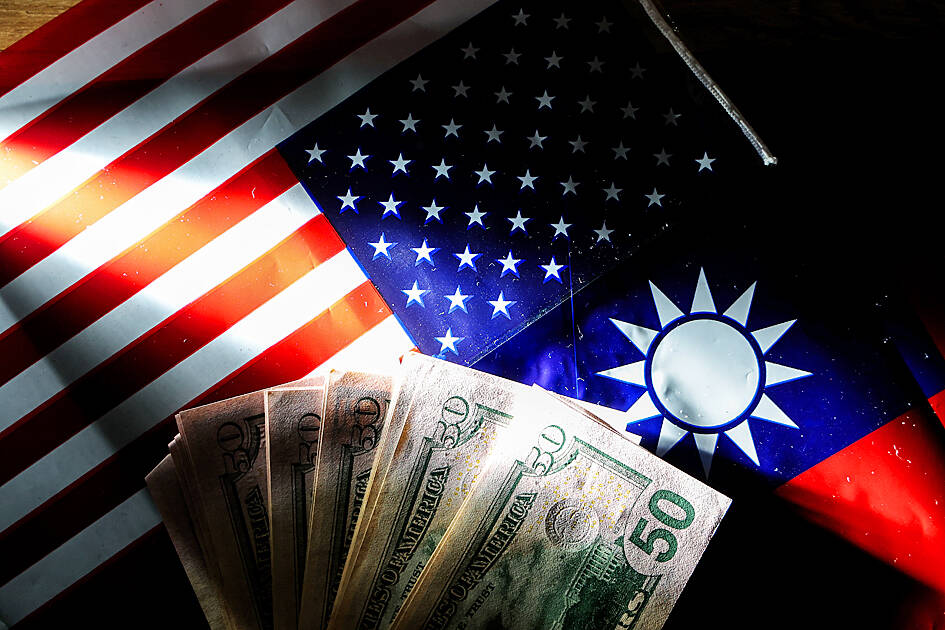
Photo: CNA
A formal trade agreement would be signed at a later date, after which the full text would be submitted to Taiwan’s legislature for review, in accordance with legal procedures, it added.
The meetings are to focus on four main objectives, including further lowering tariffs on Taiwanese goods without stacking them on existing most-favored-nation rates and securing “most favorable” treatment under Section 232 of the US Trade Expansion Act for semiconductors, semiconductor-derived products and other items, the working group said.
Other goals include expanding the “Taiwan model” within US supply chains and seeking a more favorable investment environment for Taiwanese firms, while promoting bilateral trade balance and building a strategic partnership in the global artificial intelligence (AI) supply chain, the negotiation team said.
The meetings, the sixth round of in-person trade negotiations between Taiwan and the US, are to be held amid reports that the two sides are close to reaching a trade agreement.
The New York Times reported earlier this week that US tariffs on Taiwanese imports could be reduced to 15 percent from 20 percent, and Taiwan Semiconductor Manufacturing Co (TSMC, 台積電) plans to make additional investments in Arizona, including the construction of at least five new semiconductor plants.
TSMC has declined to comment on whether it would invest more in the US on top of the US$165 billion that it has already pledged.
Taiwan’s chips are not subject to the US tariffs.
Two people familiar with the matter said an announcement on the tariffs deal could come by the end of the month.
The Office of Trade Negotiations on Tuesday said the two sides had already reached broad consensus on relevant issues and were discussing the timing of a wrap-up meeting, after which the main elements of the agreement would be made public.
The new round of negotiations also follows a White House announcement on Wednesday regarding semiconductor tariffs.
Washington imposed a 25 percent tariff on certain AI chips, such as the Nvidia H200, under a new national security order released by the White House.
Addressing that new order, Taiwan said that it has previously held multiple discussions with the US and reached a consensus on preferential tariff treatment for semiconductors and related products.
“After confirming this with the US side during the current consultations, our side will provide a public explanation,” it added, without elaborating.
Additional reporting by Reuters

The Legislative Yuan’s Finance Committee yesterday approved proposed amendments to the Amusement Tax Act (娛樂稅法) that would abolish taxes on films, cultural activities and competitive sporting events, retaining the fee only for dance halls and golf courses. The proposed changes would set the maximum tax rate for dance halls and golf courses at 50 and 20 percent respectively, with local governments authorized to suspend the levies. Article 2 of the act says that “amusement tax shall be levied on tickets sold or fees charged by amusement places, facilities or activities” in six categories: “Cinema; professional singing, story-telling, dancing, circus, magic show, acrobatics

Tainan, Taipei and New Taipei City recorded the highest fines nationwide for illegal accommodations in the first quarter of this year, with fines issued in the three cities each exceeding NT$7 million (US$220,639), Tourism Administration data showed. Among them, Taipei had the highest number of illegal short-term rental units, with 410. There were 3,280 legally registered hotels nationwide in the first quarter, down by 14 properties, or 0.43 percent, from a year earlier, likely indicating operators exiting the market, the agency said. However, the number of unregistered properties rose to 1,174, including 314 illegal hotels and 860 illegal short-term rental
INFLATION UP? The IMF said CPI would increase to 1.5 percent this year, while the DGBAS projected it would rise to 1.68 percent, with GDP per capita of US$44,181 The IMF projected Taiwan’s real GDP would grow 5.2 percent this year, up from its 2.1 percent outlook in January, despite fears of global economic disruptions sparked by the US-Iran conflict. Taiwan’s consumer price index (CPI) is projected to increase to 1.5 percent, while unemployment would be 3.4 percent, roughly in line with estimates for Asia as a whole, the international body wrote in its Global Economic Outlook Report published in the US on Monday. The figures are comparatively better than the IMF outlook for the rest of the world, which pegged real GDP growth at 3.1 percent, down from 3.3 percent
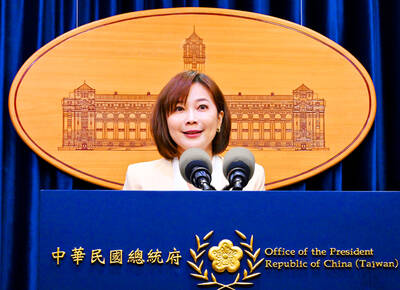
ECONOMIC COERCION: Such actions are often inconsistently applied, sometimes resumed, and sometimes just halted, the Presidential Office spokeswoman said The government backs healthy and orderly cross-strait exchanges, but such arrangements should not be made with political conditions attached and never be used as leverage for political maneuvering or partisan agendas, Presidential Office spokeswoman Karen Kuo (郭雅慧) said yesterday. Kuo made the remarks after China earlier in the day announced 10 new “incentive measures” for Taiwan, following a landmark meeting between Chinese President Xi Jinping (習近平) and Chinese Nationalist Party (KMT) Chairwoman Cheng Li-wun (鄭麗文) in Beijing on Friday. The measures, unveiled by China’s Xinhua news agency, include plans to resume individual travel by residents of Shanghai and China’s Fujian


 RSS
RSS