


The majority of the 18 ongoing public budget military procurement projects from the US are progressing normally, the Ministry of National Defense said in a report to the Legislative Yuan on Friday.
The second batch of High Mobility Artillery Rocket Systems (HIMARS) multiple-launch rocket launchers, which has extended strike capabilities, is set to be delivered ahead of schedule next year, and 80 M1A2T main battle tanks have already been delivered, the report said.
Taiwan purchased 29 HIMARS launchers from the US worth NT$32.5 billion (US$1.04 billion) and received the first 11 last year, it said.
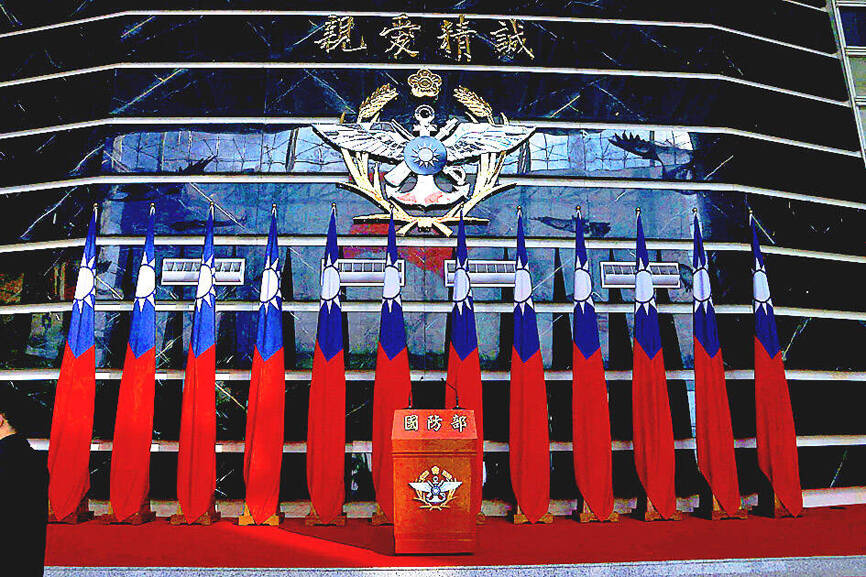
Photo: Ann Wang, Reuters
The second batch of 18 HIMARS launchers, originally scheduled for delivery in 2027, has now been confirmed for completion one year earlier, with all units to be delivered next year, the ministry said, adding that it would greatly enhance the military’s cross-region reinforcement and precision strike capabilities.
Eighty M1A2T Abrams main battle tanks have already been delivered, and the delivery of the remaining 39 is on schedule, the report said.
The tanks are gradually replacing older tanks and bolstering the army’s capability to defend the capital and stop an amphibious assault on the beaches, it added.
The delivery of Javelin and TOW missiles, the navy’s Block 1B Phalanx close-in weapons system, and missile-bearing drones highlight the nation’s effort to reinforce its asymmetric combat capabilities, it said.
Regarding delays in the delivery of F-16 Block 70 jets, the report said the first jet was expected to roll off the production line in 2023, but was delayed to this year due to research and development of bespoke systems.
The delivery of the entire order, 66 F-16s, has been set for next year and has not been subject to further delays, it added.
While the 141 F-16A/B block 20s, obtained in 1997, were upgraded to the F-16V standard last year, the AGM-154C Joint Standoff Weapon (JSOW) missiles they were to be outfitted with have been delayed due to longer production times, as Taiwan purchased the newest model, the ministry said.
Global production capability for the MK-48 heavy torpedo, which Taiwan purchased for the Hai Kun (海鯤), the nation’s first indigenous defense submarine, has been affected by the Russia-Ukraine war, and delivery has been pushed back from 2028 to 2030, the report said.
The US government is aware of supply chain issues and has made Taiwan a priority partner, while expediting deliveries and back-end logistics to prevent repeat incidents of completed equipment left to sit in warehouses undelivered, it added.
The military would continue maintain close contact with the US to ensure equipment is delivered and integrated into combat units, the ministry said.

‘NO SECURITY RISK’: The Railway Bureau reassured the public that the technicians’ activities were limited to technical guidance and did not involve sensitive systems The Railway Bureau yesterday said it had invited eight Chinese technicians to assist with an airport MRT construction project. The bureau issued the confirmation after an Internet user said Chinese nationals had entered the construction zone of Taiwan Taoyuan International Airport’s Terminal 3 project. They asked why “individuals from an enemy state” were allowed access to such a major national infrastructure project, which raised serious concerns over Taiwan’s industrial safety, sensitive systems and information security. The bureau’s Northern Region Engineering Branch Office said subcontractor Taiwan Handle Industrial Co (台灣手把工業) of the Taoyuan airport MRT’s “Contract No. CU05 Project A14 Station Civil, MEP &

The National Chungshan Institute of Science and Technology yesterday showcased its locally developed variants of the Vision 60 robotic patrol dog, which it plans to deploy on the nation’s outlying territories in the South China Sea. The variants were produced under the Joint Lab project — created by the institute and domestic companies — and assembled with domestically produced motors, lenses and artificial intelligence (AI) systems alongside licensed tech from the US, Missile and Rocket Systems Research Division deputy director Jen Kuo-kang (任國光) told the media event at a military base in Taipei’s Dazhi (大直) area. Taiwan has built up its strengths
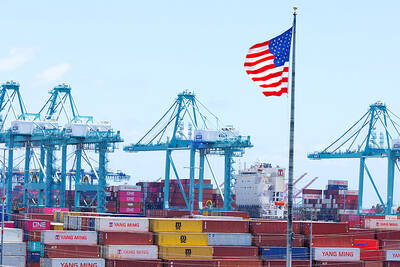
NOT IMMEDIATE: Taiwan has a chance to appeal the proposed 10 percent tariff before it starts, while other countries face a 12.5 percent tariff from the trade office Taiwan is among 60 economies determined by the US to have failed to impose or enforce a ban on the importation of goods produced with forced labor, according to a notice released on Tuesday by the Office of the US Trade Representative (USTR), which proposed imposing an additional 10 percent or more tariff on them. The USTR in a statement said that following an investigation, it had determined under Section 301 of the Trade Act of 1974 that the failure of the 60 economies to impose and effectively enforce a prohibition on the importation of goods produced with forced labor is
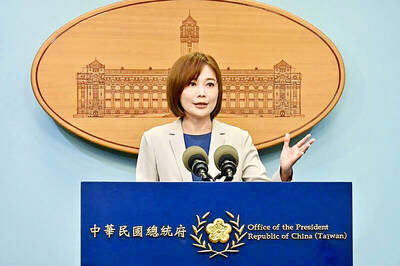
TIT-FOR-TAT: The US allegedly revoked the visa of a Chinese national working at Xinhua News Agency in the US in response to Beijing’s expulsion of Vivian Wang The Presidential Office yesterday condemned China for expelling a New York Times correspondent from Beijing following the newspaper’s interview with President William Lai (賴清德), saying the move highlighted Beijing’s suppression of press freedom and its threat to international news media. Taiwan has noted a series of recent incidents in which Beijing used similar tactics to “threaten and pressure international media outlets and journalists,” Presidential Office spokeswoman Karen Kuo (郭雅慧) said in a statement. “This concerns not only press freedom and freedom of expression, but also the safety of journalists, and Taiwan and relevant partners are paying close attention to the situation,” she


 RSS
RSS