


The Legislative Yuan yesterday passed a special budget bill aimed at bolstering economic, social and national security resilience that includes funding for a proposed NT$10,000 (US$326) cash handout to members of the public.
The distribution of the cash handout is expected to begin early next month, Minister of Finance Chuang Tsui-yun (莊翠雲) said, adding that details would be announced on the same day the president signs the budget into effect.
Foreign nationals with permanent residency or those married to Taiwanese nationals are eligible for the NT$10,000 cash handouts, the Cabinet has said.
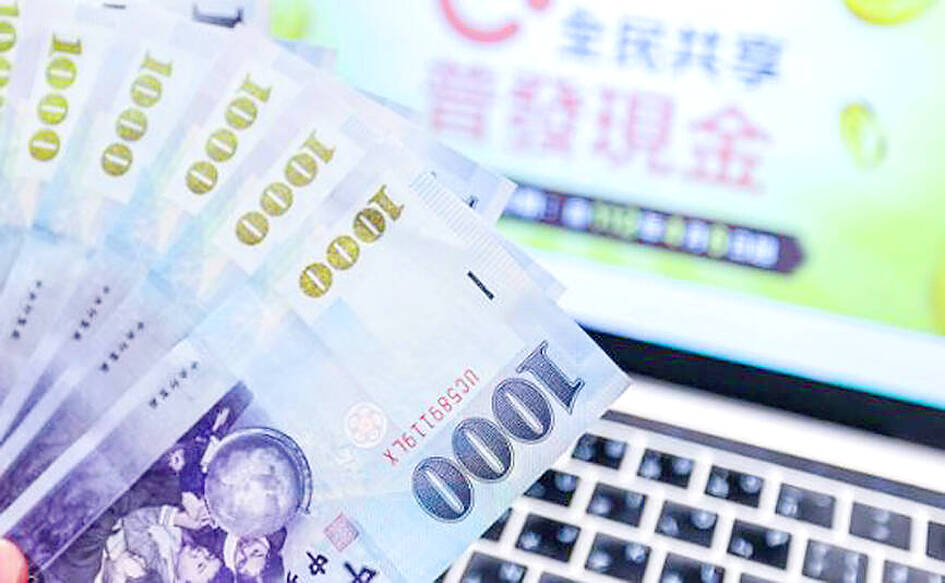
Photo: CNA
The Cabinet approved the NT$550 billion special budget on Sept. 11, with NT$236 billion earmarked for the cash handout and NT$20 billion for reserve funds for future industrial support.
The Legislative Yuan’s finance and other committees conducted a joint review before forwarding the bill for cross-party negotiations.
Legislative Speaker Han Kuo-yu (韓國瑜) convened cross-party talks on Wednesday, during which eight proposals were marked for a vote, including a NT$200 million cut to national defense capacity-building, a NT$2 billion freeze on subsidies to labor and health insurance funds, and a reduction in media promotion expenses.
Lawmakers yesterday approved a revised version of the Cabinet’s NT$550 billion special budget, cutting a total of NT$5.3 billion.
The final budget is NT$544.7 billion, with key allocations for social welfare, industry support and labor protection remaining intact.
Most reductions came from defense spending, including the Ministry of National Defense’s bottled-water procurement plan, which drew public criticism for its high costs and vague logistics.
Lawmakers cut NT$400 million from the plan, reducing its total to about NT$390 million, after saying that the NT$120 price tag for each bottle was “wasteful.”
Chinese Nationalist Party (KMT) Legislator Ma Wen-chun (馬文君) said earlier this month that the ministry should focus on combat readiness and supply-chain resilience rather than funding an “opaque” program.
The defense ministry said that the plan aimed to ensure a stable supply of safe drinking water during emergencies and overseas missions, adding that the bottles, imported from Japan, could be stored for up to five years.
However, the ministry later found local manufacturers that could produce similar drinking water and accepted the reduced funding after consulting suppliers and holding cross-party negotiations.
Democratic Progressive Party Legislator Rosalia Wu (吳思瑤) yesterday criticized what she described as “excessive” cuts to defense-related spending, warning that foreign forces could take advantage of Taiwan’s defense vulnerabilities to act if an opportunity arises.

‘NO SECURITY RISK’: The Railway Bureau reassured the public that the technicians’ activities were limited to technical guidance and did not involve sensitive systems The Railway Bureau yesterday said it had invited eight Chinese technicians to assist with an airport MRT construction project. The bureau issued the confirmation after an Internet user said Chinese nationals had entered the construction zone of Taiwan Taoyuan International Airport’s Terminal 3 project. They asked why “individuals from an enemy state” were allowed access to such a major national infrastructure project, which raised serious concerns over Taiwan’s industrial safety, sensitive systems and information security. The bureau’s Northern Region Engineering Branch Office said subcontractor Taiwan Handle Industrial Co (台灣手把工業) of the Taoyuan airport MRT’s “Contract No. CU05 Project A14 Station Civil, MEP &

A US uncrewed surface vessel (USV) encountered multiple Chinese warships during an autonomous transit of the Taiwan Strait, US defense company Seasats said in a statement on Wednesday. Seasats announced that a Lightfish USV had completed the first autonomous transit of the Taiwan Strait. Over five days, the USV traversed the entire length of the Strait while constantly monitoring surface vessel traffic, the company said. The Lightfish encountered multiple Chinese warships, one of which was a Chinese People’s Liberation Army Navy (PLAN) Type 056 corvette, it said. The Chinese vessels were operating “well within Taiwan’s exclusive economic zone without transmitting their identity via the

Taiwan is still in the process of assessing the possibility of recruiting workers from Eswatini, the Ministry of Foreign Affairs said yesterday, adding that its goal is to help Eswatini upgrade its vocational training centers. If there are plans to recruit workers from Eswatini, safeguarding national security, protecting public health and ensuring the employment rights of Taiwanese would be prerequisites, Department of West Asian and African Affairs Director-General Yen Chia-liang (顏嘉良) told a news conference. Key considerations would also include filling labor shortages in specific industries, and fostering bilateral professional and technical exchanges, he said. Yen was asked about the progress of labor
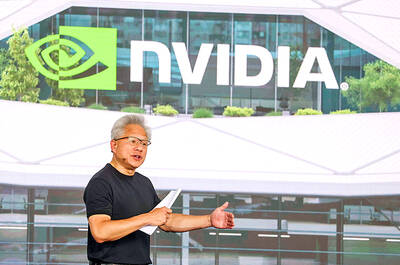
‘BOOMING’: ’ The number of partners we have here is incredible. You can see from their stock prices. They’re doing so well, they’re so happy,’ Jensen Huang said Nvidia Corp’s spending in Taiwan has ballooned to about US$150 billion a year, 10 times the US$10 billion to US$15 billion the company spent five years ago, Nvidia chief executive officer Jensen Huang (黃仁勳) said yesterday, suggesting Taiwan’s strategic importance in the global artificial intelligence (AI) supply chain. “Taiwan is the epicenter of the AI revolution. This is where the chips come, packaging comes. This is where the systems are made. This is where AI supercomputers were created,” Huang said at a meeting for the company’s employees in Beitou-Shilin Technology Park (北投士林科技園區) in Taipei, the planned site of Nvidia’s Taipei headquarters. “Taiwan


 RSS
RSS