


The Executive Yuan yesterday unveiled its new Cabinet aimed at expediting procedures and policies, and bolstering President William Lai’s (賴清德) administration.
Under the reshuffle, which started on Sunday, Executive Yuan Secretary-General Kung Ming-hsin (龔明鑫), the former head of the National Development Council (NDC), would become minister of economic affairs, following J.W. Kuo’s (郭智輝) resignation on Thursday last week, who left citing health reasons, Executive Yuan spokeswoman Michelle Lee (李慧芝) said.
Presidential Office Deputy Secretary-General Xavier Chang (張惇涵) would take over Kung’s post, Lee said, confirming reports from sources last week.
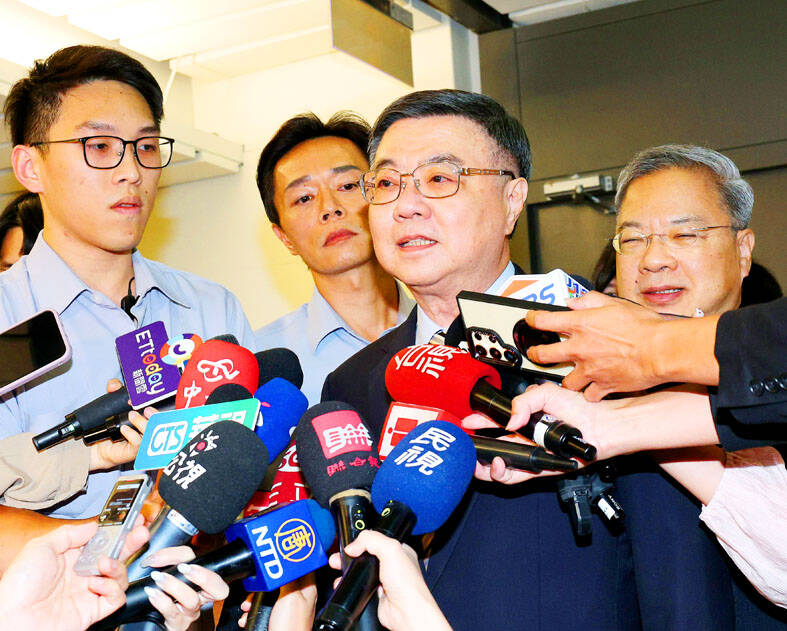
Photo: CNA
Overseas Community Affairs Council Deputy Minister Ruan Jhao-syong (阮昭雄) would be assuming Chang’s position, while former Hsinchu City councilor Lee Yen-hui (李妍慧) is expected to replace Ruan, she added.
Premier Cho Jung-tai (卓榮泰) is expected to formally introduce the new Cabinet members at a news conference today, following an Executive Yuan meeting, she said.
Michelle Lee confirmed rumors reported last week that Olympic badminton champion Lee Yang (李洋) would head the Ministry of Sports, which is to be officially established on Sept. 9.
Sports Administration Director Cheng Shih-chung (鄭世忠), Taiwan Institute of Sport Science CEO Huang Chi-huang (黃啟煌) and Sports Administration Deputy Director-General Hung Chih-chang (洪志昌) are expected to serve as Lee Yang’s deputy ministers, she said.
Former Chung-Hua Institution for Economic Research (中華經濟研究院) president Yeh Chun-hsien (葉俊顯) is to replace NDC Minister Paul Liu (劉鏡清), who resigned on Tuesday night, citing health reasons, Michelle Lee said.
National Health Insurance Administration Director-General Shih Chung-liang (石崇良) would head the Ministry of Health and Welfare, while Centers for Disease and Control Director-General Chuang Jen-hsiang (莊人祥) would be deputy minister, she said.
Deputy Minister of Digital Affairs Lin Yi-ching (林宜敬) is to take over the agency, while Taiwan Artificial Intelligence Academy Foundation secretary-general Hou Yi-hsiu (侯宜秀) would become deputy minister, she said.
Elsewhere, Ministry of Environment Chemicals Administration Director-General Hsieh Yein-rui (謝燕儒) would become the new deputy minister, while Ming Chuan University vice president for international affairs Liu Kuo-wei (劉國偉) would be appointed political deputy minister of the Ministry of Education, she said.
Legendary baseball pitcher Chen Yi-hsin (陳義信) is to become deputy minister of the Council of Indigenous Peoples, she said.
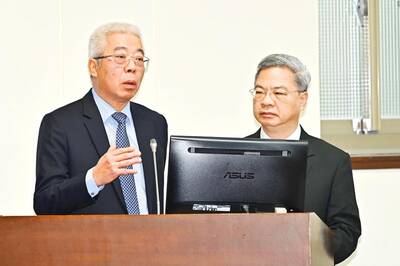
Taiwan has arranged for about 8 million barrels of crude oil, or about one-third of its monthly needs, to be shipped from the Red Sea this month to bypass the Strait of Hormuz and ease domestic supply pressures, CPC Corp, Taiwan (CPC, 台灣中油) said yesterday. The state-run oil company has worked with Middle Eastern suppliers to secure routes other than the Strait of Hormuz, through which about 20 percent of the world’s oil and liquefied natural gas typically passes, CPC chairman Fang Jeng-zen (方振仁) said at a meeting of the legislature’s Economics Committee in Taipei. Suppliers in Saudi Arabia have indicated they
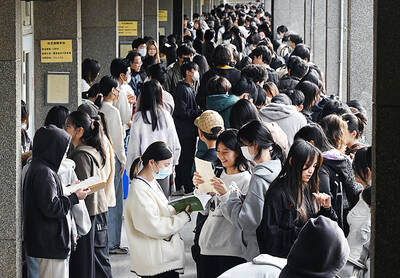
A global survey showed that 60 percent of Taiwanese had attained higher education, second only to Canada, the Ministry of the Interior said. Taiwan easily surpassed the global average of 43 percent and ranked ahead of major economies, including Japan, South Korea and the US, data from the Organisation for Economic Co-operation and Development (OECD) for 2024 showed. Taiwan has a high literacy rate, data released by the ministry showed. As of the end of last year, Taiwan had 20.617 million people aged 15 or older, accounting for 88.5 percent of the total population, with a literacy rate of 99.4 percent, the data
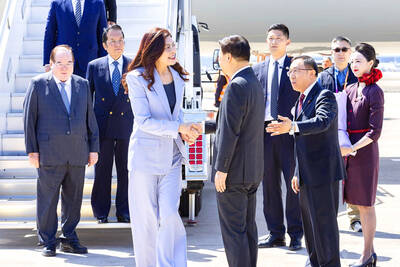
CCP ‘PAWN’? Beijing could use the KMT chairwoman’s visit to signal to the world that many people in Taiwan support the ‘one China’ principle, an academic said Chinese Nationalist Party (KMT) Chairwoman Cheng Li-wun (鄭麗文) yesterday arrived in China for a “peace” mission and potential meeting with Chinese President Xi Jinping (習近平), while a Taiwanese minister detailed the number of Chinese warships currently deployed around the nation. Cheng is visiting at a time of increased Chinese military pressure on Taiwan, as the opposition-dominated Legislative Yuan stalls a government plan for US$40 billion in extra defense spending. Speaking to reporters before going to the airport, Cheng said she was going on a “historic journey for peace,” but added that some people felt uneasy about her trip. “If you truly love Taiwan,
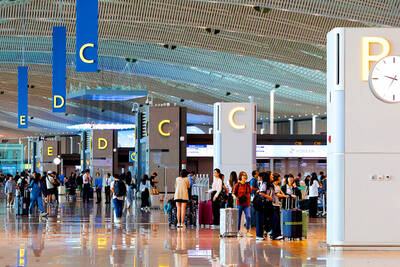
South Korea has adjusted its electronic arrival card system to no longer list Taiwan as a part of China, a move that the Ministry of Foreign Affairs said would help facilitate exchanges between the two sides. South Korea previously listed “Taiwan” as “Taiwan (China)” in the drop-down menus of its online arrival card system, where people had to fill out where they came from and their next destination. The ministry had requested South Korea make a revision and said it would change South Korea’s name on Taiwan’s online immigration system from “Republic of Korea” to “Korea (South),” should the issue not be


 RSS
RSS