


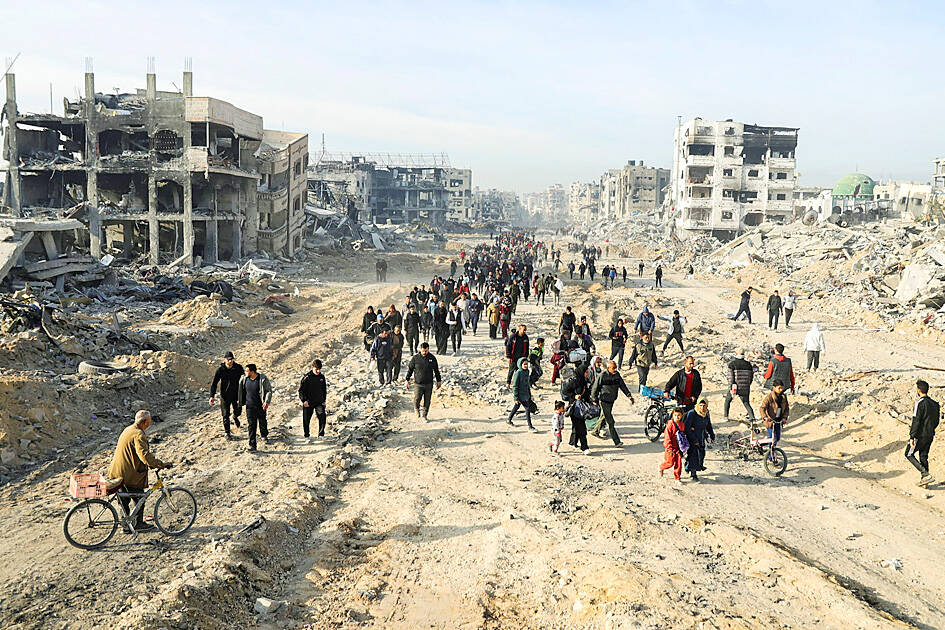
A ceasefire between Israel and Hamas took hold in the Gaza Strip yesterday, ushering in an initial six-week period of calm and raising hopes for the release of dozens of militant-held hostages and an end to a devastating 15-month conflict.
A last-minute delay by Hamas put off the start of the truce by nearly three hours and highlighted its fragility.
However, even before the truce officially took effect, celebrations erupted across the war-ravaged territory and some Palestinians began returning to their homes.
Israel has announced the names of the first hostages expected to return home later yesterday, in exchange for the planned release of dozens of Palestinian prisoners.
The truce, which started at 11:15am local time, is just the first step toward ultimately ending the conflict and returning nearly 100 hostages abducted in Hamas’ Oct. 7, 2023, attack.
An Israeli official confirmed that Romi Gonen, 24, Emily Damari, 28, and Doron Steinbrecher, 31, were set to be released later yesterday.
Gonen was abducted from the Nova music festival, while the other two were kidnapped from Kibbutz Kfar Aza. Damari is an Israeli-British dual citizen.
The official, who spoke on condition of anonymity in line with regulations, said the families had approved the publication of the names.
Hamas was supposed to provide the three names before the start of the ceasefire, originally planned for 8:30am.
Israeli Prime Minister Benjamin Netanyahu early yesterday said that the militants had not lived up to that commitment and that the Israeli military would keep fighting until they did.
Hamas eventually released the names about two hours later, citing technical reasons and saying it was still committed to the agreement.
The ceasefire deal was announced last week after a year of intensive mediation by the US, Qatar and Egypt.
Outgoing US President Joe Biden’s administration and US president-elect Donald Trump’s team had both pressed for an agreement to be reached before Trump’s inauguration today.
“Hostages starting to come out today! Three wonderful young women will be first,” Trump wrote on his social media platform, Truth Social.

A subsidiary of a Hong Kong-based company that has lost control of two critical ports on the Panama Canal said it is seeking US$2 billion of compensation in damages from Panama over its “illegal” takeover of the ports. Panama Ports Co, a unit of Hong Kong’s CK Hutchison Holdings (長江和記實業), on Friday said in a statement that it is demanding the sum under international arbitration proceedings that it had already started. The Panamanian government last week seized control of the Balboa and Cristobal ports on each end of the Panama Canal, after the country’s Supreme Court declared earlier that a concession allowing
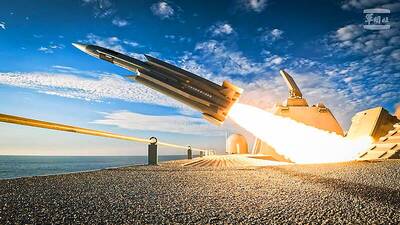
DETERRENCE: With 1,000 indigenous Hsiung Feng II and III missiles and 400 Harpoon missiles, the nation would boast the highest anti-ship missile density in the world With Taiwan wrapping up mass production of Hsiung Feng II and III missiles by December and an influx of Harpoon missiles from the US, Taiwan would have the highest density of anti-ship missiles in the world, a source said yesterday. Taiwan is to wrap up mass production of the indigenous anti-ship missiles by the end of year, as the Chungshan Institute of Science and Technology has been meeting production targets ahead of schedule, a defense official with knowledge of the matter said. Combined with the 400 Harpoon anti-ship missiles Taiwan expects to receive from the US by 2028, the nation would have

POSSIBILITIES EMERGE: With Taiwan’s victory and Japan’s narrow win over Australia, Taiwan now have a chance to advance if South Korea also beat the Aussies Taiwan has high hopes that the national baseball team would advance to the World Baseball Classic (WBC) quarter-finals after clinching a crucial 5-4 victory over South Korea in a nail-biting extra-inning game at the Tokyo Dome yesterday. Boosted by three home runs — two solo shots by Yu Chang (張育成) and Cheng Tsung-che (鄭宗哲) and a two-run homer by Stuart Fairchild — the triumph gave Taiwan a much-needed second victory in the five-team Pool C, where only the top two finishers would advance to the knockout stage in Miami, Florida. Entering extra innings with the game tied at four apiece, Taiwan scored
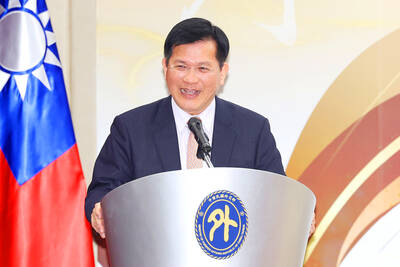
MISSION OF PEACE: The foreign minister urged Beijing to respect Taiwan’s existence as an independent nation, and work together to ensure peace and stability in the region Minister of Foreign Affairs Lin Chia-lung (林佳龍) yesterday rejected Chinese Minister of Foreign Affairs Wang Yi’s (王毅) comments about Taiwan, criticizing China as a “troublemaker” in the international community and a disruptor of cross-strait peace. Speaking at a news conference on the sidelines of the Chinese National People’s Congress, Wang said that Taiwan has always been a territory of China and that it would be impossible for it to become its own country. The “return” of Taiwan to China was the natural outcome of the Chinese people’s resistance against Japan in World War II, and that any pursuit of independence was “doomed


 RSS
RSS