


Impeached South Korean President Yoon Suk-yeol was arrested yesterday over his failed martial law bid, ending a weeks-long standoff with authorities and becoming the first president to be detained in the nation’s history.
Yoon, who faces charges of insurrection over his short-lived effort to impose martial law last month, said he would comply with investigators to avoid “bloodshed.”
A former prosecutor who led the conservative People Power Party (PPP) to election victory in 2022, Yoon could face the death penalty or life in jail if found guilty of insurrection.
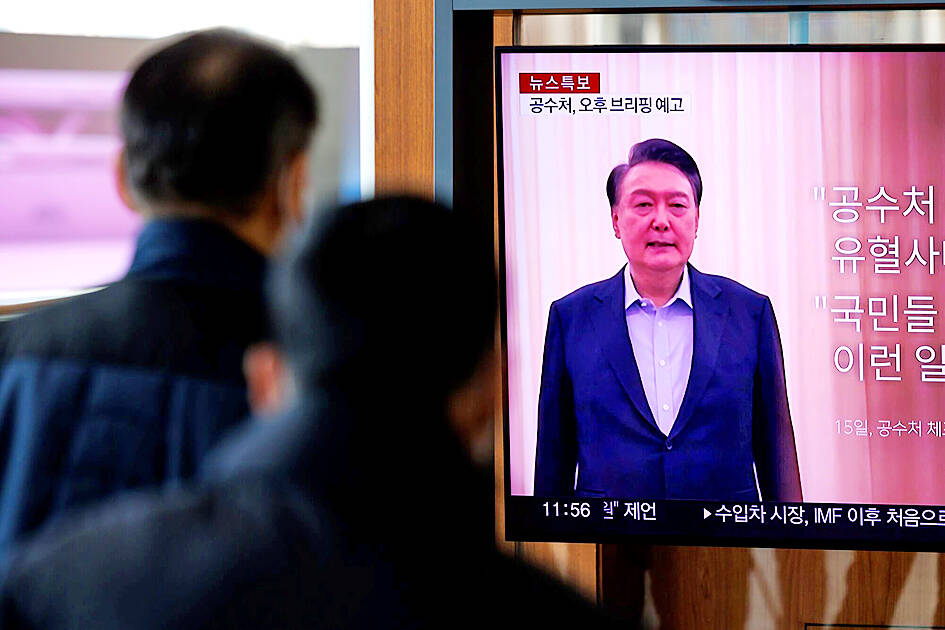
Photo: Bloomberg
He had sought to evade arrest for weeks by remaining in his residential compound, protected by members of the Presidential Security Service who had remained loyal to him.
His guards had installed barbed wire and barricades at the residence, turning it into what the opposition called a “fortress.”
Yoon, who had vowed to “fight to the end,” managed to thwart a first arrest attempt on Jan. 3 following a tense hours-long impasse between the guards and anti-graft investigators working with police.
However, before dawn yesterday, hundreds of police officers and investigators from the South Korean Corruption Investigation Office (CIO) again surrounded the residence, some scaling perimeter walls and hiking up back trails to reach the main building.
After a standoff of about five hours, authorities announced Yoon had been arrested and the impeached leader released a pre-recorded video message.
“I decided to respond to the Corruption Investigation Office,” Yoon said in the message, adding that he did not accept the legality of the investigation, but was complying “to prevent any unfortunate bloodshed.”
Yoon left his residence in a convoy and was taken to the offices of the CIO.
Investigators began questioning Yoon shortly after his arrest, but they said he had exercised “his right to remain silent.”
He refused to be filmed during questioning, a CIO official told reporters, adding that Yoon would spend the night at a detention center.
In a later Facebook post that Yoon said he wrote while holed up in his residence, he repeated election fraud claims and spoke of “hostile” nations attacking the country, alluding to North Korea.
Yoon shocked the nation late on Dec. 3 last year when he declared martial law, claiming he needed to safeguard South Korea “from the threats posed by North Korea’s communist forces and eliminate anti-state elements.”
He deployed troops to parliament, but lawmakers defied them and voted against martial law. Yoon revoked martial law after just six hours. Yoon can be held for up to 48 hours following yesterday’s arrest. Investigators would need to apply for another arrest warrant to keep him in custody.
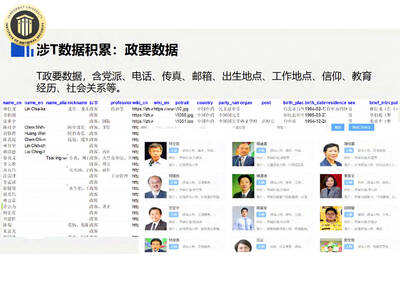
NETWORK-MAPPING PROJECT: The database contains 170 detailed files of Taiwanese politicians and about 23 million records of household registration data in Taiwan China has developed a network-mapping project targeting political figures and parties in Taiwan to monitor public opinion during elections and to craft tailored influence campaigns aimed at dividing Taiwanese society, according to documents leaked by Chinese technology firm GoLaxy (中科天璣). The documents, collected by Taipei-based Doublethink Lab, showed a database was specifically created to gather detailed information on Taiwanese political figures, including their political affiliations, job histories, birthplaces, residences, education, religion and a brief biography about them. Several notable Taiwanese politicians are in the database, including President William Lai (賴清德), former president Tsai Ing-wen (蔡英文), Minister of Foreign Affairs Lin Chia-lung (林佳龍),
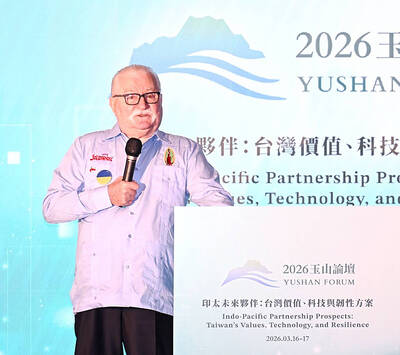
RECOGNITION: Former Fijian prime minister Mahendra Chaudhry said that Taiwan’s New Southbound Policy serves as a stabilizing force in the Indo-Pacific region Taiwan can lead the unification of the Chinese people, Nobel Peace Prize laureate and former Polish president Lech Walesa said in Taipei yesterday, adding that as the world order is changing, peaceful discussion would find good solutions, and that the use of force and coercion would always fail. Walesa made the remarks during his keynote address at a luncheon of the Yushan Forum in Taipei, titled “Indo-Pacific Partnership Prospects: Taiwan’s Values, Technology and Resilience,” organized by the Taiwan-Asia Exchange Foundation with the Ministry of Foreign Affairs. Walesa said that he had been at the forefront of a big peaceful revolution and “if
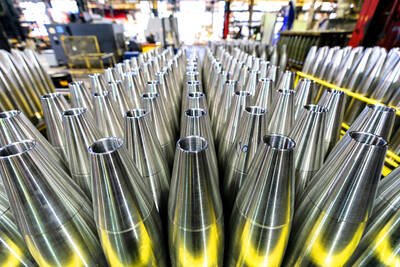
UPGRADED MISSILE: The Chungshan Institute of Science and Technology is reportedly to conduct a live-fire test of the Hsiung Feng III anti-ship missile on Thursday next week The US Army is planning to build new facilities to boost explosives production and strengthen its supply chain, a move aimed at addressing munitions shortages and supporting obligations to partners including Taiwan, Ukraine and Israel, Defense News reported. The army has issued a sources sought notice for a proposed Center of Excellence at the Blue Grass Army Depot in Kentucky, the report said. The facility would serve as a hub within the US industrial base for the production of key military explosives, including research department explosives (RDX) and high melting explosives (HMX), while also supporting research and development of next-generation materials. The proposed
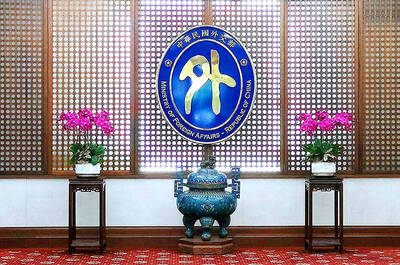
SOUTH KOREA DISPUTE: If Seoul continues to ignore its request, Taiwan would change South Korea’s designation on its arrival cards, the foreign ministry said If South Korea does not reply appropriately to a request to correct Taiwan’s name on its e-Arrival card system before March 31, the government would take corresponding measures to change how South Korea is labeled on the online Taiwan Arrival Card system, the Ministry of Foreign Affairs said yesterday. South Korea’s e-Arrival card system lists Taiwan as “China (Taiwan)” in the “point of departure” and “next destination” fields. Taipei has asked Seoul to change the wording. Since March 1, South Koreans who hold government-issued Alien Resident Certificates (ARC) have been identified as from “South Korea” rather than the “Republic of Korea,” the


 RSS
RSS