


Uber Technologies Inc’s plan to acquire Delivery Hero SE’s local Foodpanda business for US$950 million has been rejected, the Fair Trade Commission (FTC) said yesterday, citing anti-competitive concerns.
UberEats had aimed to complete the all-cash deal by the first half of next year. The acquisition would have been one of Taiwan’s largest outside of the chip industry, marking a retreat for Delivery Hero from Asia.
However, the commission earlier this month indicated that it had concerns about the planned deal.
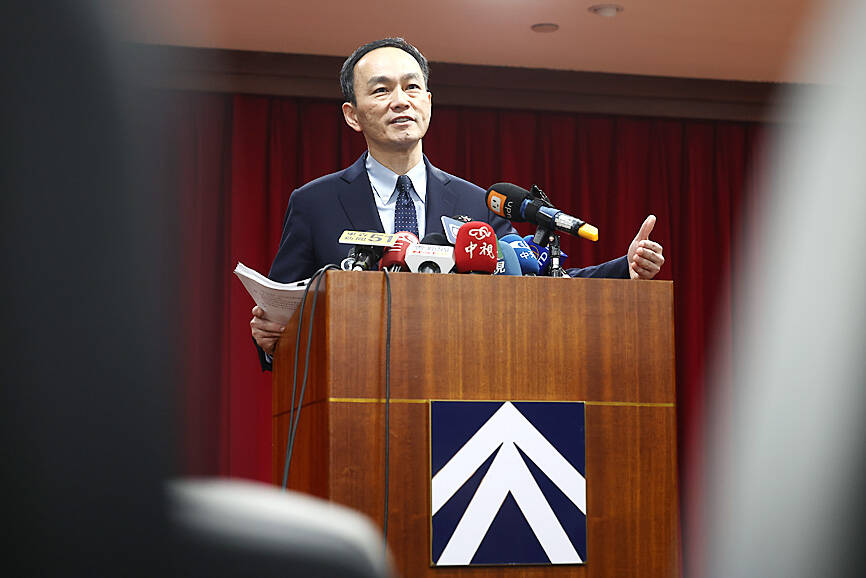
Photo: CNA
The Ministry of Labor in October notified the commission of its opposition to UberEats’ proposed acquisition of rival service Foodpanda in Taiwan.
Uber and Delivery Hero had previously said that the takeover was contingent on regulatory approval. They are the two dominant players in the market.
UberEats yesterday expressed its disappointment with the commission’s decision, as it firmly believed that the transaction — if it had gone through — could bring the greatest benefits to its delivery partners, merchant partners, consumers and Taiwan’s economy.
It had maintained good communications with the FTC since it first announced its acquisition plan in May and had made proposals with multiple conditions attached, hoping to address the regulators’ concerns, UberEats said in a statement.
Despite the setback, the company would continue to invest in the nation and bring innovation, as Taiwan is still among the global markets with the greatest growth and is full of food delivery business opportunities, it said.
The National Delivery Industrial Union yesterday welcomed the commission’s rejection of the planned deal, saying it was right to prevent the food delivery industry from falling into the hands of one business group.
Union spokesman Su Po-hao (蘇柏豪) told reporters that food delivery platforms have been in Taiwan for more than 10 years, but benefits and security for delivery workers have declined each year, while customers are constantly being charged extra fees, and merchants face ever-increasing commissions and advertising fees.
Against this backdrop, if the merger of UberEats and Foodpanda had been approved, it would have been a lose-lose situation for the industry and consumers, Su said.
This is the second big takeover stopped by Taiwanese regulators recently.
In September, the FSC rejected CTBC Financial Holding Co’s (中信金控) multibillion-dollar bid for smaller rival Shin Kong Financial Holding Co (新光金控).

‘NO SECURITY RISK’: The Railway Bureau reassured the public that the technicians’ activities were limited to technical guidance and did not involve sensitive systems The Railway Bureau yesterday said it had invited eight Chinese technicians to assist with an airport MRT construction project. The bureau issued the confirmation after an Internet user said Chinese nationals had entered the construction zone of Taiwan Taoyuan International Airport’s Terminal 3 project. They asked why “individuals from an enemy state” were allowed access to such a major national infrastructure project, which raised serious concerns over Taiwan’s industrial safety, sensitive systems and information security. The bureau’s Northern Region Engineering Branch Office said subcontractor Taiwan Handle Industrial Co (台灣手把工業) of the Taoyuan airport MRT’s “Contract No. CU05 Project A14 Station Civil, MEP &

A US uncrewed surface vessel (USV) encountered multiple Chinese warships during an autonomous transit of the Taiwan Strait, US defense company Seasats said in a statement on Wednesday. Seasats announced that a Lightfish USV had completed the first autonomous transit of the Taiwan Strait. Over five days, the USV traversed the entire length of the Strait while constantly monitoring surface vessel traffic, the company said. The Lightfish encountered multiple Chinese warships, one of which was a Chinese People’s Liberation Army Navy (PLAN) Type 056 corvette, it said. The Chinese vessels were operating “well within Taiwan’s exclusive economic zone without transmitting their identity via the
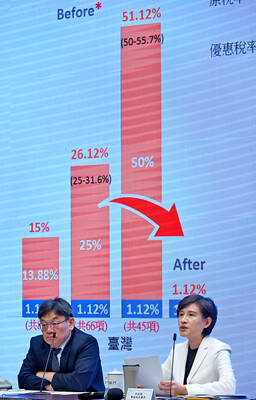
GREATER REACH? Auto parts and wood products would face tariffs of up to 15%, matching those targeting the EU, Japan and South Korea, Vice Premier said The US has announced that preferential tariff treatment for Taiwan’s non-semiconductor Section 232 goods would take effect retroactively from May 1, the Executive Yuan said yesterday. The US government yesterday posted a notice on the Federal Register’s public inspection Web site previewing tariff concessions for Taiwan under a memorandum of understanding (MOU) on Taiwan-US investment after two months of negotiations. The MOU signed on Jan. 15 stipulated three major preferential tariff arrangements: a 15 percent “reciprocal” tariff rate for Taiwan without stacking most-favored nation (MFN) rates; preferential Section 232 treatment for semiconductors and related products; and preferential Section 232 treatment for non-semiconductor

TIT-FOR-TAT: The US allegedly revoked the visa of a Chinese national working at Xinhua News Agency in the US in response to Beijing’s expulsion of Vivian Wang The Presidential Office yesterday condemned China for expelling a New York Times correspondent from Beijing following the newspaper’s interview with President William Lai (賴清德), saying the move highlighted Beijing’s suppression of press freedom and its threat to international news media. Taiwan has noted a series of recent incidents in which Beijing used similar tactics to “threaten and pressure international media outlets and journalists,” Presidential Office spokeswoman Karen Kuo (郭雅慧) said in a statement. “This concerns not only press freedom and freedom of expression, but also the safety of journalists, and Taiwan and relevant partners are paying close attention to the situation,” she


 RSS
RSS